
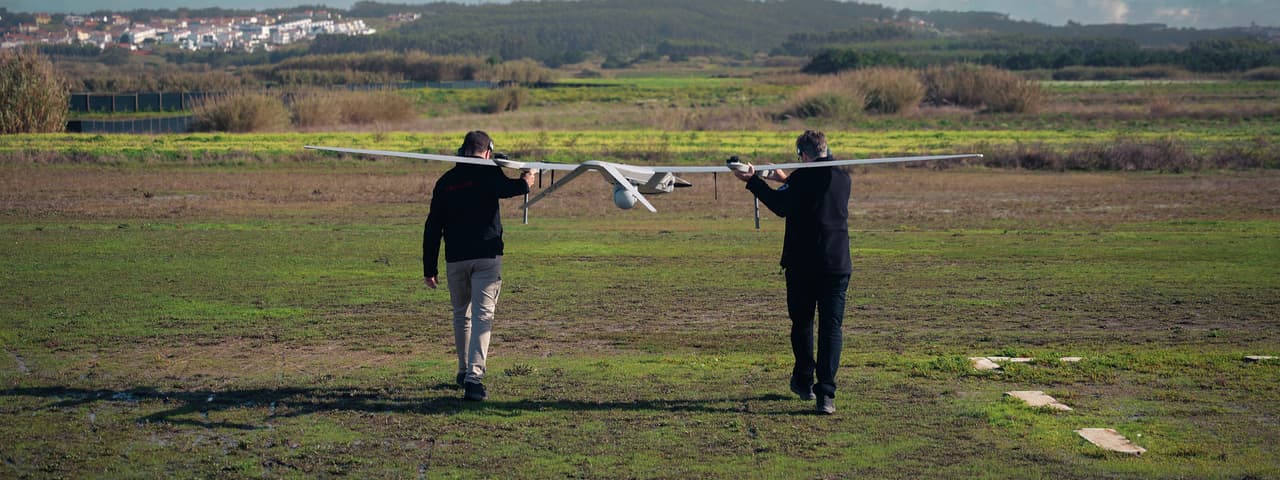
Tekever's AR3 Drone. (Tekever)
Doing business with Ukraine: partnering for success
DSEI Gateway explores the opportunities and obstacles for international companies doing business in Ukraine.
10 AUG 2026

By
Benjamin
Howe
Defence Journalist, DSEI Gateway
For four years Ukraine has been at war with Russia, and while its industrial base is stepping up to meet the demands of conflict, its armed forces still require additional equipment from its partners abroad.
International companies are helping to bridge this gap, having fulfilled 18% of Ukraine’s procurement contracts in 2025.
Companies are often drawn to the country by the opportunity to test and evaluate their equipment in a real battlefield environment, while leveraging insights from experienced frontline users.
The suppliers also benefit from being able to prove the frontline utility of their equipment to other global customers.
Yet, entering the Ukrainian market is harder than many might expect. Companies that approach Ukraine with a purely transactional relationship in mind tend to struggle, while those that commit to a more balanced partnership reap the rewards.
Companies must view Ukraine "as a partner, not as a laboratory, and not as a way of getting some cash. The Ukrainians have had four years of people trying to do that,” Luke Richardson, Managing Director at Dodeca Defence, told DSEI Gateway during an interview in mid-July 2026.
Dodeca Defence advises UK companies on doing business in Ukraine, while also helping Ukrainian firms navigate the UK market.
A two-way opportunity
Richardson positions the relationship between Ukraine and international companies as a “two-way street”.
As a country at war, Ukraine seeks the most effective capabilities at the best price, and it wants them quickly. For international suppliers, the chance to operate at the leading edge of a market that moves faster than any peacetime procurement system is invaluable.
The way battlefield requirements are fulfilled in other countries is in stark contrast to Ukraine’s rapid procurement model, Richardson explained.
"Western procurement is still built around exquisite platforms on decade-long timescales," he said. "The Ukrainians are like the British in the Second World War. They're building Bletchley Park and they're building the bouncing bomb," turning capability around far more quickly.
Companies looking to sell to Ukraine must be conscious of just how rapid the pace of innovation is, though. A mutually beneficial partnership is key to succeeding in the market.
Tekever's partnership with Ukraine
One company that has developed a successful and ongoing working relationship with Ukraine is Tekever.
The dual-use drone manufacturer – which has a growing footprint throughout Europe – made a strategic decision in 2022 to establish itself in the country for the long term.
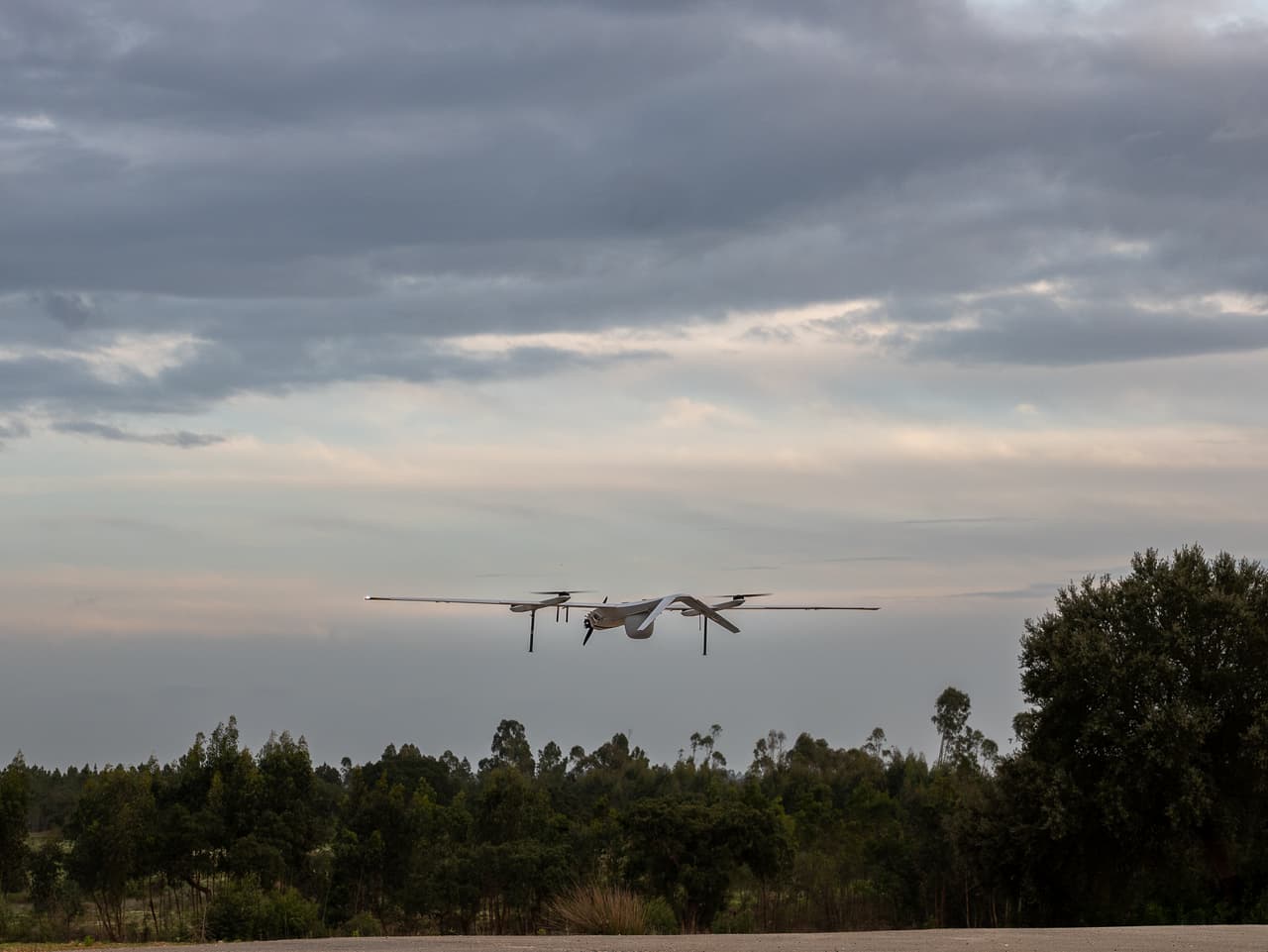
Tekever AR3 drone . (Tekever)
“We did so because we believed that supporting Ukraine was a moral obligation and that our technology could make a meaningful contribution to the defence of the country and its people,” the company told DSEI Gateway.
Elaborating on the company’s approach, Lieutenant Colonel (Retd) Simon Briggs, Head of Defence Capability at Tekever, told DSEI Gateway that "We mustn't just sell drones to Ukraine. We must partner with them."
Briggs explained that Tekever’s UAVs are widely used in Ukraine, with the company providing through-life support, and having a permanent office in the country.
That presence has taught Tekever a great deal about the modern battlefield, prompting "hundreds of modifications” to both its hardware and software platforms, Briggs said.
Those changes span Tekever's AR3 and AR5 intelligence, surveillance, and reconnaissance UAVs, and have shaped its new AR3 Evo drone.
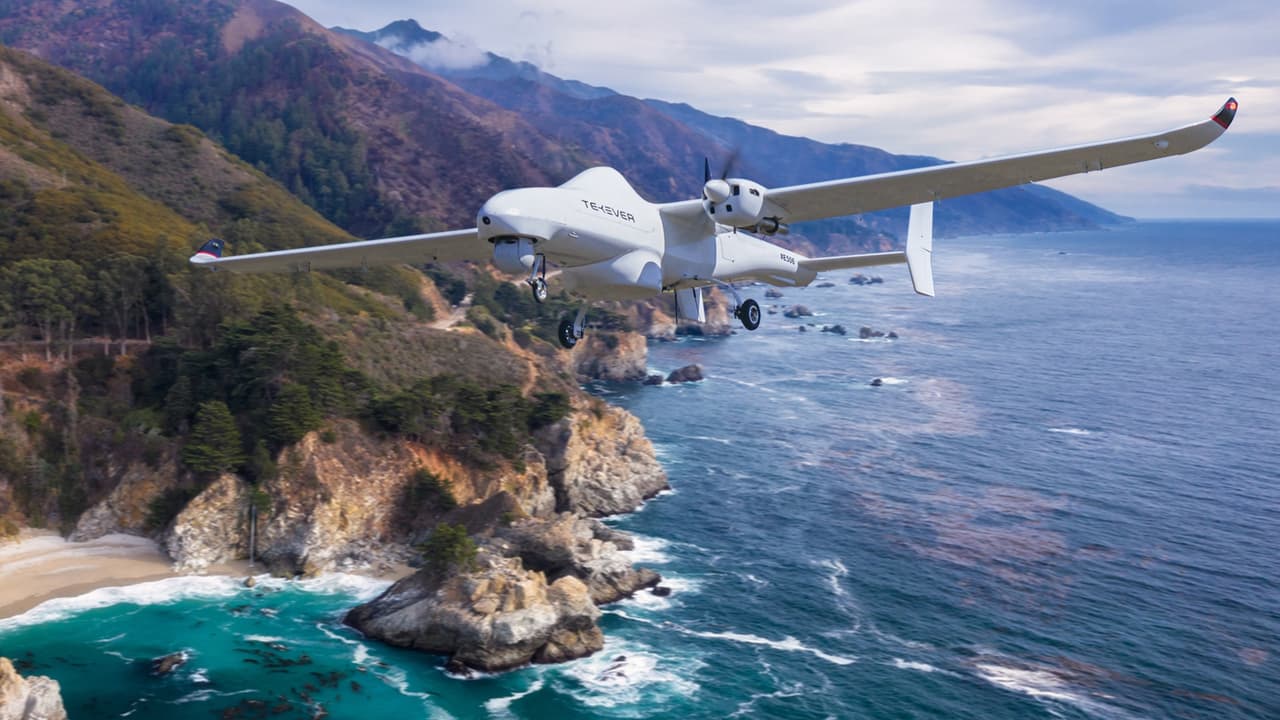
Tekever AR5 drone . (Tekever)
The hardware, though, is only part of the offer. "The product that we really sell is our end-to-end relationship," Briggs explained, pointing to the research, training, maintenance, and logistical support that the company provides alongside the platform.
This, he said, contrasts sharply with suppliers that hand over kit and leave, with their equipment often "cannibalised for parts" once newer technology surpasses it.
Operating in Ukraine, in Briggs’ view, means proving that a platform can survive a contested environment and that the supplier can sustain it there.
What hurdles stand in the way?
Even if companies aim for a long-term relationship with Ukraine, they must first grapple with significant hurdles before they can sell to the country.
Geography
For Briggs, the central challenge is not bureaucracy but geography. Ukraine’s airspace is closed to civilian flights, the country is large, and resupply across a vast frontline is slow and complex.
“Name me another country in the world where you can’t fly in,” Briggs said, framing the difficulty as “a fact of an operating environment”, rather than procurement related.
For those visiting in person, travel is slow, with most routes running through Poland and border crossings that can turn “a one-hour meeting” into “three days of effort”, Richardson said.
Complexity
Suppliers also must navigate a fragmented buyer landscape of “dozens of doors and no signposts” spanning the defence ministry, procurement agencies, brigades with their own budgets, and private manufacturers, Richardson continued.
Testing
Along with this, testing can be constrained by limited sites, with insurance and competition for space adding to the cost. DSEI Gateway understands that test activity can – at times – be halted without warning by air alerts, when threats are detected.
Cost
Martial law adds further friction around payments, currency controls, and the movement of staff, including exit permits for Ukrainian personnel.
Meanwhile, a wartime cap on margins limits how far businesses can scale, a particular squeeze for Ukrainian businesses whose export routes have, until recently, been heavily limited by the government.
Competition
UAVs are among the most common capabilities international companies supply to Ukraine, supported by the Drone Coalition – a Latvia-UK-led initiative that coordinates drone provision to Ukraine through the Ukraine Defence Contact Group.
However, this can make it challenging for companies to sell to Ukraine, because the market is crowded. “It is a saturated market,” Richardson said, adding that drones are not the only capability driving that saturation. “You need something better, faster, stronger, cheaper, or more reliable” to stand out, he said.
While these challenges are considerable, some of them are easing, Richardson said, pointing to improving bureaucracy, new innovation centres in Kyiv, and collaboration with international trade associations as signs of growing accessibility for international companies.
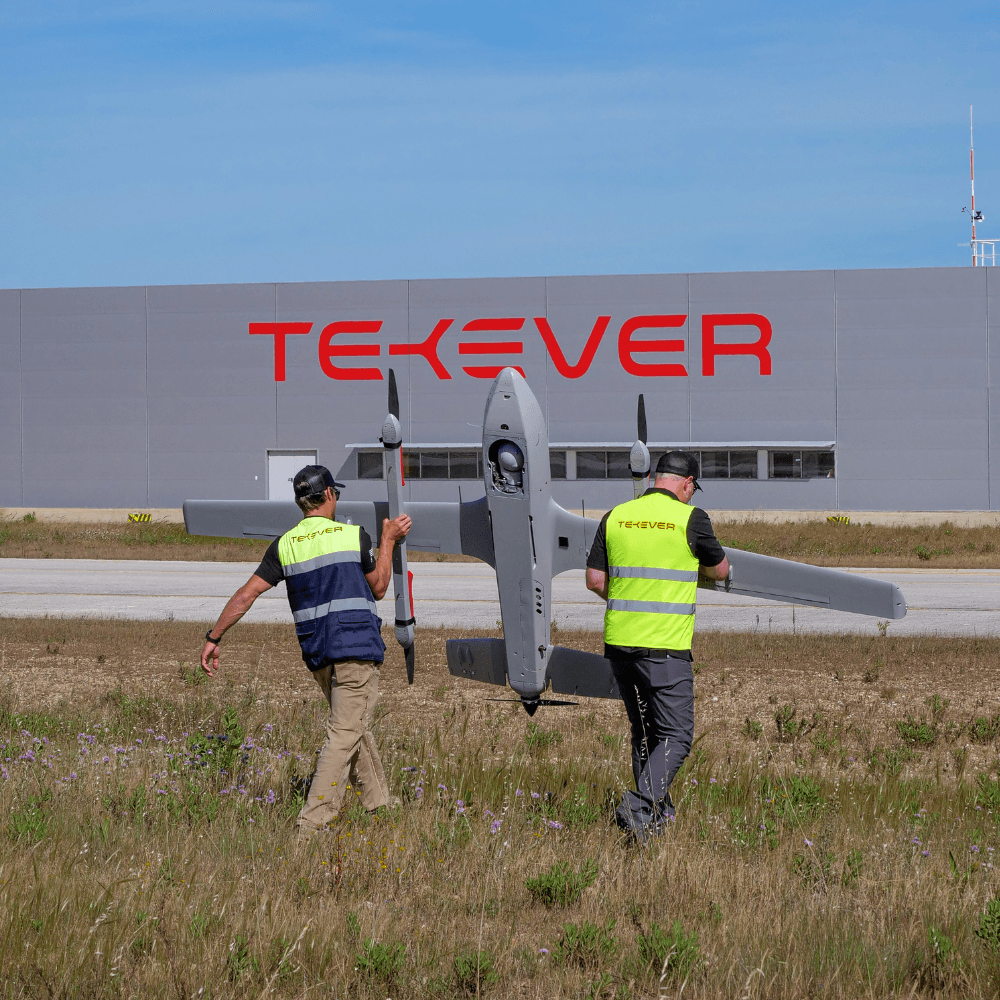
A Tekever AR3 Drone. (Tekever)
Partnering for success
Success in overcoming these hurdles, and building a long-term partnership with Ukraine, rests as much on a genuine two-way relationship as on the products themselves.
For Tekever, this has meant hiring locally. "We employ Ukrainians to do work in Ukraine," Briggs said, arguing that those who live there are best placed to build relationships on the ground.
Trust, he adds, "is born in-country by having a product that works, that is reliable, and by proving that you're going to stick around."
Richardson frames the route in similar terms, recommending partnering and joint ventures over a cold approach, and warning companies from anticipating quick wins.
"Don't expect instant return unless you've got a perfect product," he said.
The overall outlook for international collaboration with Ukraine is encouraging, with the country now moving to open up defence exports, and growing numbers of joint ventures being established between Ukraine’s domestic industry and companies abroad.
Benjamin
Howe
Defence Journalist, DSEI Gateway
Benjamin is a UK-based Journalist working for DSEI Gateway, having previously worked as a Content and Community Manager on Clarion's digital products.