
(Shutterstock)
Adapting at the tactical edge: what NATO must learn from Ukraine
Ahead of Apex Europe in October, DSEI Gateway examines how NATO can match Ukraine’s rapid pace of battlefield innovation and technology adaptation.
31 JUL 2026

By
Olivia
Savage
Editor in Chief, DSEI Gateway
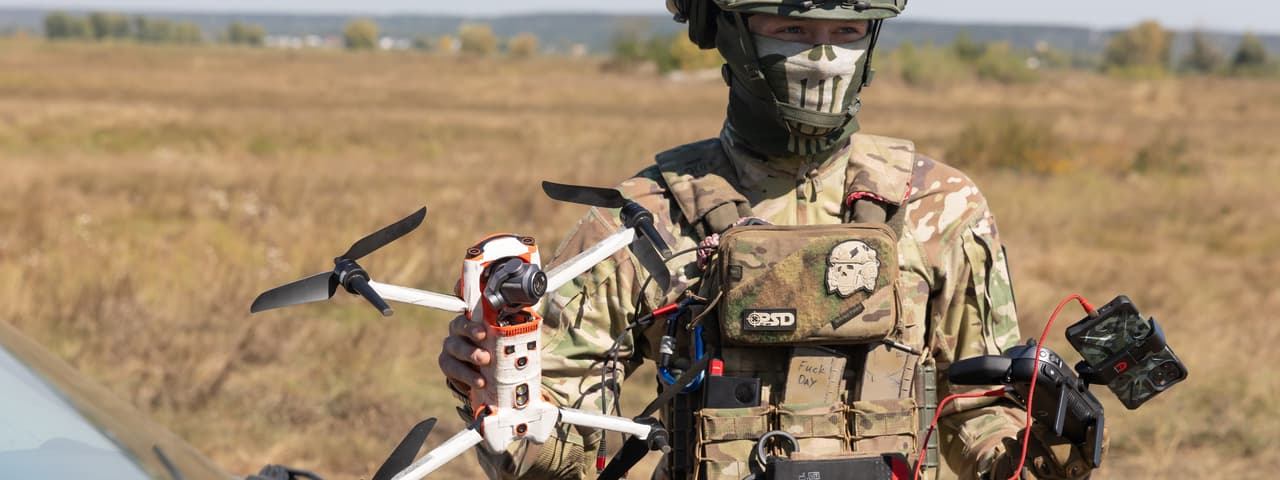
Ukraine has demonstrated how rapid procurement and technological iteration can be achieved under wartime pressure. Technology, especially drones and electronic warfare systems, now evolve in weeks and months rather than years.
Before the widespread adoption of fibre-optic controlled drones, Ukrainian officials told your editor-in-chief that drones were being updated every one to two weeks, as Russian electronic warfare systems became increasingly effective at hunting and jamming radio frequencies.
“Changes happen every week,” Mykhailo Fedorov, Ukraine’s Deputy Prime Minister at the time, reiterated to CBC News in February 2025 when referring to drone innovation.
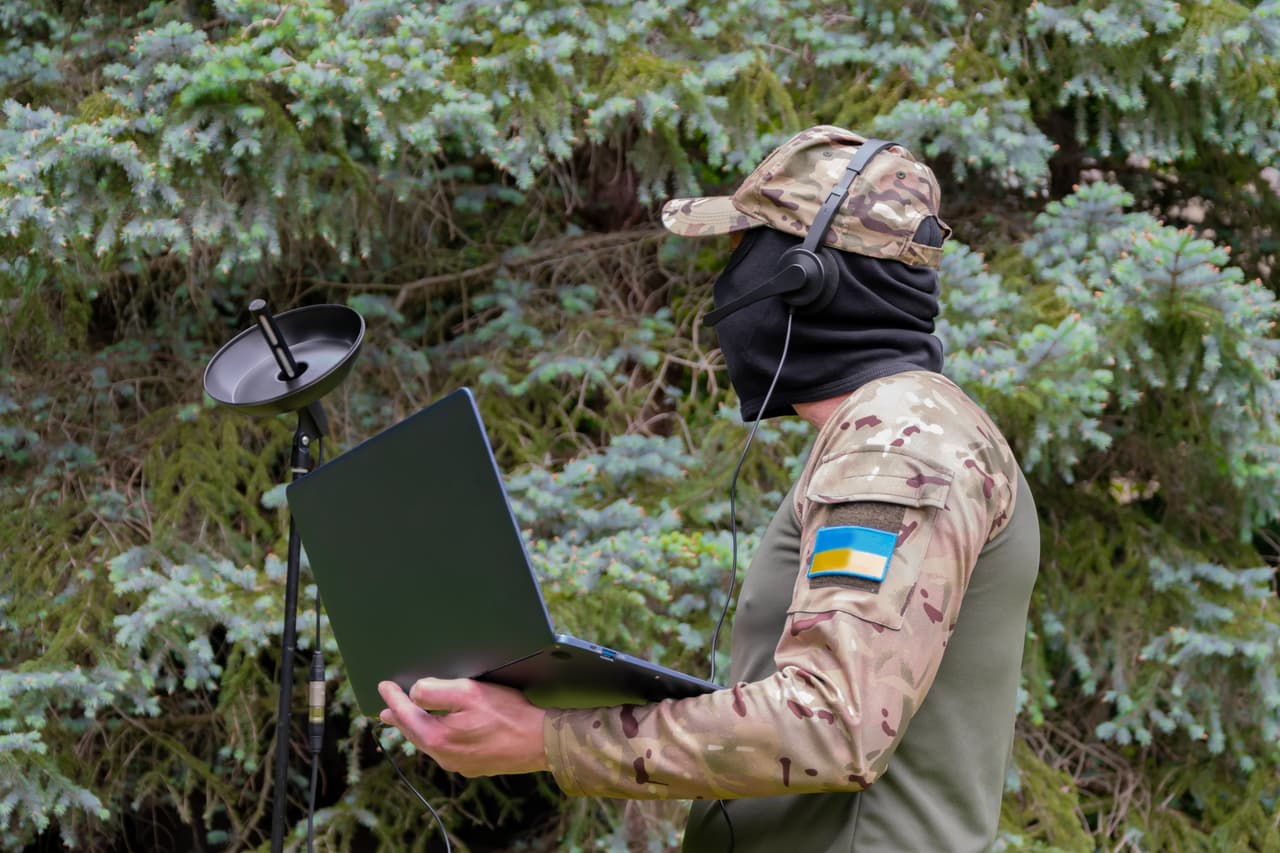
A Ukrainian soldier uses a directional microphone and a laptop in the forest, conducting radio reconnaissance. (Shutterstock)
Frontline units are central to this iteration. Troops are now directly involved in modifying equipment, enabled by direct and continuous feedback with suppliers. This is no longer a "nice to have" – it is now essential to maintaining a technological edge over an adversary.
This constant iteration means that, for now, UAVs remain two, three steps ahead of counter-UAS technology, Major Modris Kairišs, head of Latvia's Autonomous Systems Competence Centre, told DSEI Gateway at the International Drone Summit in Riga, Latvia in May. This is sustained only through tight feedback loops between soldiers and manufacturers.
How can NATO learn from this?
NATO must be able to adapt and innovate at a comparable pace if it is to retain a technological edge. This requires a fundamental rethink of how the alliance operates.
The underlying challenge is NATO currently does not operate on a wartime footing, so cannot enforce strategic priorities and move at the tempo needed to rapidly acquire capability and accelerate adaptation cycles.
Reiterating this point, Claudio Palestini, the Head of Innovation and Technology Adoption at NATO, acknowledged in June that: "Sometimes we award contracts after several months, and we realise that the capabilities that we buy are based on requirements that are perhaps obsolete."
This has direct implications for the warfighter.
But there are efforts NATO can begin to explore to get the alliance thinking and operating in this mindset.
Military adaptation at the tactical level
To move closer to Ukraine’s pace of adaptation, the alliance must devolve greater decision-making authority to the tactical level, so the military can absorb cutting-edge technologies faster.
In practice, this means giving soldiers the opportunity – and authority – to adapt and modify capability at the tactical edge, working directly with suppliers. But this raises the question of how much permission and power should sit at that level, and under what safeguards.
Training soldiers to adapt
Training is one such safeguard. Soldiers must understand how their equipment works, such as drones and electronic warfare systems, to implement supplier instructions correctly rather than working blind.
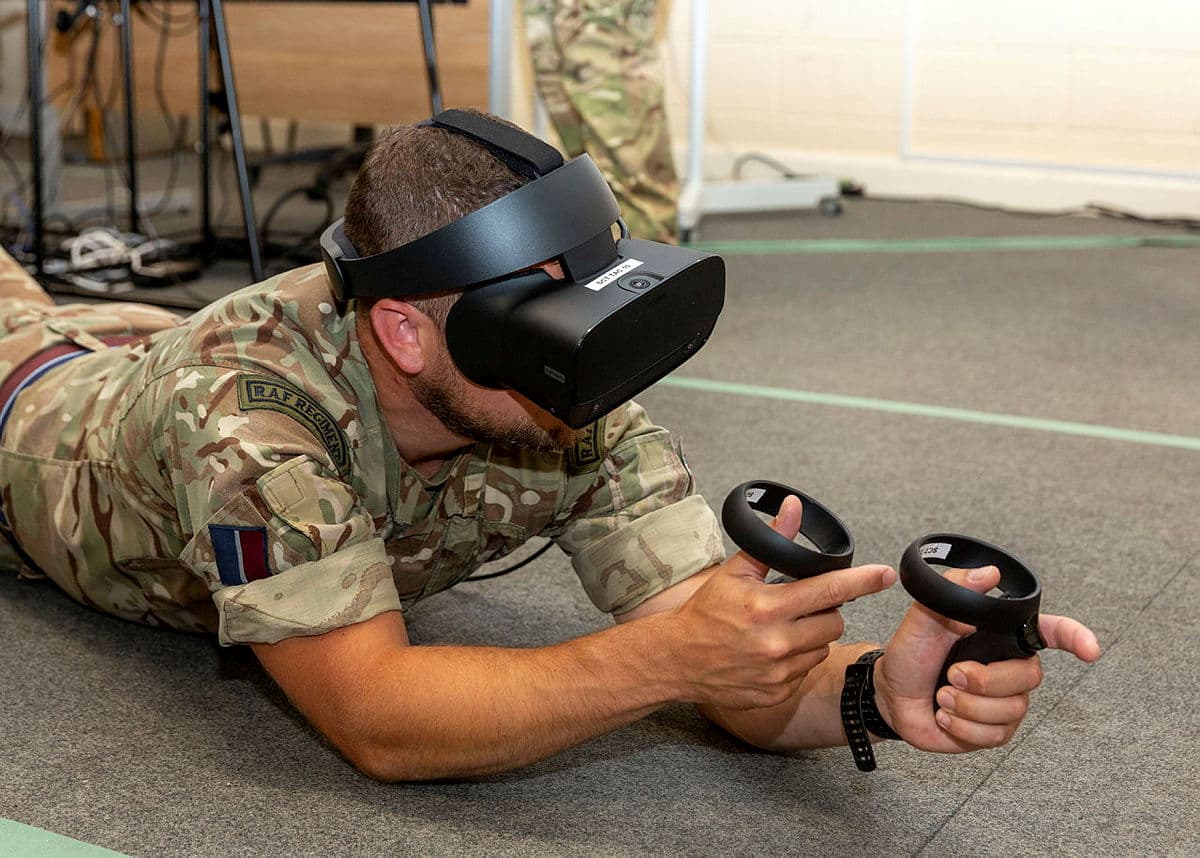
A RAF Regiment instructor in prone firing position trialing SimCentric’s SAF-TAC Virtual Reality software. (UK MoD Crown Copyright 2021)
Without that grounding, devolving authority to the tactical level risks devolving error along with it. And because the equipment itself is changing rapidly, this training cannot be a one-off: it requires constant updating.
Structure matters beyond training too. In Ukraine, some defence companies are sending engineers to the frontline to work alongside troops to iterate the technology, and to see first-hand how their equipment performs.
It may be one of the fastest ways to adapt technology at the point of need, but it exposes both personnel and infrastructure to risk, and could make engineers targets in their own right.
Structuring NATO’s innovation based on frontline feedback
A structured system between supplier and end user is needed to support this rapid adaptation safely, ensuring modifications are captured accurately.
A joint mechanism across NATO members could also, in principle, let key stakeholders track how and why technology is changing, avoiding siloed development. Additionally, it can help educate the alliance on the rapidly evolving tactics, techniques and procedures that shape not only shapes how NATO member states conduct warfare, but also on what to acquire.
An online platform is one option, but it raises security risks around interception and hacking.
DIANA’s Rapid Adoption Service
NATO's own machinery offers a partial precedent. DIANA's Rapid Adoption Service is designed to let military end-users test, validate, refine and procure new technologies, shortening the time from concept to adoption.
DIANA can award R&D and prototype contracts on behalf of the alliance through an opt‑in programme, reducing administrative barriers and accelerating adoption timelines. Successfully demonstrated prototypes can then transition through to production without further competition.
NATO
In April 2026, HonuWorkx was awarded an R&D contract to further development of its undersea systems under the initiative.
The initiative follows NATO’s wider vision to harmonise and facilitate agile procurement across the alliance, through the Rapid Adoption Action Plan, which was unveiled at the NATO Summit in The Hague in June 2025. A core component of the plan is NATO’s ‘Innovation Ranges’ that are being established across the alliance to accelerate testing, experimentation, and adoption of innovative technologies.
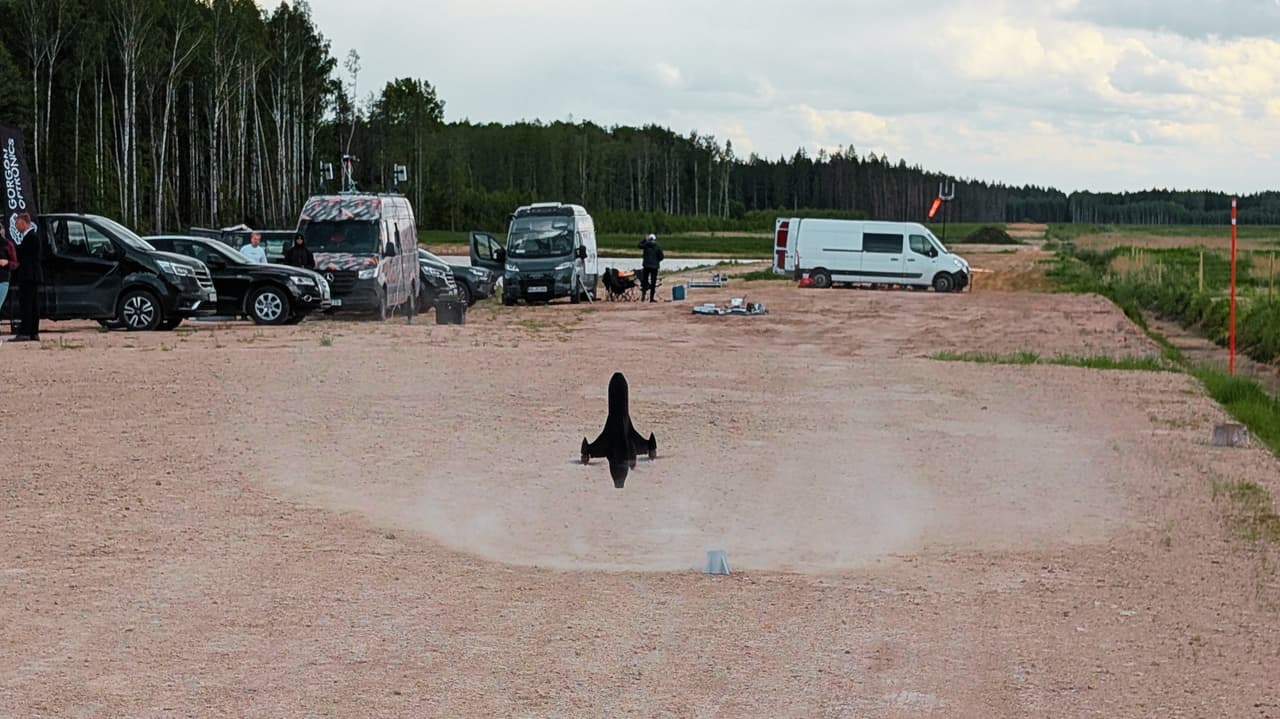
The Raven interceptor counter-drone system from company 'RDC' at NATO's Innovation Range in Latvia. (DSEI Gateway)
These ranges allow innovative equipment and disruptive technologies to be trialled in realistic settings, including with conventional forces. Through the ranges, companies can also be awarded NATO 'Innovation Badges', which demonstrates the technology's performance and quality, helping to de risk uptake.
Latvia’s Sēlija testing range is the most mature of these ranges, having run several testing campaigns this year, Palestini told DSEI Gateway during the International Drone Summit in Riga in May.
NATO's Front Door
A second, newer piece of this machinery is NATO's Front Door for Industry, officially launched by Secretary General Mark Rutte at the NATO Summit in Ankara in July 2026. The portal gives companies a single point of access to NATO procurement opportunities, innovation support mechanisms and events across the alliance. It also offers consolidated unclassified "demand signals", setting out NATO's capability priorities to companies for the coming years. It is designed to be accessible to companies of all sizes, including SMEs and startups.
As it stands, the Front Door is a discovery and engagement tool, not a feedback mechanism. But it could evolve, eventually incorporating a channel for frontline units to cooperate with suppliers directly and flag capability gaps to programme officers, thereby becoming the "structured system" NATO needs for the rapid adaptation of technology at the frontline. That would be a significant expansion of its current remit, however, and there is no indication, yet that NATO is planning this.
Taken together, the Rapid Adoption Service, the Innovation Ranges, and the Front Door show NATO is building the scaffolding for faster adoption – testing ranges, streamlined contracting, a single point of industry contact. What none of these initiatives yet do is close the loop at the point Ukraine has proven matters most: the soldier in contact, modifying kit in real time, with a structured route back to the suppliers. That gap is where NATO's rethink still has to happen.
This is exactly the challenge Apex Europe (7–8 October 2026, Magazine London) will put to operational leaders, acquisition executives, and the innovators directly: how militaries adapt and innovate at the tactical edge, following Ukraine's approach.
Olivia
Savage
Editor in Chief, DSEI Gateway
Olivia Savage is the Editor in Chief of Clarion Defence & Security, organisers of DSEI and other defence events. Previously, she was a Senior Defence Journalist at Janes, specialising in electronic warfare, uncrewed systems, and space.