
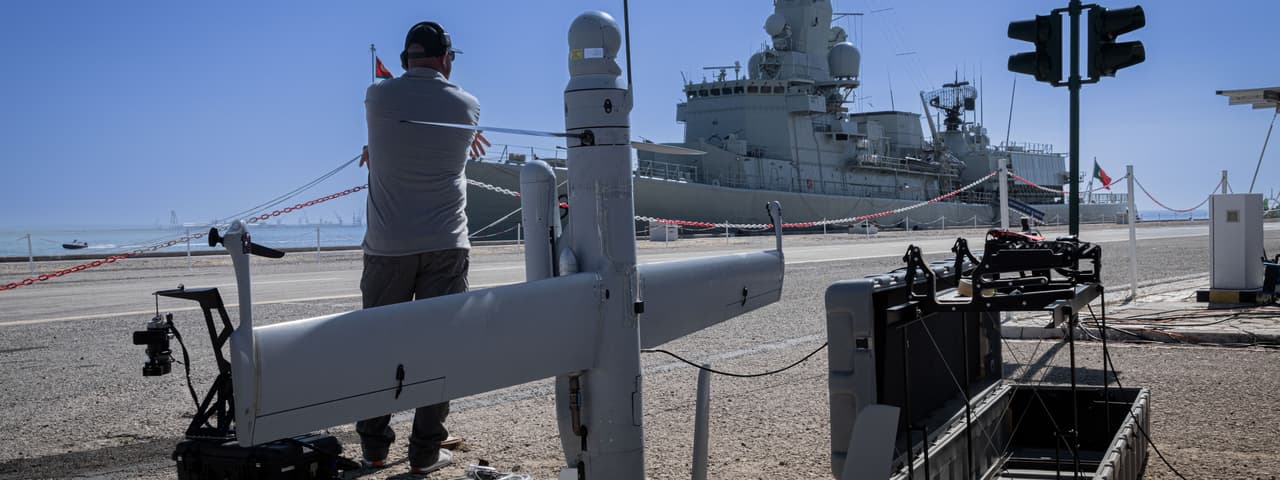
A UAV on display at NATO REMPUS 2025. (NATO)
Demonstrations and experimentations: what’s in it for SMEs?
DSEI Gateway hears from industry and the organisers of demonstrations and exercises about why SMEs should get involved in showcasing their capabilities.
19 AUG 2026

By
Victoria
Hanscomb
Editor, DSEI Gateway
Testing equipment is an essential part of development.
For companies developing new systems, the chance to evaluate and understand how these technologies perform in real-world conditions is vital.
To do this, SMEs and startups require access to testing facilities. Taking part in demonstrations, challenge-led competitions, and experimentations run by militaries, research organisations, and alliances such as NATO is an opportunity for companies to assess how effective their technology is and how it compares to other, potentially competing, equipment.
Additionally, the presence of other SMEs, defence primes, and military end users can open up doors for collaborations.
However, the cost and impact on resources when sending a company and its employees to demonstrations can be a significant barrier for smaller businesses.
Despite this, technology-focused demonstrations and trials are beginning to gain traction among defence ministries. By identifying the newest innovations from industry, and helping companies to iteratively develop their technologies, militaries can help to de-risk and inform future programmes of record.
DSEI Gateway speaks to representatives from the organisers of these demonstrations, as well as industry, to explore the benefits and whether the cost of taking part is worthwhile for SMEs.
What are demonstrations?
Various demonstrations and challenge-led trials hosted by militaries, research centres, and defence agencies take place throughout the year. Based in a select location, companies of all sizes participate to test their capabilities, typically alongside military end users.
The US Army’s Project Convergence, for example, is a “persistent experimentation” involving a range of realistic exercises that companies can be involved in to test joint domain command and control. Similarly, SeaSEC is an experimentation centre founded by the defence ministries of Denmark, Finland, Germany, the Netherlands, Norway, and Sweden. The centre offers maritime testing grounds in Dutch coastal shallow waters, providing companies with an opportunity to demonstrate their capabilities to defence users.
Bart Hollants, NATO Innovation Broker, told DSEI Gateway that these experimentations enable industry to “verify whether or not a technology will fit into operational realities”, and guide the development of less mature technologies.
One of the largest industry-focused experimentations is Robotic Experimentation and Prototyping with Maritime Unmanned Systems (REPMUS). This is an exercise organised by the Portuguese Navy, alongside Oporto University, the NATO Centre for Maritime Research and Experimentation, NATO Joint Capability Group Maritime Unmanned Systems, and European Defence Agency.
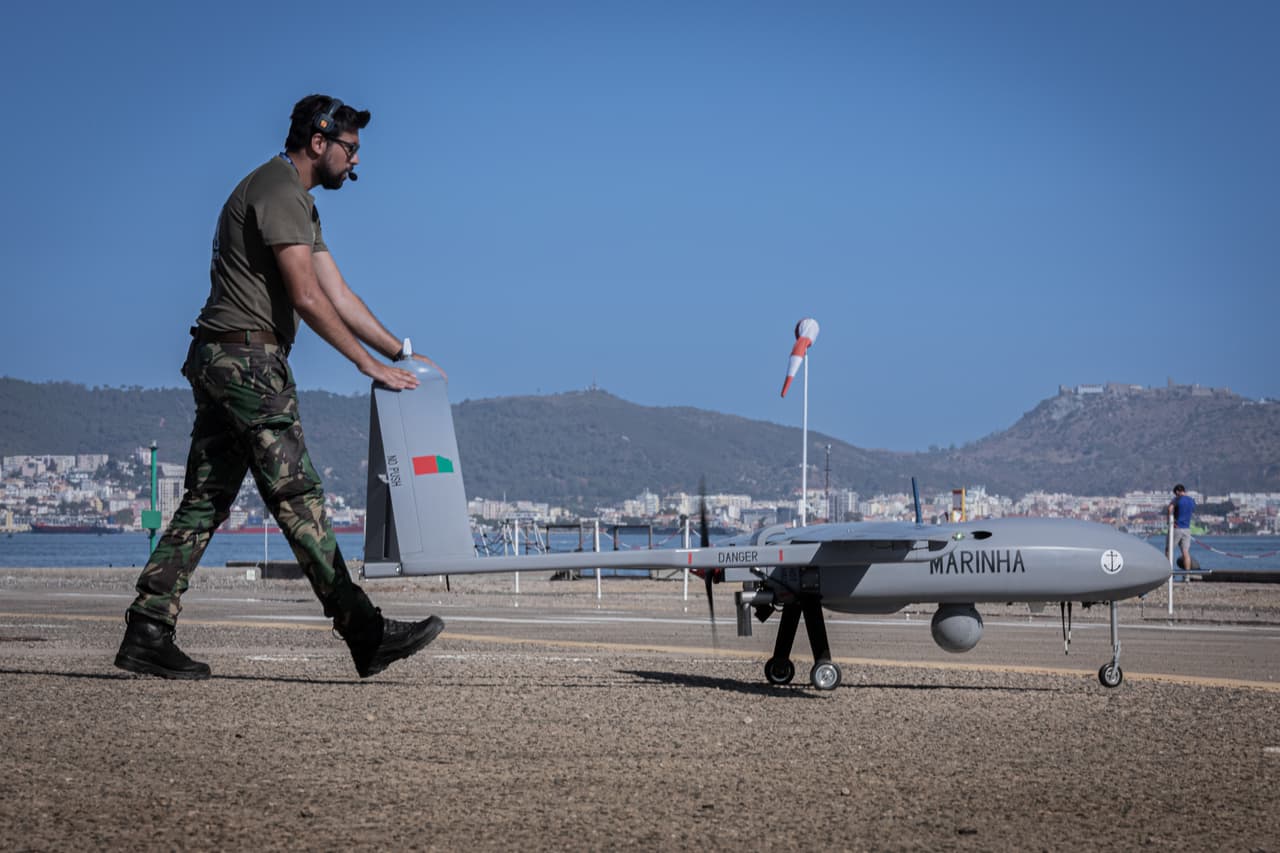
A Portuguese official demonstrating a UAV at REPMUS 2025. (NATO)
“We identify the current operational gaps that need to be filled with new technology, transforming those gaps into a challenge,” Commander Luís Quaresma dos Santos, Chief of Innovation and Transformation of the Portuguese Navy, told DSEI Gateway. These challenges are then presented to navies, industry, and academic partners.
Since its inception in 2010, REPMUS has expanded considerably, now involving more than 30 participating nations and over 3,000 SMEs, with more than 500 uncrewed systems tested during last year's event.
The commander explained that from very early on, Portugal understood the need to engage industry and academia in the process of developing new autonomous capabilities, offering direct feedback from end users so that system developers can adjust and improve their technologies as needed.
“Companies can then come back to REPMUS after a year with improvements, hopefully solving the challenges even better,” the commander said. He added that seeing innovations up close also allows the navies from participating – or sponsoring – nations to adjust potential procurement requirements in accordance with new technologies.
“This is a very symbiotic ecosystem with a win-win approach,” the commander said.
What are the costs of taking part?
Taking part in a demonstration can offer smaller companies, including SMEs, valuable insight into their capabilities – but the cost and impact on resources can be significant.
A REPMUS Information for Industry paper published in January 2024 states that industry participants are expected to attend at their own expense, unless the costs are covered by one of the sponsoring nations.
As NATO Innovation Broker, Hollants also noted that SMEs with more mature technologies with the purpose of selling their equipment, rather than to develop their kit, should be selective about the experimentations they attend. This is because procurement is not usually one of the outcomes from a demonstration.
“That is a dynamic that I see a lot – SMEs do not fully understand that exposure to end users and exposure to customers is not the same thing,” Hollants said.
This was echoed by the commander, who explained that while REPMUS is open to companies of all sizes, it is not intended as a sales event. “We are an opportunity for navies to, in a collaborative and cooperative way, develop future systems,” he said.
Major Modris Kairišs, head of the Autonomous Systems Competence Centre, which oversees the new NATO Innovation Range focused on uncrewed systems in Sēlija, Latvia, also emphasised this point to DSEI Gateway in May.
The Latvian range provides companies with facilities to test their uncrewed technologies and identify why failures may occur. However, Kairišs highlighted that some participants see the range “as an opportunity to sell their products, but it is not. This is a place where you can improve your products.”
Despite this, Jet Drones, one of the companies that took part in the experimentation at the Latvian NATO Innovation Range in May, said the event had helped raise its profile. “This event was a very big push for us, so that the military world knows Jet Drones is there,” Daniel Jacobs, a flight engineer at the company, told DSEI Gateway at the event.
Is it worth it for SMEs?
Although there is a cost to participation for SMEs, Hollants emphasised that the landscape of investment is changing in Europe. If companies perform well in an experimentation like REPMUS, they gain a ‘badge of honour’.
This was the experience that Euroatlas, a Germany-based SME, found after taking part in REPMUS in 2025, demonstrating its Greyshark autonomous undersea vehicle (AUV).
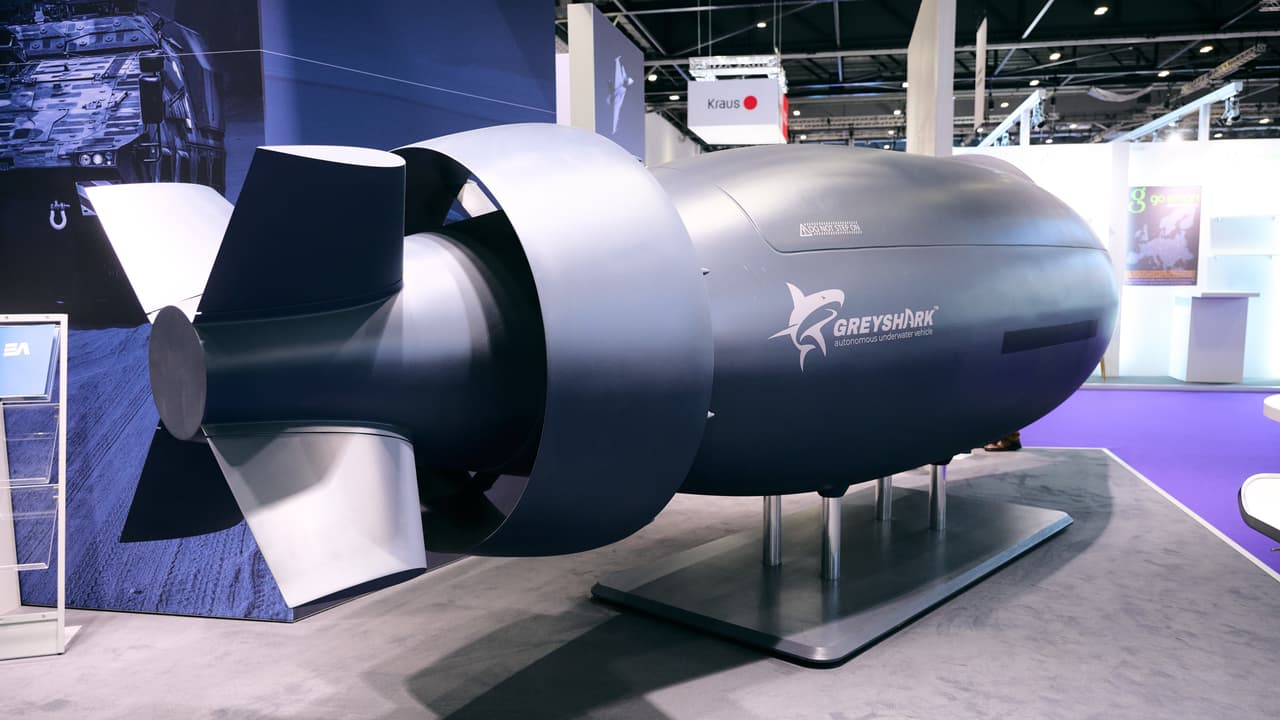
Euroatlas' Greyshark AUV at DSEI 2025. (DSEI Gateway)
“A capability that has successfully demonstrated at REPMUS carries far more weight than what we can communicate on our own,” Verineia Codrean, Chief of Strategy and Partnerships at Euroatlas, told DSEI Gateway. “For Greyshark specifically, we were able to showcase its autonomy, proving its navigation, communication, and sensor performance under realistic conditions.”
The data collected from REPMUS experimentations, she added, is available to navies in NATO. During bidding processes, the navies can confirm what companies claim their capabilities can do, lending them more credibility.
While the ‘badge of honour’ for taking part in experimentations like REPMUS is conceptual, NATO is currently undertaking work to formalise a similar idea. The alliance announced in May that it will be introducing new ‘Innovation Badges’ for technologies that undergo evaluations at its Innovation Ranges, which are intended to serve as a mark of quality.
Due to be introduced in September, these badges support NATO’s wider Rapid Adoption Action Plan, an initiative to accelerate the adoption of new defence technology.
This means that, although NATO does not view these demonstrations and experimentations as sales opportunities for companies, participation can continue to benefit SMEs long after the event.
What’s in it for SMEs?
The commander at the Portuguese Navy said that overall, REPMUS and similar experimentations should not be seen as a chance to showcase capabilities, but as part of the development journey.
“We want to see failure because that's where we can learn and improve technologies towards an operational level,” he said.
While first-hand feedback from end users is valuable to SMEs developing new technologies, simply participating in demonstrations can have long-lasting impacts, providing companies with the credibility needed to operate in the defence sector.
Victoria
Hanscomb
Editor, DSEI Gateway
Victoria Hanscomb is an Editor at DSEI Gateway, reporting on the defence industry. Her previous experiences as an Editor include covering the international security market and pharmaceutical sector.