
(Google Gemini AI)
EU launches EUR40m undersea cable repair challenge
The European Commission will also fund two hubs to protect undersea cables.
29 JUN 2026

By
Benjamin
Howe
Defence Journalist, DSEI Gateway
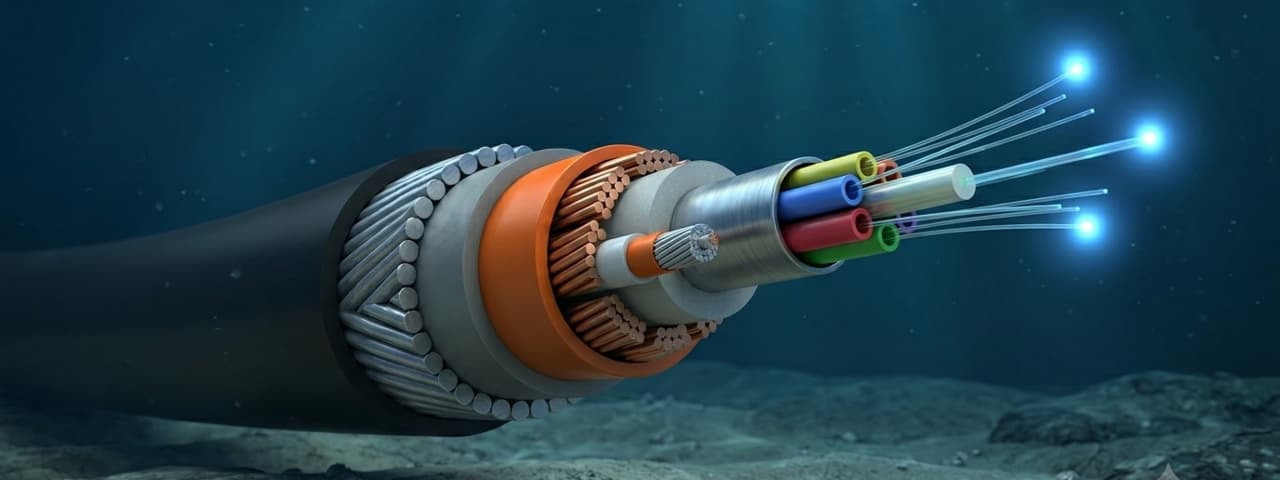
The European Commission has launched a EUR40 million undersea cable repair challenge as part of efforts to increase Europe’s capacity to repair critical undersea infrastructure (CUI).
Announced by the organisation on 23 June, the challenge calls for “adaptable [cable repair] modules” that can be “rapidly installed and deployed by existing repair vessels.” This is the second challenge of its kind, following a EUR20 million pilot call, launched in February 2026, which financed cable repair modules for the Baltic Sea.
Similar to the inaugural call, the new challenge sits under the EU Action Plan on Cable Security which seeks to “monitor, detect and respond to threats targeting” CUI, and support the resilience of Europe’s undersea cables.
(DSEI Gateway)
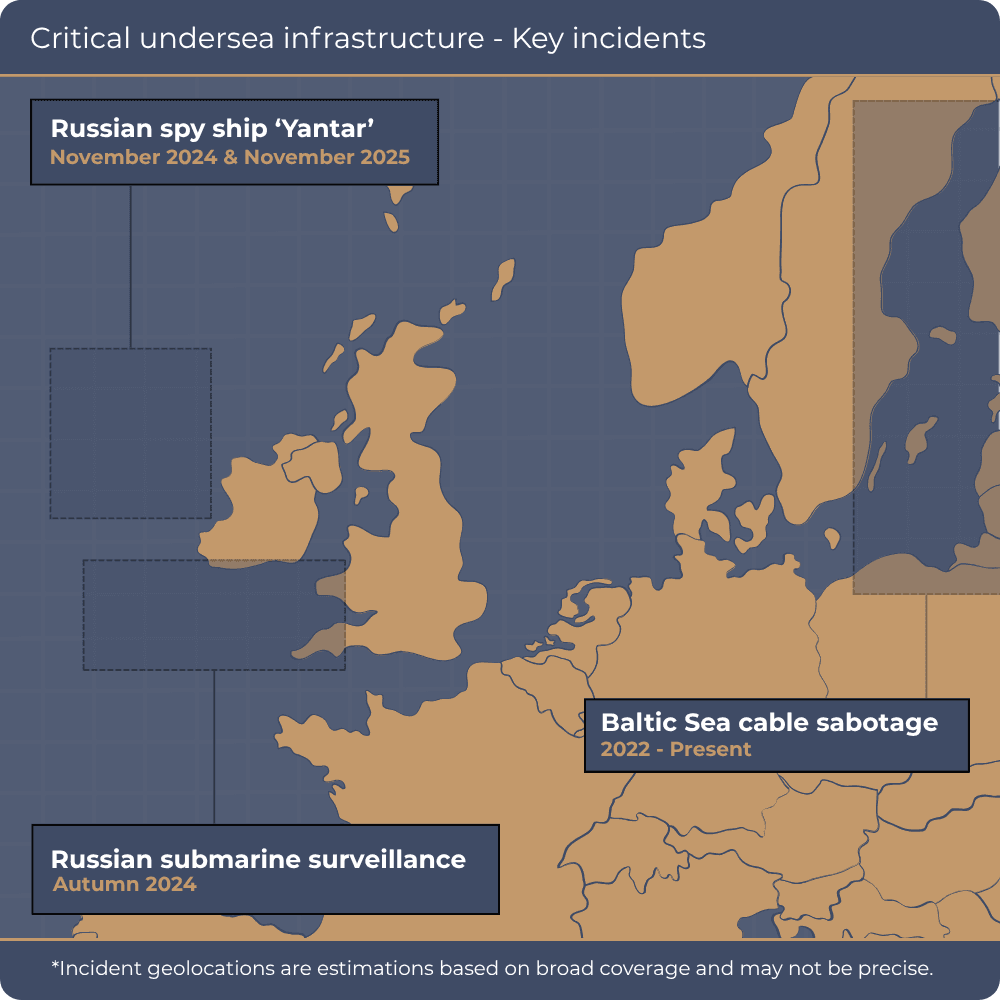
It follows several high-profile incidents in Europe over the past five years where undersea infrastructure sustained damage.
Funding for the challenge is being provided by the Connecting Europe Facility, an initiative to support “private investments in digital connectivity infrastructures between 2021 and 2027.”
Companies have until 8 October to submit their proposals.
New ‘Regional Cable Hubs’
On top of the challenge call, EUR5.8 million being allocated to establish two ‘Regional Cable Hubs’, one in the Baltic Sea and another in the Mediterranean.
The Baltic Sea hub is receiving EUR2.5 million to “reinforce regional surveillance and response mechanisms” for threats to CUI. The project will strengthen operation centres – both national and cross-border – and will improve the EU’s ability to “detect and prevent threats to critical marine infrastructure.” The Baltic effort will be led by Finland, with support from Denmark, Estonia, Germany, Latvia, and Sweden.
Meanwhile, the Mediterranean hub – which will receive EUR3.3 million in funding – will be tied to a “federated technological platform” that is intended to deliver timely “information exchange, anomaly detection, and coordinated incident response across borders.” Italy will lead this effort, supported by Cyprus, Greece, and Malta.
Taken together, the EU says these initiatives further its aim to develop a near real-time situational picture of sea basins, including the Atlantic, Baltic, and Mediterranean.
In pursuit of this, a further challenge will be launched in the autumn “to establish [additional] regional cable hubs in sea basins not yet covered”.
Benjamin
Howe
Defence Journalist, DSEI Gateway
Benjamin is a UK-based Journalist working for DSEI Gateway, having previously worked as a Content and Community Manager on Clarion's digital products.