

(DSEI UK)
AUKUS Pillar II: inside the advanced trilateral capability programme
DSEI Gateway explores the progress under AUKUS Pillar II – which has largely flown under the radar – and whether it is delivering on its promises.
02 NOV 2026

By
Victoria
Hanscomb
Editor, DSEI Gateway
While Pillar I of AUKUS – the programme to build a new class of nuclear-powered attack submarines – has attracted the most attention, a lesser-known element of the partnership is Pillar II.
Under Pillar II, the trilateral AUKUS partnership between Australia, the UK, and the US focuses on the joint development of advanced and interoperable technologies at a pace individual countries would struggle to achieve.
DSEI Gateway explores the progress made so far under Pillar II and whether the partnership is set up for success.
What is AUKUS Pillar II?
Pillar II was launched in 2021 and is specifically designed to accelerate the delivery of advanced capabilities, “with a particular focus on near-term warfighting objectives,” the Australian defence department says.
With the submarines under Pillar I expected to enter service in the UK in the 2030s and Australia in the 2040s, Pillar II is pitched as the part of AUKUS that will deliver capabilities sooner.
Pillar II initially had four focus areas, or workstreams: AI, cyber, quantum technologies, and undersea capabilities.
The number of workstreams was then expanded in April 2022 to include electronic warfare, hypersonic and counter-hypersonic capabilities, information sharing, and “innovation”.
A trilateral working group leads each workstream, overseen by a joint steering group, while senior officials provide “overall direction”.
An update in December 2023 also saw UK defence ministers announce that a “deep space advanced radar capability” was due to be developed under Pillar II, to bolster the identification of emerging threats from space. Construction of the first radar site in Western Australia was completed in December 2024, with sites in the UK and US expected by 2030.
A UK House of Commons Research Briefing from 2024 noted that it was “unclear” whether this was a new workstream under Pillar II. Neither Australia nor the US has acknowledged it as such.
What progress has been made under Pillar II so far?
AI
AI is increasingly becoming a priority for militaries, providing enhanced operational efficiency and decision-making. However, different countries offer strengths in specific areas, making the pooling of industrial bases and capabilities key to its accelerated development.
Considering this, the first trial under AUKUS Pillar II, held in April 2023, tested trilaterally developed machine learning models on UAVs. Organised by the UK’s Defence Science and Technology Laboratory, the AUKUS Resilient and Autonomous Artificial Intelligence Technologies (RAAIT) trial saw the live retraining of AI models in flight. It also tested the interchange of models between the AUKUS nations.
A second RAAIT trial took place in March 2024, when autonomous and AI-enabled sensing systems were deployed as part of the US Army-led multinational Project Convergence operational exercise. These trials saw the systems tested in a multi-domain battlespace, to minimise the time between sensing and responding to a threat. The datasets and models developed under this trial were interoperable, designed to be shared across all three nations.
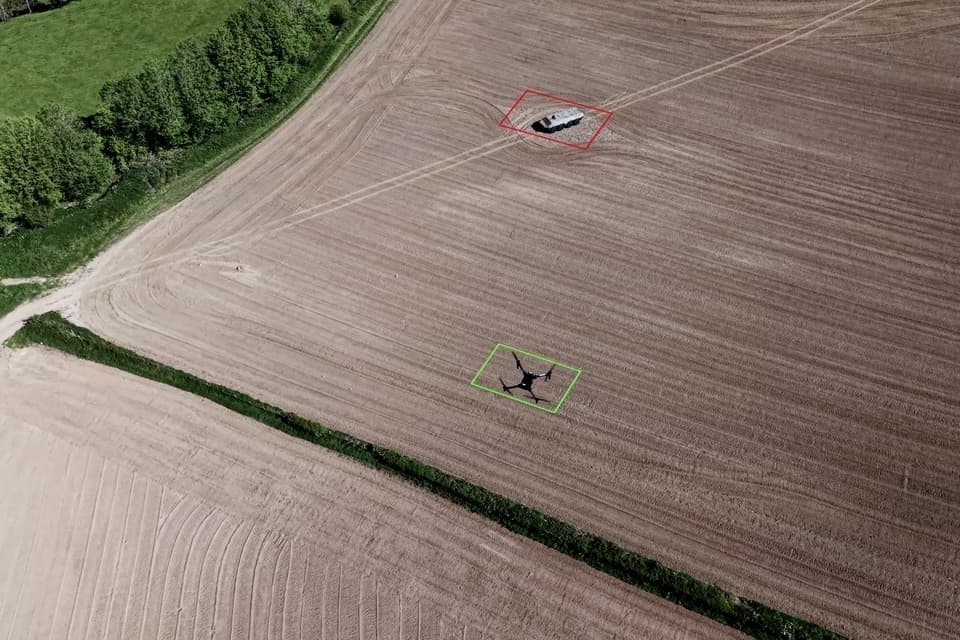
A drone and ground vehicle from the Software Defined Swarms Concept Demonstrator. (Defence Science and Technology Laboratory)
The Australian defence department says that through AUKUS Pillar II, the partner nations are “exploring opportunities for the use of AI, maximising its benefits while managing its risks.” This will help to improve decision-making and keep warfighters safer.
More recently, in September, the UK Government revealed that, under the first phase of its Software Defined Swarms Concept Demonstrator, the British Army had successfully experimented with a drone swarm, building on “joint activity” under AUKUS Pillar II. However, this particular exercise was a UK-led experiment – specifically intended to aid the intelligence, surveillance, and reconnaissance (ISR) abilities of the country’s army.
Electronic warfare
The war in Ukraine has underscored the operational importance of electronic warfare, including disrupting adversary communications and navigation while protecting friendly systems from similar interference.
To this end, the three respective nations under AUKUS launched a challenge in March 2024 focused on developing electronic warfare innovations, as well as capabilities that provide a “competitive advantage” to electromagnetic targeting. The challenge was managed as three separate competitions by the Advanced Strategic Capabilities Accelerator in Australia, the Defence and Security Accelerator in the UK, and Defence Innovation Unit in the US.
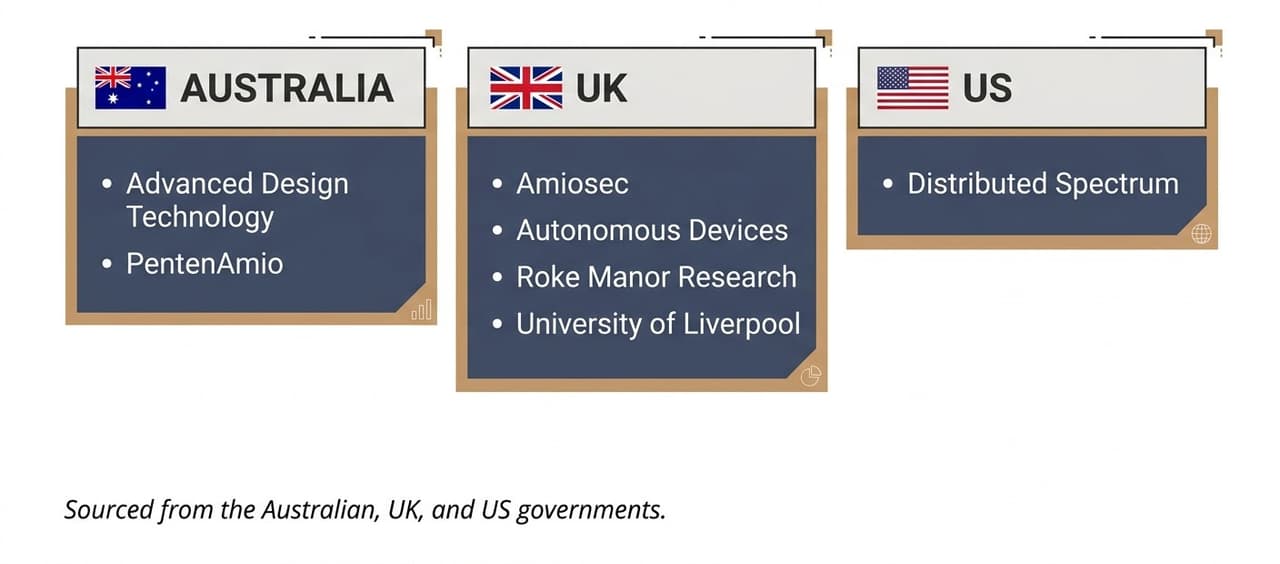
The winners of the electronic warfare challenge. (DSEI Gateway)
The winners from Australia won contracts worth a combined AUD8 million (GBP4.2 million), while the UK winners each received a share of GBP2 million, and the US winner USD150,000.
While interoperability and interchangeability were listed as two of the capability considerations for this challenge, a siloed approach meant that each of the nations selected the winners.
Maritime and undersea capabilities
Operations and deterrence in the maritime domain are central to AUKUS. Like other maritime nations, the three partners are increasingly interested in autonomous systems, which can help sustain a persistent presence in contested environments.
A key part of this effort is the AUKUS Pillar II Maritime Big Play initiative, which serves as an operational experimentation model to rapidly test, integrate, and operationalise autonomous and uncrewed maritime systems.
Under this initiative, all three nations participated in Exercise Autonomous Warrior in October 2024 in Australia. The joint programme focused on testing asymmetric capabilities, including technologies that deliver strike capabilities and persistent ISR.
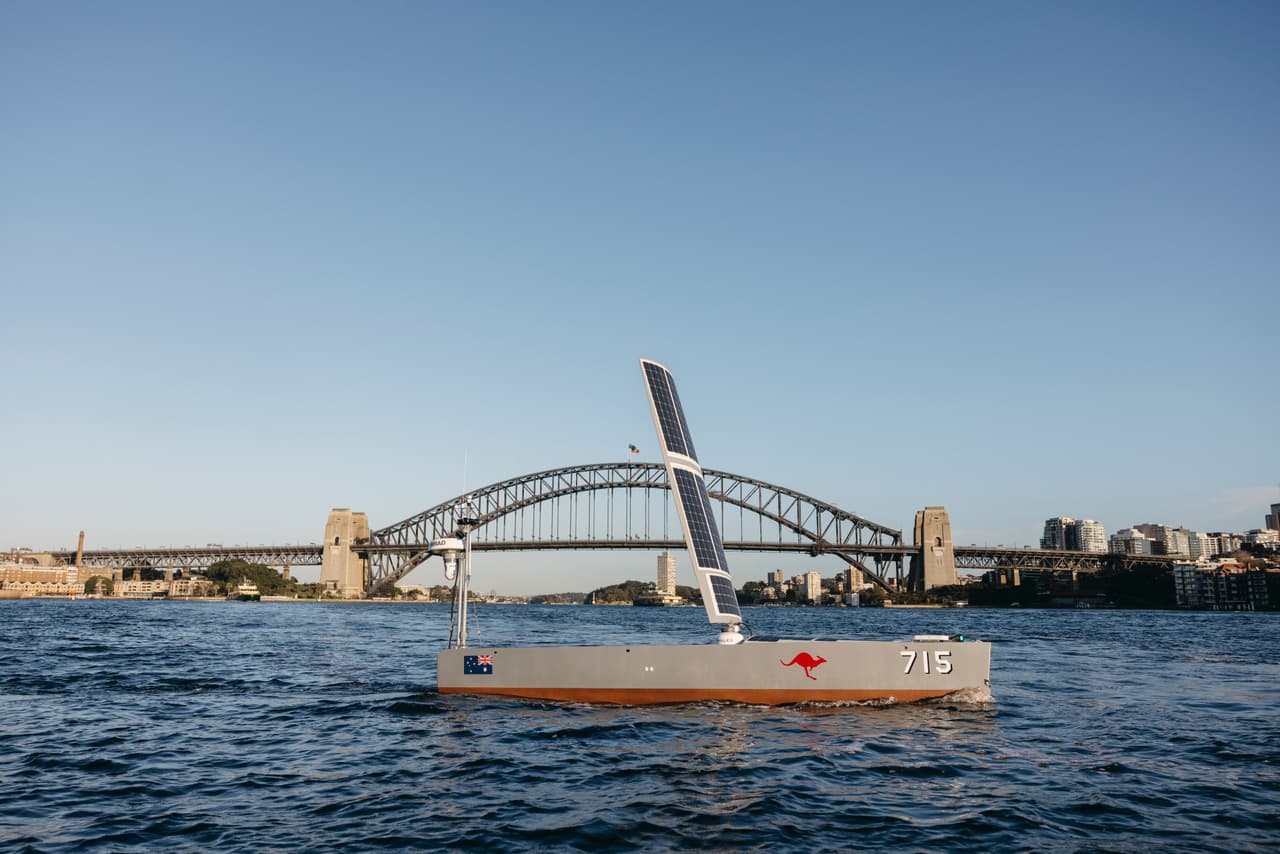
The Ocius Bluebottle vessel. (Ocius)
Around 30 UAVs, uncrewed vessels, submersibles, and submarine-hunting sonobuoys from the three partner nations were deployed. In particular, Australia deployed the Ocius Bluebottle uncrewed surface vessel, which is used for low-observable surface and undersea ISR.
Another key exercise held in Australia that tested AUKUS Pillar II technologies was Exercise Talisman Sabre – Australia’s largest multilateral military exercise, held in July and August 2025. The partners embedded a dedicated Maritime Big Play experimentation window within the exercise to test their ability to communicate with autonomous undersea systems.
Notably, Japan was involved in the exercise – its first active, non-observer participation in an AUKUS Pillar II project.
“By working together on these essential technologies, Maritime Big Play is redefining how uncrewed systems are used in the maritime domain as a trilateral force,” the Australian defence department says.
Another maritime activity under Pillar II included the testing of subsea and seabed warfare capabilities by the Australian and US navies during Exercise Rim of the Pacific 2026, off the coast of Hawaii in July. While the results of this test are also available to the UK, the country was not directly involved in the AUKUS-related activities.
Quantum technologies
As another workstream, quantum technologies represents a fundamental leap in defence capabilities, offering significantly enhanced sensing, navigation, computing, and communications.
However, the technology remains relatively experimental for the military. To advance its development, in June and July 2025, the AUKUS partners collaborated with the Naval Research Lab in Washington, DC to test quantum optical atomic clocks.
These are intended to aid operations in environments where GPS navigation cannot be used.
Four clocks from Australian organisations were tested, while organisations from the US contributed a further four. The UK did not directly participate in the trial, despite UK quantum startup, Aquark Technologies, having developed the UK’s first industrially designed and built cold-atom atomic clock.
What has Pillar II achieved so far?
While there has been some capability development and testing under AUKUS Pillar II, there has been criticism that this part of the programme has been too siloed. According to the UK Royal United Services Institute think tank, success of AUKUS Pillar II depends on the “close cooperation” of the partner nations, but the practicalities of collaboration are “unclear and untested”. While many of the exercises have been jointly led, the challenges and projects remain nationally driven.
One way in which collaboration has been improved since the start of Pillar II is through the easing of export regulations. In particular, the US International Traffic in Arms Regulations (ITAR) typically limits the import and export of defence-related technology and capabilities. However, in August 2024, the US approved a new exemption for ITAR, removing the need for these licences between authorised users in Australia, the UK, and US.
In April, the UK also announced a licence update to permit the export of dual-use and military goods or technologies between the three AUKUS nations, further promoting collaboration.
However, further scrutiny has been placed on Pillar II regarding its ability to deliver capabilities at a rapid pace. A UK House of Commons committee report from April 2026 said that one of the key challenges facing Pillar II was a lack of progress. The briefing cited that “frustration" during Pillar II was “exacerbated” by a scarcity of tangible results.
Following these criticisms, the first Pillar II signature project was announced in May 2026, ensuring a clearer more targeted focus.
The project will be delivered under a phased approach: first developing “interchangeable national payloads” and then progressing to “joint trilateral next-generation payloads,” the UK government says.
According to former UK defence secretary, John Healey, the project was “backed by the very best of the defence industry and innovations in all three nations.” Notably, the first deliveries expected as a result of this project are expected in 2027, at an accelerated pace.
What is next for AUKUS Pillar II?
In the future, AUKUS could grow through the addition of further partner countries. In April 2024, defence ministers from Australia, the UK, and US released a joint statement, saying that they were “considering” cooperation with Japan on Pillar II projects. Other countries, such as Canada, New Zealand, and South Korea are also actively involved in conversations to collaborate on AUKUS Pillar II projects.
However, the House of Commons report noted that more partners would add a layer of complexity and negotiation to what is already a “difficult task”. For now, the partnership remains a trilateral one.
Has AUKUS Pillar II been effective?
Having been established for five years, the level of progress made under Pillar II has been placed in the spotlight. The committee report in particular “concluded overwhelmingly” that Pillar II had “failed to deliver on its promise”. The report recommended the trilateral partners agree on priority projects to focus development, and further clarity around funding mechanisms.
With additional projects expected to be announced and further tests to take place as part of AUKUS Pillar II, the nations should leverage the joint foundation of the partnership and allow for the accelerated delivery of advanced capabilities.
Victoria
Hanscomb
Editor, DSEI Gateway
Victoria Hanscomb is an Editor at DSEI Gateway, reporting on the defence industry. Her previous experiences as an Editor include covering the international security market and pharmaceutical sector.