
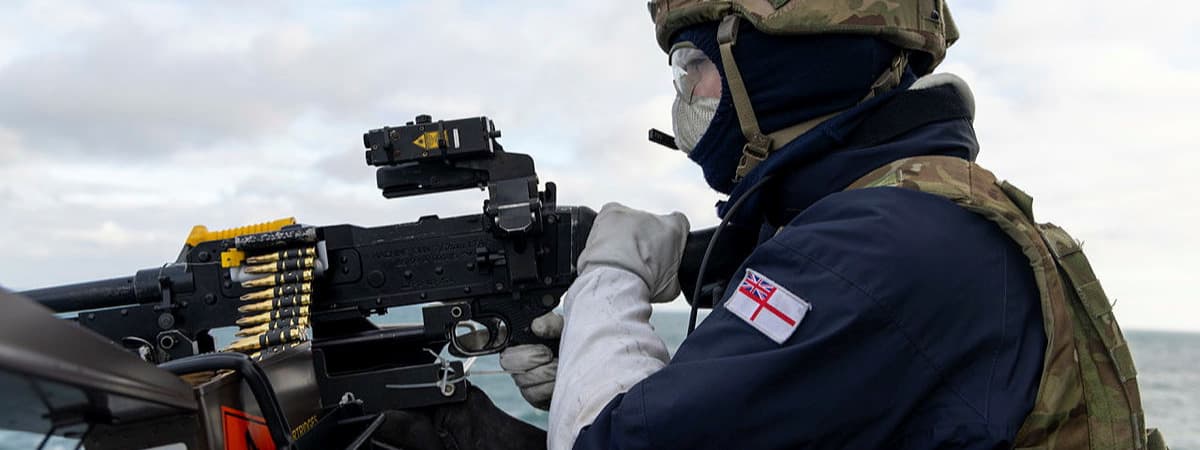
An upper deck weapon crew in the Royal Navy engages a drone during Exercise Sharpshooter. (UK MoD Crown Copyright 2026)
The maritime threat: cutting the cost of countering uncrewed systems
DSEI Gateway spoke to NATO and industry leaders to discover how they are fast-tracking uncrewed tech to secure the maritime domain.
22 APR 2026

By
Olivia
Savage
Editor in Chief, DSEI Gateway
Uncrewed systems are a pervasive threat.
In the Ukraine conflict, drones now account for approximately 70-80% of all combat casualties, according to the military think tank Royal United Services Institute.
Beyond land operations, Ukraine has demonstrated the efficacy of uncrewed surface vessels (USVs), having severely degrading the operational effectiveness of Russia’s Black Sea Fleet, despite not having a conventional navy of its own.
Russia has struggled to counter this asymmetric shift, often having to rely on ship-borne machine guns to eliminate incoming USVs.
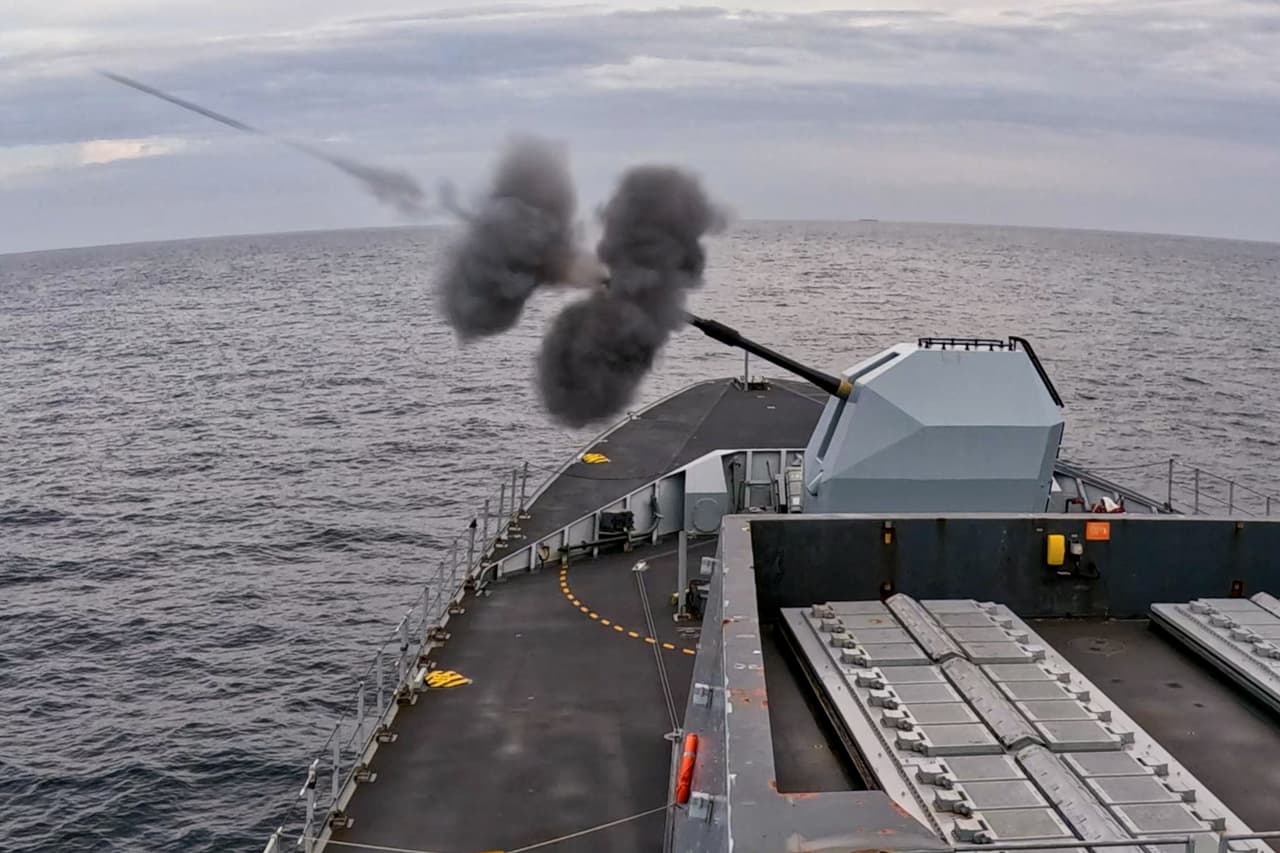
A 4.5' gun engaging incoming drone threats during Royal Navy Exercise Sharpshooter. (UK MoD Crown Copyright 2026)
Meanwhile, in the Middle East, uncrewed systems have posed a persistent threat to regional stability.
Non-state actors, such as the Houthis, have successfully deployed one-way attack systems to target NATO vessels and commercial shipping in the Red Sea – though activity has stabilised following the Gaza ceasefire in October 2025.
Recognising the threat these systems can pose, Iran has similarly been deploying its one-way attack UAVs to disrupt global shipping trade in response to US military action.
To counter this aerial uncrewed threat, navies are being forced to expend sophisticated interceptor missiles, some costing nearly USD1 million a unit, to neutralise systems that cost around USD50,000.
This growing economic and tactical disparity highlights the urgent need for more sustainable maritime defence solutions.
To explore the strategies and technologies tackling this pervasive threat, DSEI Gateway spoke with the Chairman of NATO’s Naval Armaments Group (NNAG) and a leading technical expert from the industry consortium developing the UK’s DragonFire directed energy weapon, which promises to cheaply counter this threat.
Inside NATO's response to the maritime uncrewed threat
Countering uncrewed systems is the top priority for NNAG, Rear Admiral lower half (RDML) Paul Flos, the chairman of the agency, told DSEI Gateway.
This stems directly from operations in both the Black and Red Sea, which underscored the threat posed by USVs and UASs, respectively, he said.
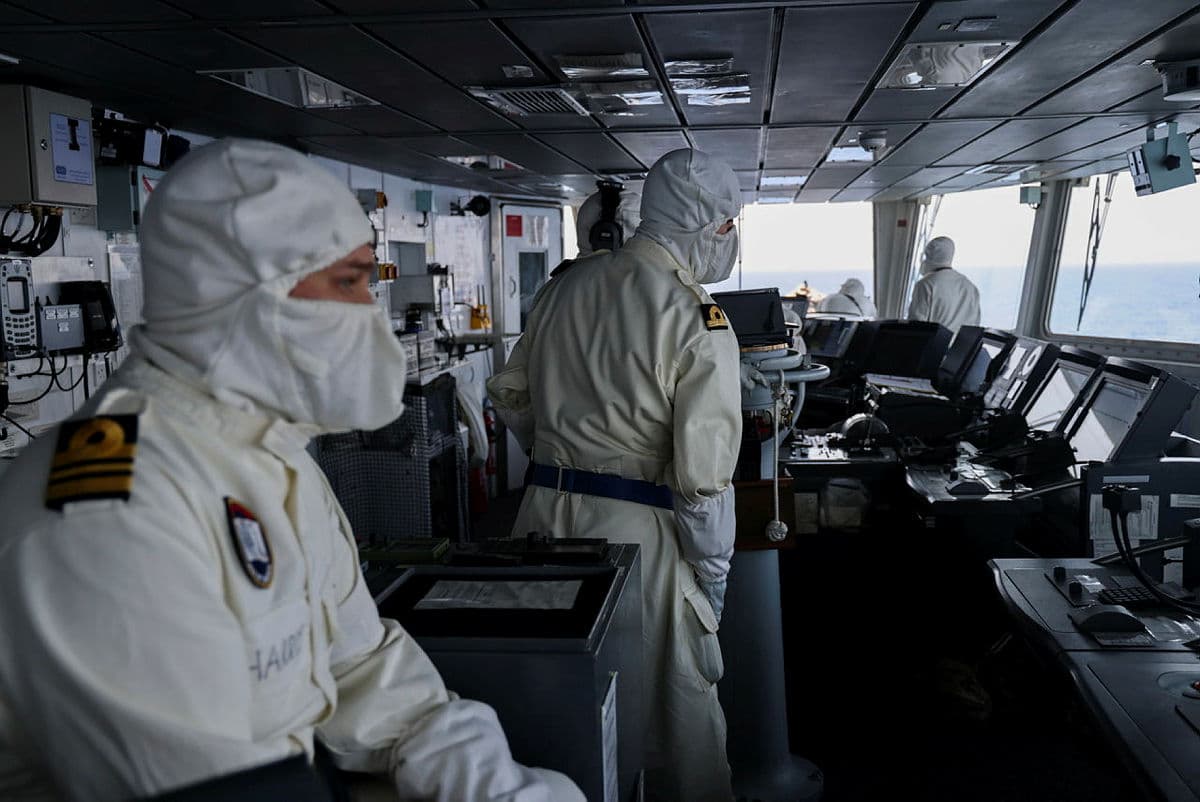
HMS Diamond’s Bridge team shooting down a missile fired by the Houthi forces in the Red Sea in 2024. (UK MoD Crown Copyright 2024)
NATO “must be ready for war in 2028… [and] we need to counter both [uncrewed systems] in any future war,” he acknowledged.
To rapidly meet this threat, a new NATO-led competition will launch this year to quickly identify, test, and procure relevant off-the-shelf industry capabilities, he said.
At the heart of this effort is an operational challenge designed to assess industry capabilities, rather than pursuing a multi-year development programme that costs time.
While Canada is leading the competition, many other countries are involved, including Italy, the Netherlands, and the UK.
A meeting took place in March to define the approach and the operational requirements ahead of the challenge which, he envisages, will take place before the summer. No funding has been confirmed yet.
The ultimate goal is a joint procurement of the most successful system(s). However, he noted that a contract will not immediately follow the challenge due to the complexities of differing procurement laws among NATO allies.
Therefore, a tender will subsequently follow, with the best candidates then invited to participate.
He acknowledged that while this tiered approach is "less fast" than a direct award, it remains more agile than standard procedures and is still capable of meeting their urgent operational demands.
Agile procurement in action
This new challenge-led procurement approach is gaining traction among NATO members.
By prioritising the iterating and testing of capabilities alongside military end-users in real-world environments, equipment – in theory – is more tailored to and reaches the warfighter faster.
The Netherlands and the UK have been trialling this method already.
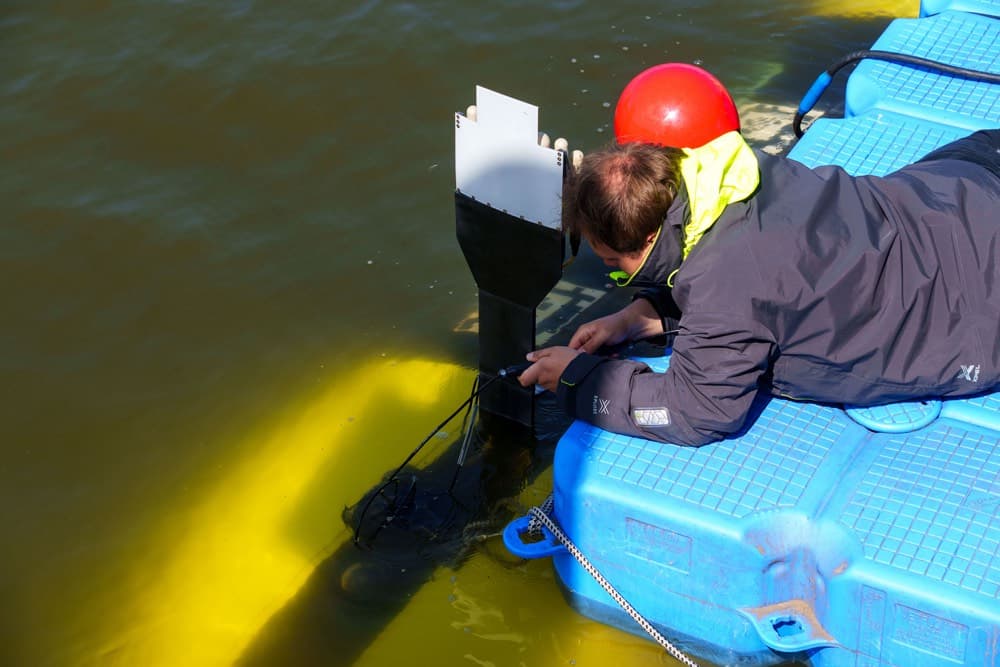
20 commercial organisations participated in SeaSEC off the coast of Scheveningen near The Hague. (SeaSEC)
For example, the Seabed Security Experimentation Centre (SeaSEC) held ‘Challenge Weeks’ last year, where industry partners demonstrated and stress tested their technologies in the North Sea with military partners. In turn, enabling them to iterate and further develop their systems.
SeaSEC is a collaborative hub of six defence ministries, including the Netherlands, dedicated to protecting critical undersea infrastructure.
The UK has similarly been trialling this procurement model.
Most notably with its Heavy-Lift Challenge, held between 2021-2022, which adopted the approach to accelerate the development of autonomous heavy-lift UAS.
Following a downselection process, two UK companies – Malloy Aeronautics and Windracers Autonomous Systems – emerged as frontrunners, winning funding to develop their systems further. The platforms were then involved in exercises with the Royal Navy and Royal Marines.
Not all onboard
However, some countries are not quite bought into this procurement model, RDML Flos acknowledged, adding that some countries could drop out of the new NATO competition.
“It’s always difficult when leading an international programme, especially when its new.”
Even at the national scale, when the Netherlands originally trialled this approach, industry was initially reluctant – but then they bought into the idea, he added.
While this procurement approach brings industry closer to the end user, a contract needs to be in place by the end of the programme to give vendors confidence that participation will translate into tangible business.
Therefore, by not having a contract at the end of the NATO-led challenge, some industry may be reluctant to get involved.
Complementing these NATO-wide efforts is a mature UK programme developed in close collaboration with industry to create a new laser directed energy weapon (LDEW).
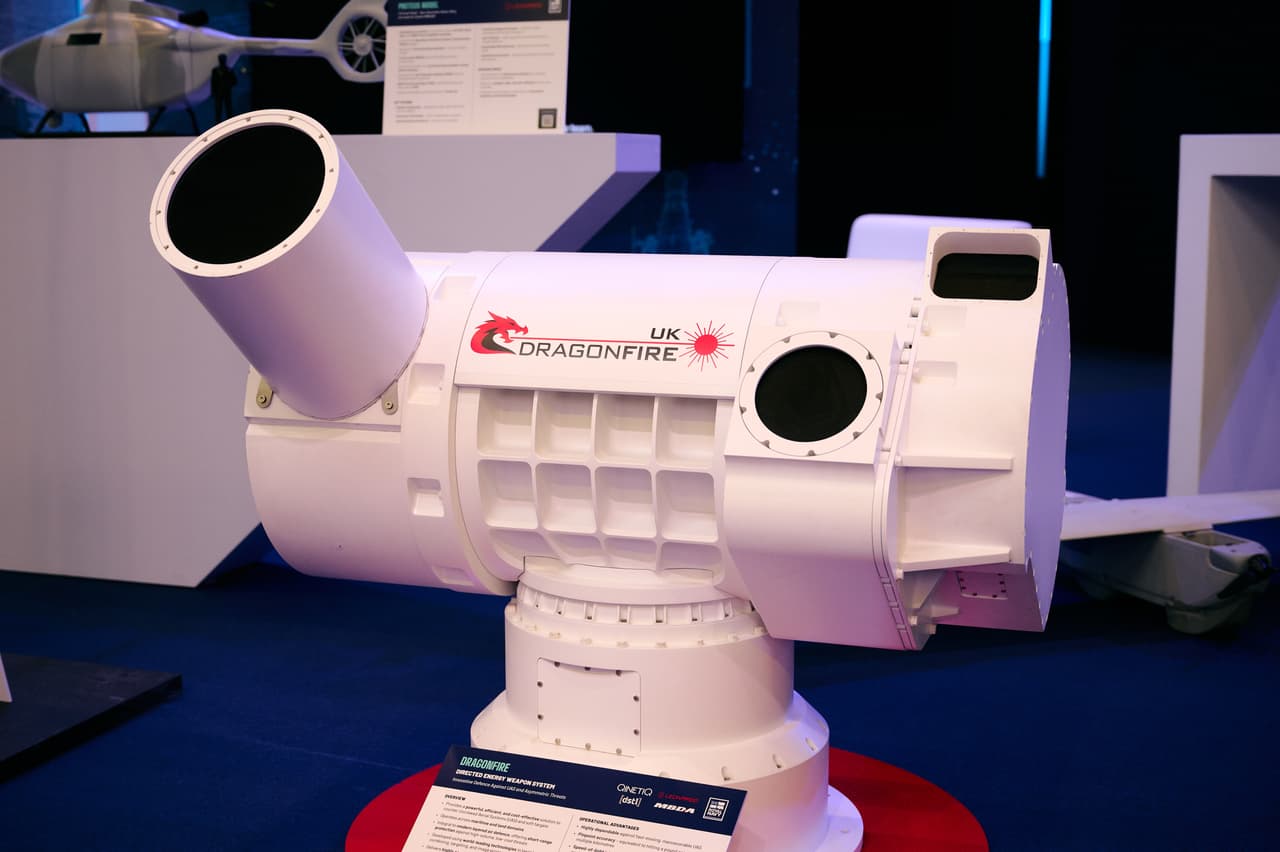
The Dragonfire LDEW at DSEI UK 2025
DragonFire: a low-cost answer to maritime uncrewed threats
Known as DragonFire, the system is designed for the rapid, low-cost neutralisation of drones, mortars, and other aerial threats and will be equipped onboard the Royal Navy’s Type 45 destroyers.
MBDA, Leonardo, and QinetiQ are working with the UK’s Defence Science and Technology Laboratory to deliver the LDEW, which is expected to enter service onboard the destroyers in 2027.
In the most rudimentary sense, the system works by firing a “huge beam of energy which overwhelms the electronics and/or its structure,” Graeme McNaught the Campaign Manager for EO, Infrared and Laser Directed Energy at Leonardo informed DSEI Gateway.
By harnessing a laser, DragonFire is a much cheaper way to neutralise aerial and surface threats than interceptor missiles, he emphasised.
Some interceptor missiles can cost USD1 million a unit, whereas a single burst from DragonFire costs less than GBP10 per shot, according to Leonardo.
DragonFire “protects the magazine”, McNaught said, adding that it also offers the Royal Navy “lots of flexibility” to eliminate threats.
For example, it can be programmed to engage different targets with different effects, allowing operators the option to disable or destroy the threat.
However, the system must be in line-of-sight, meaning navies have a relatively short engagement window.
Additionally, the maritime environment presents challenging hurdles. In high-seas, maintaining a precise lock can be challenging.
When asked about these challenges, McNaught said DragonFire had proven capable of operating in challenging conditions during trials.
What’s next
“We’re in the build sequence now for production,” McNaught said, following trials last year when DragonFire neutralised 30 drones.
Lessons learned from the trials are now also being fed into the production of the system, he continued.
Aside from the technical capabilities, the technology is energising industry, with many companies involved or wanting to get involved in the programme, he said.
“There’s lots of interest in it”.
This includes other countries, although due to sensitivities he was not able elaborate on this.
Once these systems enter service at scale, they will fundamentally reshape how navies operate at sea. Warships will be able to stay on station for longer because they won’t be “exhausting their kinetics”, he concluded.
Together, these two programmes are promising efforts to tackle a very real, serious threat. However, it is concerning that many navies and militaries are largely reacting to the uncrewed revolution as it happens, rather than having anticipated and prepared.
Olivia
Savage
Editor in Chief, DSEI Gateway
Olivia Savage is the Editor in Chief of Clarion Defence & Security, organisers of DSEI and other defence events. Previously, she was a Senior Defence Journalist at Janes, specialising in electronic warfare, uncrewed systems, and space.