

MGI Engineering’s TigerShark deep-strike capability developed under Project Brakestop. (MGI Engineering)
Project Brakestop: providing long-range strike systems to Ukraine
DSEI Gateway explains the UK’s initiative to develop and deliver low-cost, long-range strike capabilities to Ukraine.
09 SEP 2026

By
Victoria
Hanscomb
Editor, DSEI Gateway
Since the full-scale conflict between Russia and Ukraine began in February 2022, Ukraine has required significant aid from its allies.
To answer this need, countries across Europe and beyond have provided Ukraine with loans, grants, and military capabilities.
The UK in particular has committed GBP25 billion to Ukraine as of August 2026, of which GBP16 billion has been allocated towards military support.
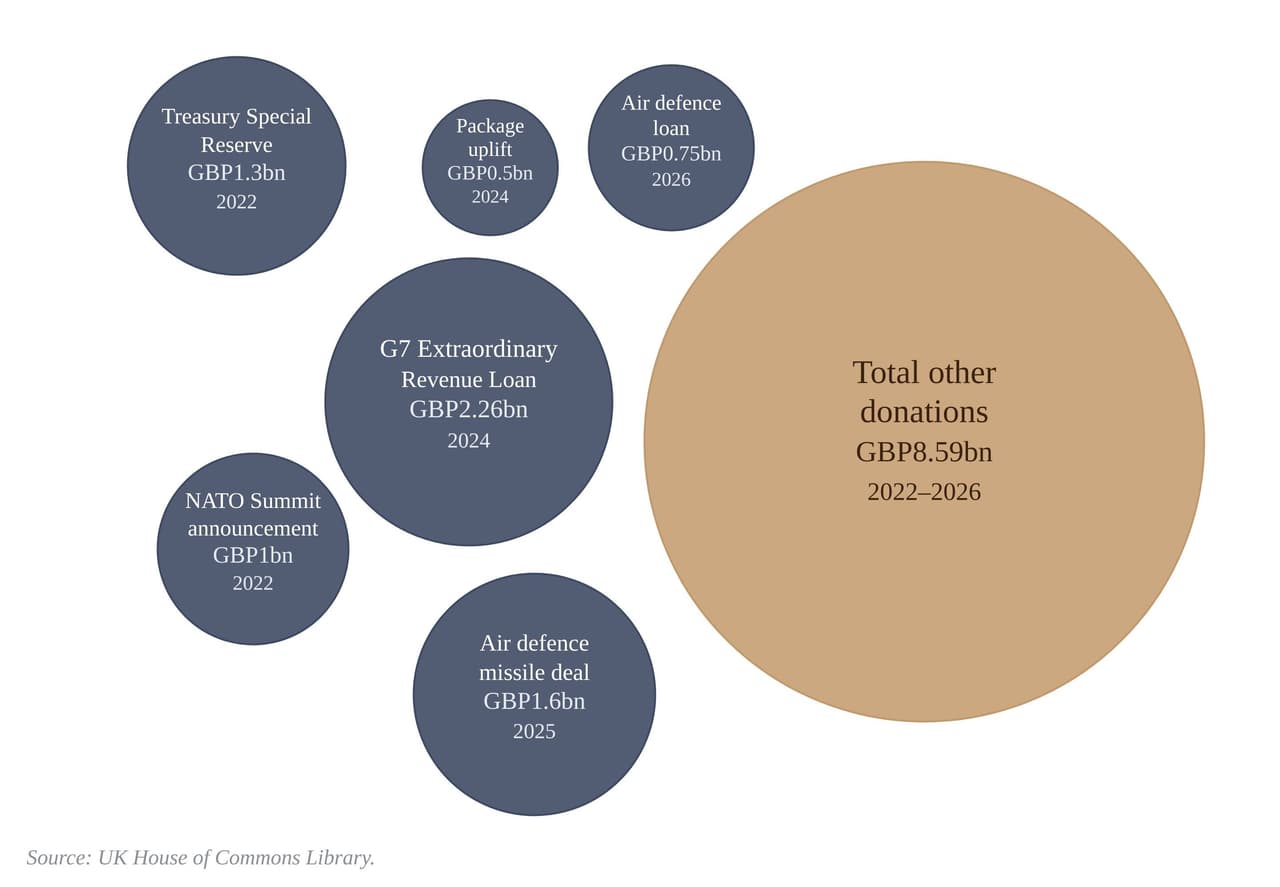
UK military assistance to Ukraine 2022-2026. (DSEI Gateway)
This UK military support has included the donation of Storm Shadow long-range air-launched missiles in May 2023, and the creation of the Drone Coalition with Latvia in February 2024 to scale up and accelerate the delivery of uncrewed systems to Ukraine. Companies in the respective coalition countries can bid to supply equipment to Ukraine under the programme.
More recently, in June, the UK announced that it would deliver 150,000 drones to Ukraine by the end of the year via a GBP752 million funding package.
What is Project Brakestop?
This support for Ukraine often contributes to a broader effort to strengthen the UK's defence industrial base. Project Brakestop, first announced in September 2024, is a clear example, which aims to rapidly discover, test, and field low-cost, long-range ground-launched strike capabilities to deliver to Ukraine. These one-way effectors are being rapidly developed to meet Ukraine's high demand for weapons that can strike critical military targets deep within Russian territory.
Project Brakestop additionally aims to identify suppliers that can deliver these capabilities at an accelerated pace. The UK Ministry of Defence (MoD) says that the project will also help it to understand the potential capabilities of one-way effectors for the longer term.
The country's Defence Investment Plan – released in June – says that it is now "pivoting to the next generation of low-cost cruise missiles".
Still ongoing, the one-way effectors developed under Project Brakestop will support this goal. The project has so far seen a range of companies develop and test prototype one-way effectors, from SMEs MGI Engineering and Rotron Aerospace, and MBDA UK.
What are Project Brakestop’s requirements?
Project Brakestop was launched by the MoD’s Taskforce Kindred. Established in March 2022, the taskforce manages requests from the Ukrainian Armed Forces and works with Defence Equipment & Support – part of the UK’s National Armaments Director Group – to source the required capabilities.
A prior information notice – published by the MoD in September 2024 – set out the requirements for a tender released in October of the same year. In the notice, the MoD says that the effector could be a missile, drone, or other technology travelling via any trajectory. The notice specified that the effector needs to be able to deliver payloads of up to 300kg, while travelling distances of at least 600km and at speeds of approximately 600km/h.
According to the notice, the effector must also be capable of being “safely ground launched” from a mobile platform and accurately striking “user-programmed” targets.
Other requirements for the effector listed in the notice include the ability to operate in harsh physical and contested environments, at day and night. The MoD says that the strike capability should also be resistant to electronic warfare attacks and spoofing.
Spiral development was another requirement specified by the MoD in the prior information notice – a common approach with many UK procurement programmes
A minimum of 20 units a month at a cost of GBP400,000 each was listed as the expectation, although the MoD anticipates it will increase the number of units acquired.
The project will be prioritising scalability over exquisite solutions.
– the UK MoD
In the tender, the MoD says that during testing, the payload and casing, fusing/initiation device, test range and facilities, and advice for SMEs were to be provided by the government. The ground-based launch vehicle was also to be provided.
Project Brakestop progress so far
Following the release of the tender, the MoD received a total of 27 bids from industry. The defence ministry then carried out “detailed technical assessments” and held pitches in February 2025.
From this, six companies were awarded contracts under Project Brakestop worth approximately GBP5 million each. This funding was then used to build and develop prototype systems, with the aim to test the capabilities within seven months.
By December 2025, only MBDA UK, MGI Engineering, and Rotron Aerospace remained in the running and progressed to flight testing. The companies’ systems were all successfully tested at the MoD Hebrides Range, a specialist site for trials managed by defence company QinetiQ.
What capabilities are in the running?
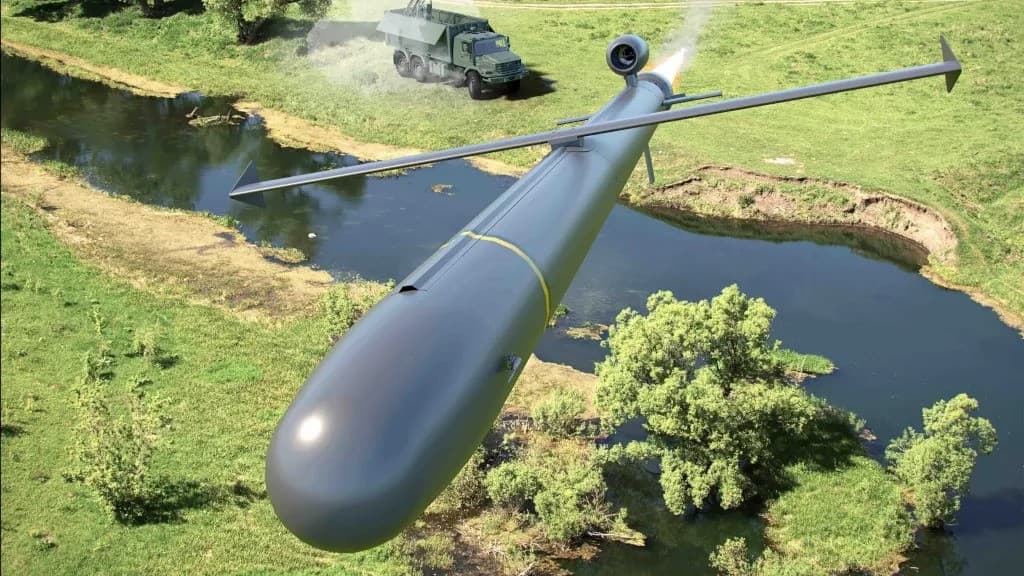
A rendering of MBDA’s Crossbow one-way effector. (MBDA)
While MBDA UK has not publicly disclosed the name of the capability it is developing under the project, its ‘Crossbow’ one-way effector – revealed at DSEI UK in 2025 – matches the Brakestop specifications set out by the MoD. Crossbow is a deep-strike capability that can deliver payloads of up to 300kg at ranges of over 800km.
Meanwhile, MGI Engineering has developed its ‘TigerShark’ deep-strike system as part of Project Brakestop. The company showcased the system at an MoD industry event in June to highlight progress on the project.
Meanwhile, MGI Engineering has developed its ‘TigerShark’ deep-strike system as part of Project Brakestop. The company showcased the system at an MoD industry event in June to highlight progress on the project.
According to the company, TigerShark is designed as an “affordable and scalable” one-way effector that can operate autonomously via an open architecture software.
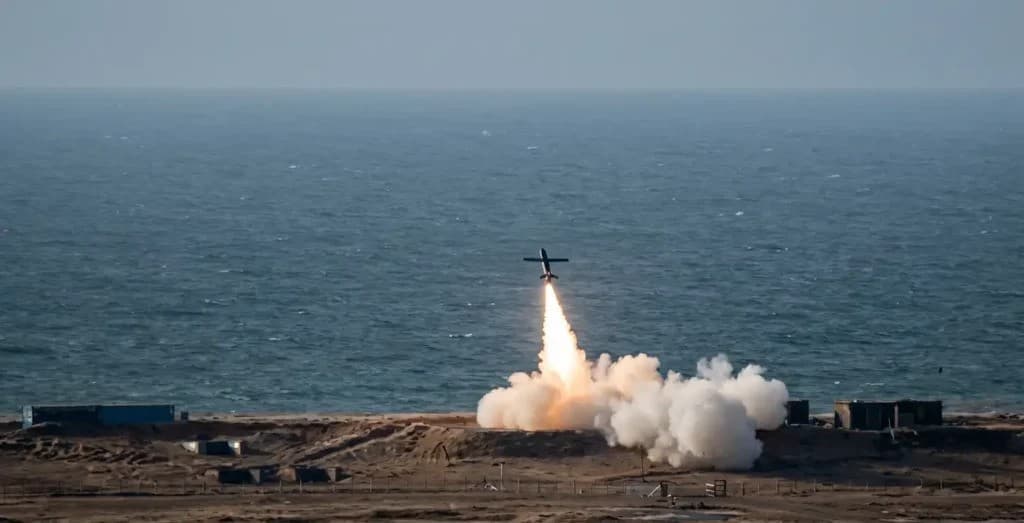
MGI Engineering’s TigerShark deep-strike capability. (MGI Engineering)
The company says that the platform is capable of carrying payloads of up to 300kg and travelling at speeds of up to 750km/h, with a range of 900km.
“Advanced navigation technologies” enable TigerShark to operate effectively in contested conditions, MGI Engineering says.
Lastly, Rotron Aerospace, a subsidiary of dual-use company Ondas, is also developing a low-cost one-way effector under Project Brakestop named ‘SkyLance’.
Rotron Aerospace says that a “key differentiator” of SkyLance is its advanced propulsion technology, which provides a “substantially greater operational range” than other systems in its class.
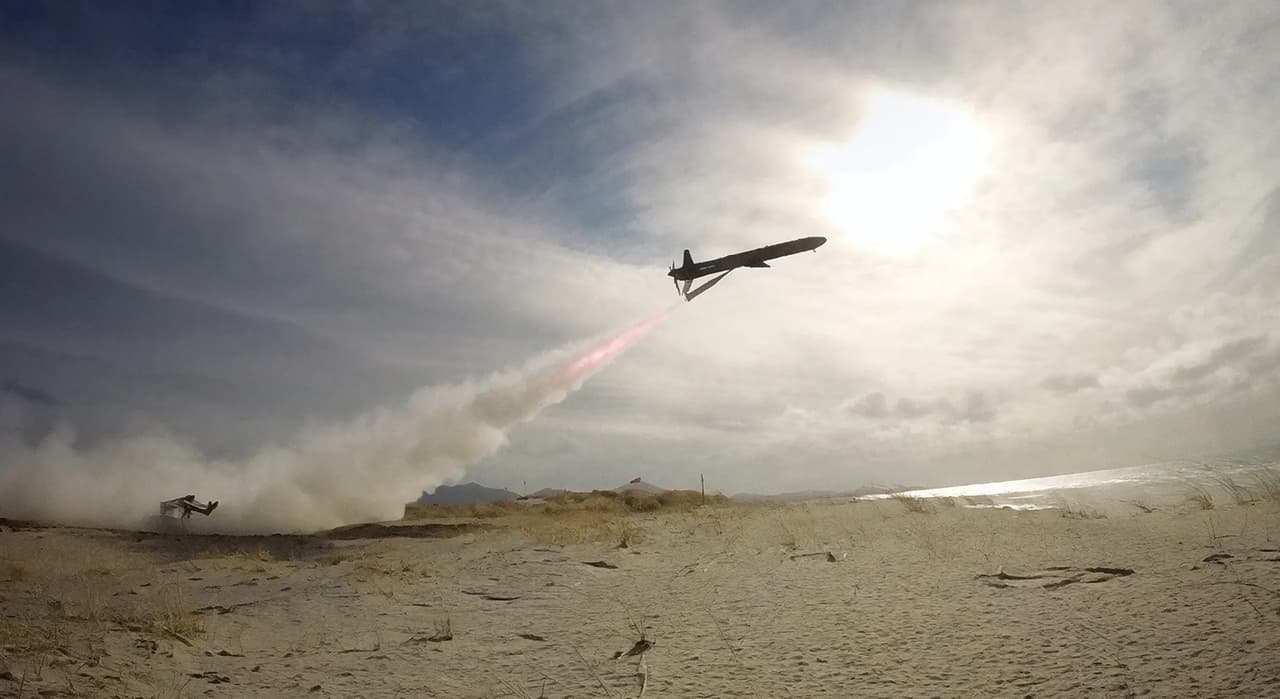
Rotron Aerospace SkyLance long-range strike capability. (Rotron Aerospace)
“This programme proves agile UK SMEs can deliver complex defence capability at pace, often outperforming traditional procurement models,” Alex Head, CEO of Rotron Aerospace, said. “Through sovereign technology, rapid development, and lower-cost delivery, we can provide better value for the taxpayer while strengthening the UK defence industrial base.”
Where will Project Brakestop go in the future?
The MoD announced in June that it awarded the three companies with contracts individually worth approximately GBP15 million to produce 15 improved effectors each, alongside launchers and support vehicles.
Louise Sandher-Jones, UK Minister for the Armed Forces, said: “In less than a year, UK companies have taken an ambitious concept from the drawing board to flight testing, delivering a new generation of capability at remarkable speed.”
The next phase of Project Brakestop is now underway, with further testing to take place in the UK, followed by additional trials overseas, including in Ukraine.
“Project Brakestop is a positive example of how the MoD and industry can work together to accelerate development, testing, and get the right capabilities into service quickly,” Mike Gascoyne, CEO of MGI Engineering, said.
Victoria
Hanscomb
Editor, DSEI Gateway
Victoria Hanscomb is an Editor at DSEI Gateway, reporting on the defence industry. Her previous experiences as an Editor include covering the international security market and pharmaceutical sector.