
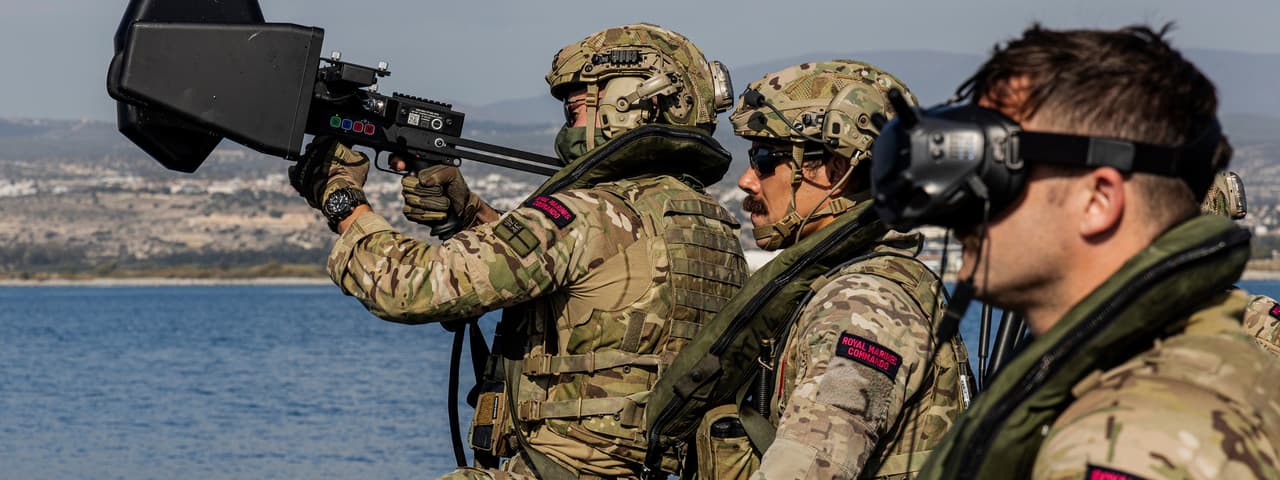
Royal Marines using the Kirintec Recurve C-UAS system. (UK MoD Crown Copyright 2026)
Countering UAVs at sea: NATO’s new priority
DSEI Gateway explores how NATO navies are racing to deploy counter-UAS technology to tackle the growing UAV threat at sea.
27 JUL 2026

By
Dr Lee
Willett
Independent naval writer and analyst
The proliferation of UAVs is transforming naval warfare. Across maritime operational theatres – such as the Baltic Sea, the Gulf, and the Red Sea – low-cost UAVs are actively challenging commercial shipping, naval task groups, and the international order.
For NATO navies, the maritime counter-UAS (C-UAS) requirement is therefore an urgent operational air defence priority, mandating rapid technological integration across the air, land, and sea domains. Countering uncrewed threats on and undersea is also important, but the UAV threat is currently the dominant operational and political risk.
NATO navies are countering technology with technology, introducing maritime C-UAS capability – part of a broader counter-drone push – through platforms, sensors, and effectors.
This development is evident in operations and procurement plans.
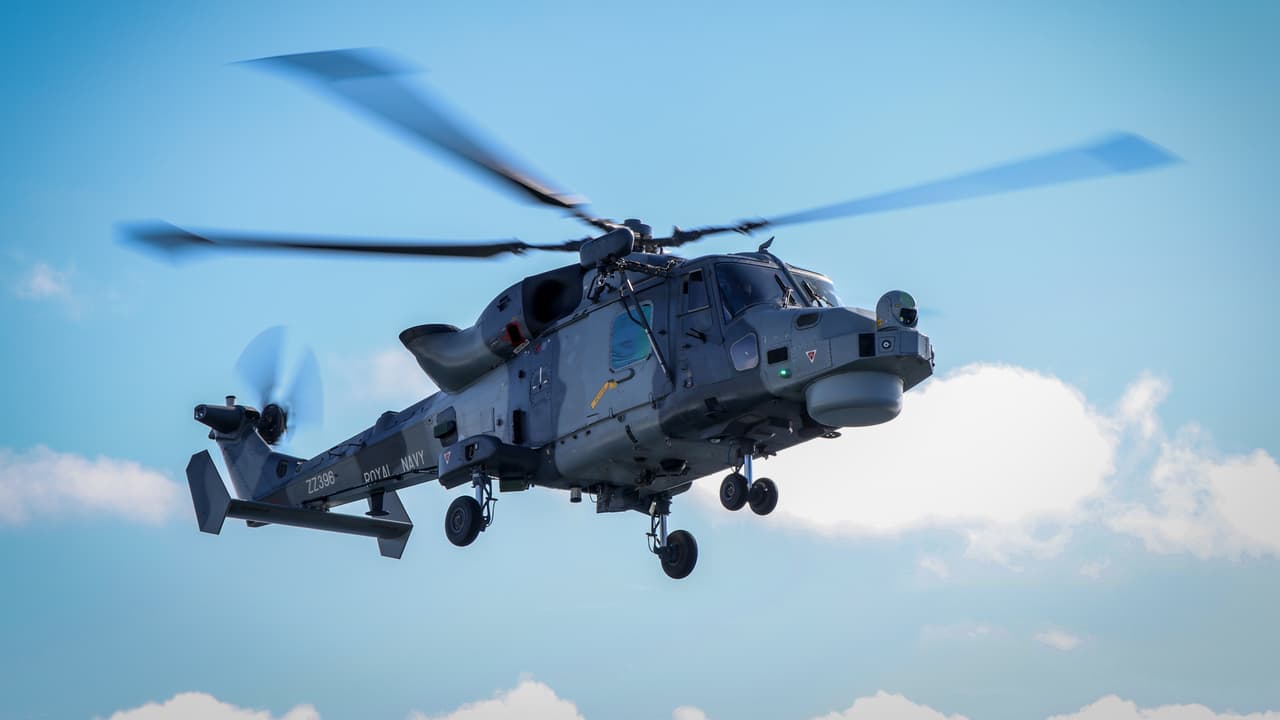
A UK Royal Navy Wildcat helicopter. (UK MoD Crown Copyright 2026)
C-UAS on operations
The UK, for example, has deployed C-UAS capabilities to deter threats in both the Baltic and the Gulf. In the latter case, to counter Iran’s UAV threat, this included sending C-UAS-capable Wildcat helicopters to Cyprus, ashore and aboard the Royal Navy’s Type 45 air-defence destroyer HMS Dragon.
In its Defence Investment Plan, published in July 2026, the UK confirmed the fit of the DragonFire laser-based directed energy weapon (LDEW) to two Type 45 destroyers.
LDEW provides a ‘soft-kill’ (non-kinetic) maritime C-UAS option for navies – as does electromagnetic warfare, another ‘soft-kill’ option the Defence Investment Plan highlighted. The plan also emphasised the need for urgency in delivering C-UAS capability.
The threat impact
The Baltic, Gulf, and Red Sea examples illustrate, in operational and technological terms, how UAVs can be used to disrupt major sea lines of communication and maritime chokepoints. This underlines the pressing maritime C-UAS requirement for NATO navies.
For example, in the Baltic, NATO’s ‘Baltic Sentry’ campaign, launched in January 2025, brought deterrent pressure to counter asymmetric threats against critical undersea infrastructure. The knock-on effect of this deterrent pressure may have been to prompt a series of UAV incursions, in September 2025, around NATO Baltic states’ civilian and military sites ashore.
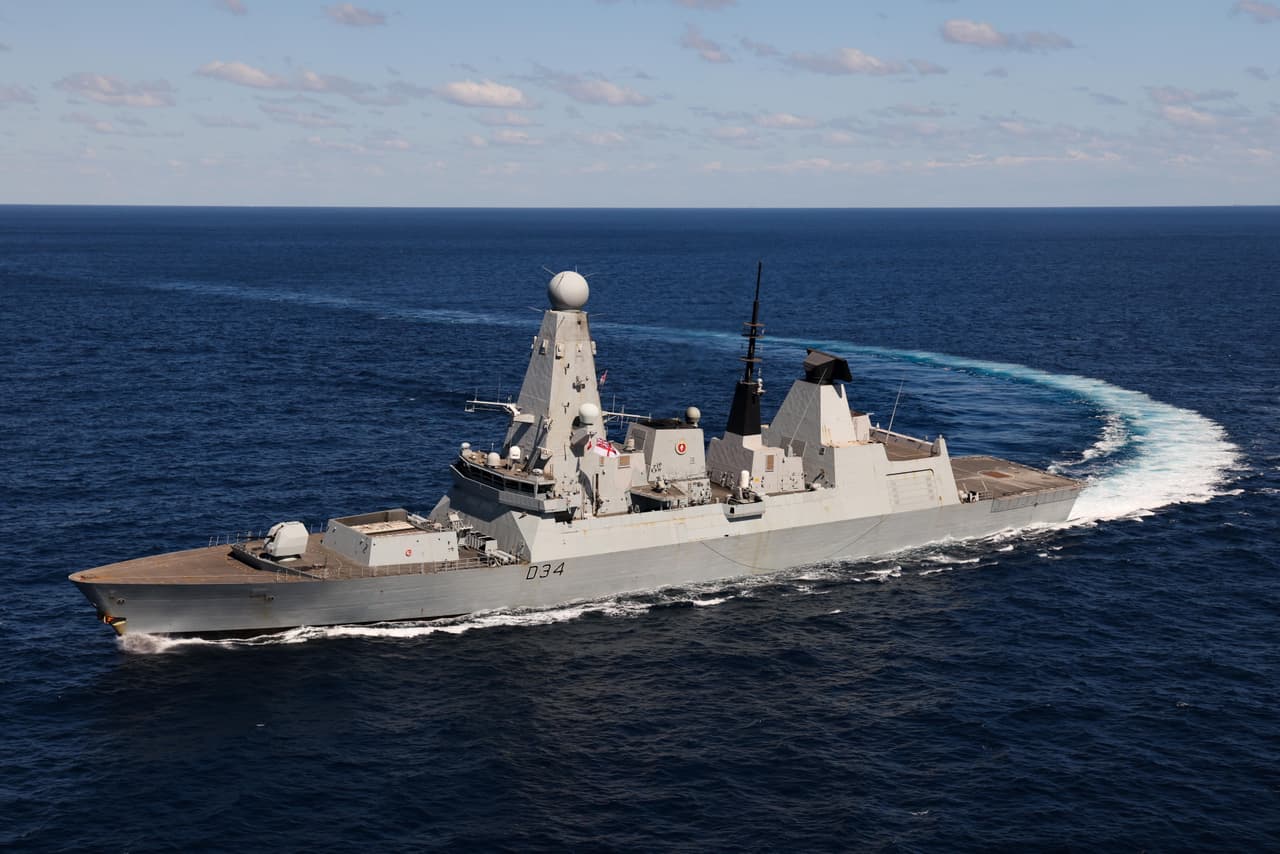
HMS Diamond, participating in Operation Prosperity Guardian to protect shipping in the Red Sea in 2024. (UK MoD Crown Copyright 2024)
In the Gulf, Iran has been using UAVs to harass commercial ships in the Strait of Hormuz for several years. In 2023-24, the Yemen-based, Iran-backed Houthi non-state actors used UAVs and other systems to target commercial and naval ships, threatening Red Sea freedom of navigation.
In exchanges with Israel since April 2024, Iran has launched more than 1,200 one-way attack UAVs, missile defence expert Dr Uzi Rubin told a Royal United Services Institute conference in April 2026.
Alongside closing Hormuz under the threat of mines, missiles, and UAVs, Iran also reminded the international community it could re-apply such threats to the Red Sea.
Indeed, in late July 2026, Houthi Red Sea missile attacks re-commenced.
How to counter the UAV threat
UAVs remain two or three steps ahead of C-UAS technology, Major Modris Kairišs, head of Latvia's Autonomous Systems Competence Centre, told DSEI Gateway at the International Drone Summit in Riga, Latvia in May 2026.
Given the geostrategically pervasive maritime risk and the ever-changing sense, destroy, and defeat technology requirements, outpacing the UAV threat is a core NATO maritime C-UAS capability principle.
Defeating this threat requires the integration of sensing, detection, identification, tracking, targeting, and engagement technologies, drawing on both established and emerging naval capabilities. Standard systems including sensors and effectors such as radars and guns retain important roles, and evolving iterations are already introducing C-UAS capability.
Detecting and intercepting UAVs in the maritime environment
Naval radars have traditionally been designed to detect inbound aircraft, and more recently cruise missiles, at distance; they have not been designed to counter growing swarms of smaller drones at close quarters.
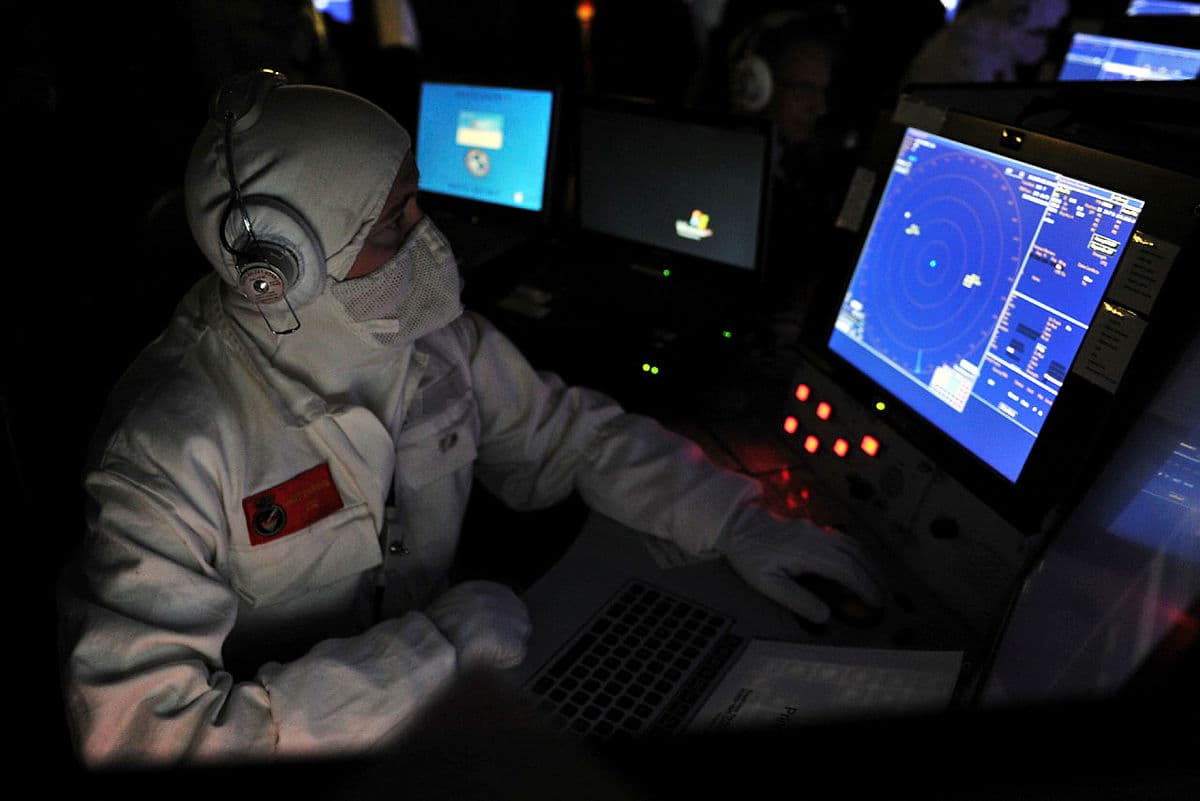
A sailor looking at a radar screen onboard the Royal Navy Type 45 destroyer HMS Daring. (UK MoD Crown Copyright)
UAVs differ from aircraft and missiles in shape and substance too, meaning less radar-reflective surfaces and smaller radar cross-sections. Consequently, radar and fire-control software upgrades may be required, along with radar systems employing higher frequencies to sense the smaller, less reflective UAVs.
To detect, track, identify, and target an inbound UAV, three-dimensional radar and electro-optical fire-control systems are required in tandem, including to establish whether the threat is a surveillance or attack UAV, thus shaping the response. Accurate and timely detection and tracking will give commanders confidence in tackling the threat.
Kinetic and non-kinetic C-UAS approaches
In the ‘kill’ phase, ‘soft-kill’ (non-kinetic) options include employing electronic warfare to jam or LDEW to ‘dazzle’ a drone. ‘Hard-kill’ (kinetic) requirements remain, but ships’ gun ammunition types may need upgrading for C-UAS applicability.
‘Hybrid’ naval platforms, including uncrewed surface vessels (USV) also have relevance.
With C-UAS radars often designed for short-range drone detection, forward-deployed USVs of various sizes carrying such radars could extend detection out from a crewed ship or task group, increasing commanders’ decision time. Larger USVs carrying ‘soft’ or ‘hard-kill’ capabilities could also neutralise the threat at a distance.
How NATO countries are building maritime C-UASs
Routinely, NATO does not buy capability for member states. Typically, it identifies a collective risk and co-ordinates pan-alliance input, perhaps through a member state programme already underway.
The number of NATO member states developing maritime C-UAS capabilities underscores the urgent need. C-UAS developments are similar across NATO navies, due to habitual collaboration on capabilities and use.
Germany: layered sensing and jamming
Responding to the Baltic UAV incursions, NATO dispatched the German Navy frigate FGS Hamburg to Copenhagen, Denmark to provide presence and air-defence capacity to counter the threat.
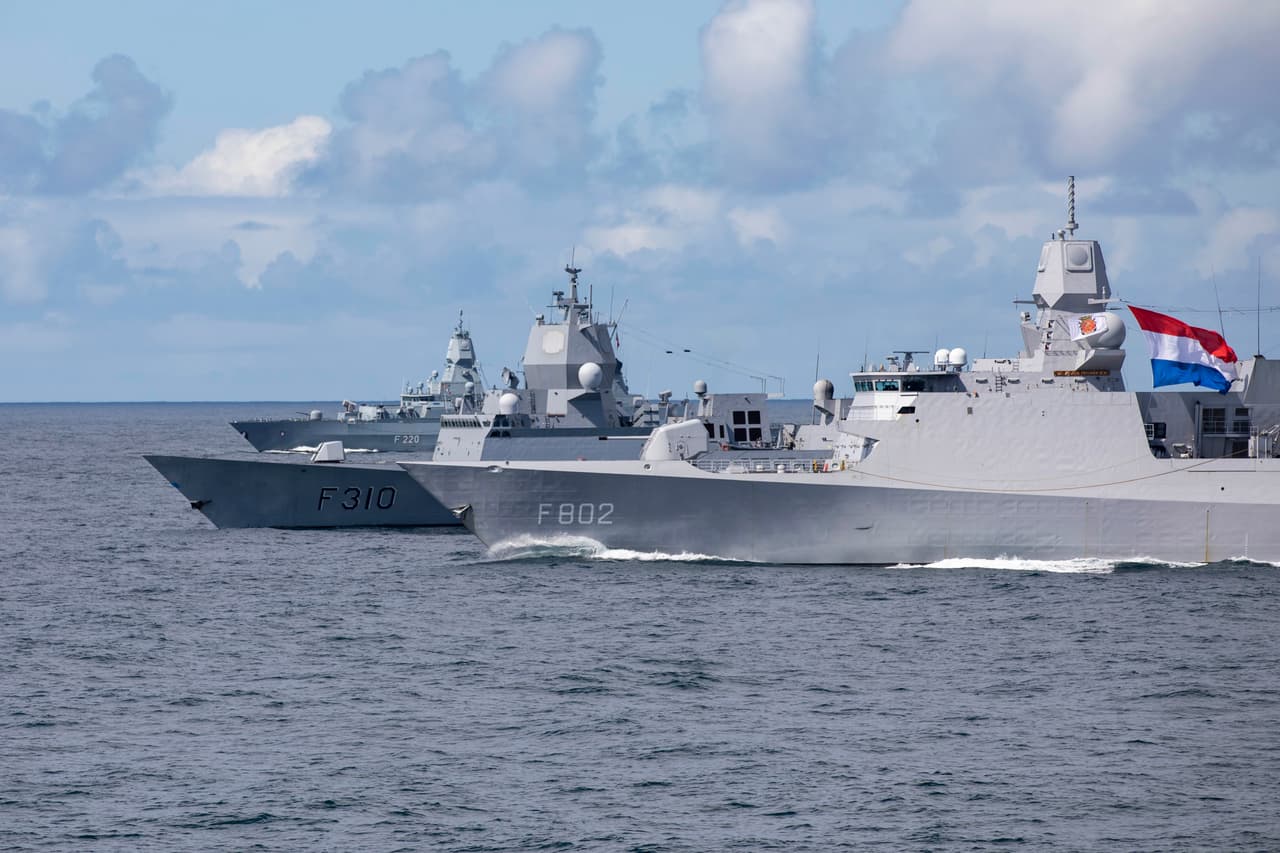
The German Navy frigate FGS Hamburg (rear) and the Royal Netherlands Navy frigate HNLMS De Zeven Provincien (foreground) participate in a NATO air-defence exercise in 2021. (US Navy)
While a German Navy spokesperson was unable to divulge detailed information to DSEI Gateway about how Germany tackles the threat specifically, they did say that it operates systems that can detect incoming UAVs before they can be seen or heard.
The spokesperson added that the increasing availability of commercial systems provides different options and capacity for building C-UAS capability.
One such system is the German Army’s Effektor HP47 shoulder-mounted anti-drone jammer: it disrupts communications, forcing the UAV to land or return to its operator.
Germany has used the system in exercises and operations to secure its Baltic coastal maritime infrastructure.
The Netherlands: a hybrid fleet
The Royal Netherlands Navy’s (RNLN’s) C-UAS concept and capability development is supported by its Maritime Uncrewed Task Force (MUTF) construct, the vision for which was released in April 2026. MUTF is central to the RNLN’s ‘hybrid’ fleet transformation.
A C-UAS capability helps enable this ‘hybrid’ fleet to operate in any environment, when and where needed, Captain Sjoerd Feenstra, head of the navy’s uncrewed systems expertise centre, told DSEI Gateway. Here, he explained, the navy prioritises both ‘soft-kill’ and ‘hard-kill’ systems that augment ship self-defence.
Lessons learned from the Baltic, Gulf, and Red Sea cases include “C-UAS requiring a broad variety of systems, both ‘soft-kill’ and ‘hard-kill’, to ensure layered defence in sufficient numbers that is not only effective from a technical perspective but also economically affordable – for example, employing cheap interceptors against cheap targets,” Captain Feenstra said.
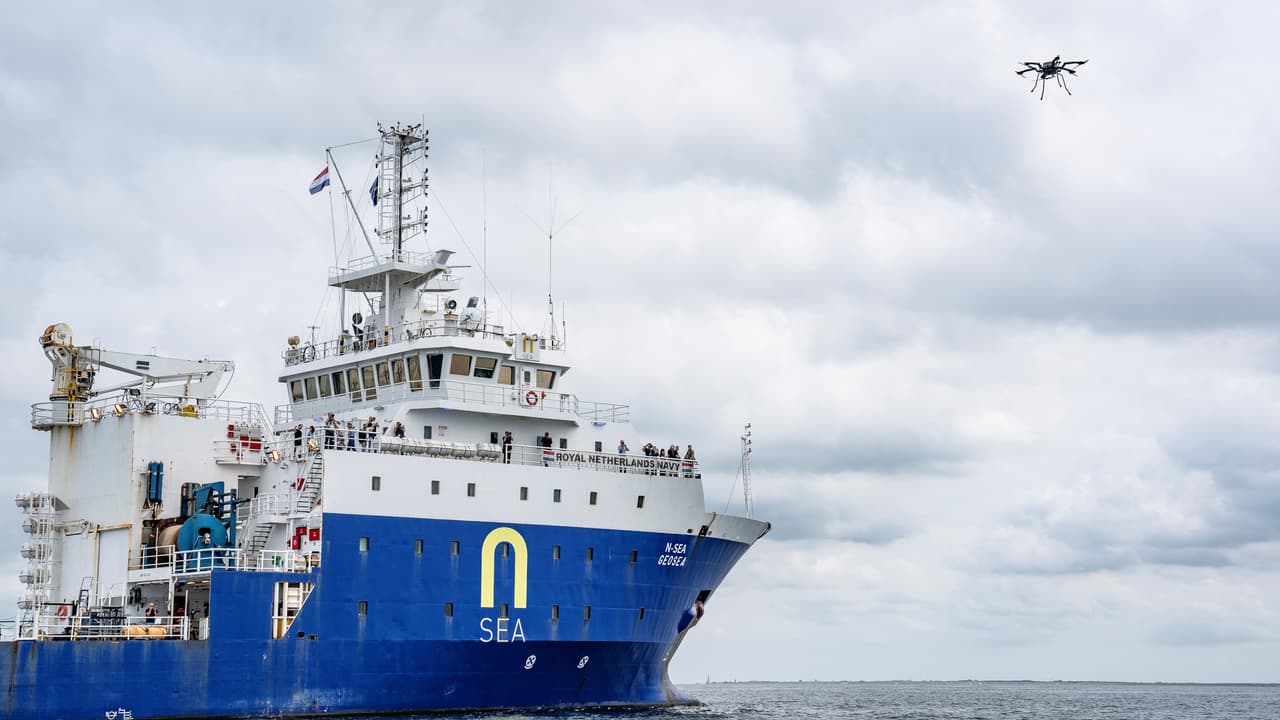
A UAV operates near the Netherlands navy research vessel MV Geosea during Dutch MUTF trials in June 2026. (Netherlands Ministry of Defence)
To illustrate, in its MUTF vision the RNLN explained that its future integrated air and missile defence concept involves crewed air-defence ships leading task groups, supported by multi-role vessels carrying various systems including electronic warfare and directed energy weapon C-UAS capabilities to counter the threat.
UK: low-cost layers
Assessing UK developments, Captain Matthew Cox, Head of Above Water Battlespace Capability for Royal Navy Develop, told DSEI Gateway that the navy is developing various capabilities to support C-UAS prioritisation.
The UK, similar to the Netherlands, is investing in creating a layered C-UAS approach comprising traditional weapons alongside electronic warfare and directed energy weapon systems. “This layered approach gives our forces the flexibility needed to maintain an operational edge,” Captain Cox said.
The UK’s Defence Investment Plan detailed the navy’s plans and progress. It announced a GBP490 million investment in directed energy weapon capability between 2026-2030, including delivering the DragonFire LDEW system to Type 45 destroyers from 2027.
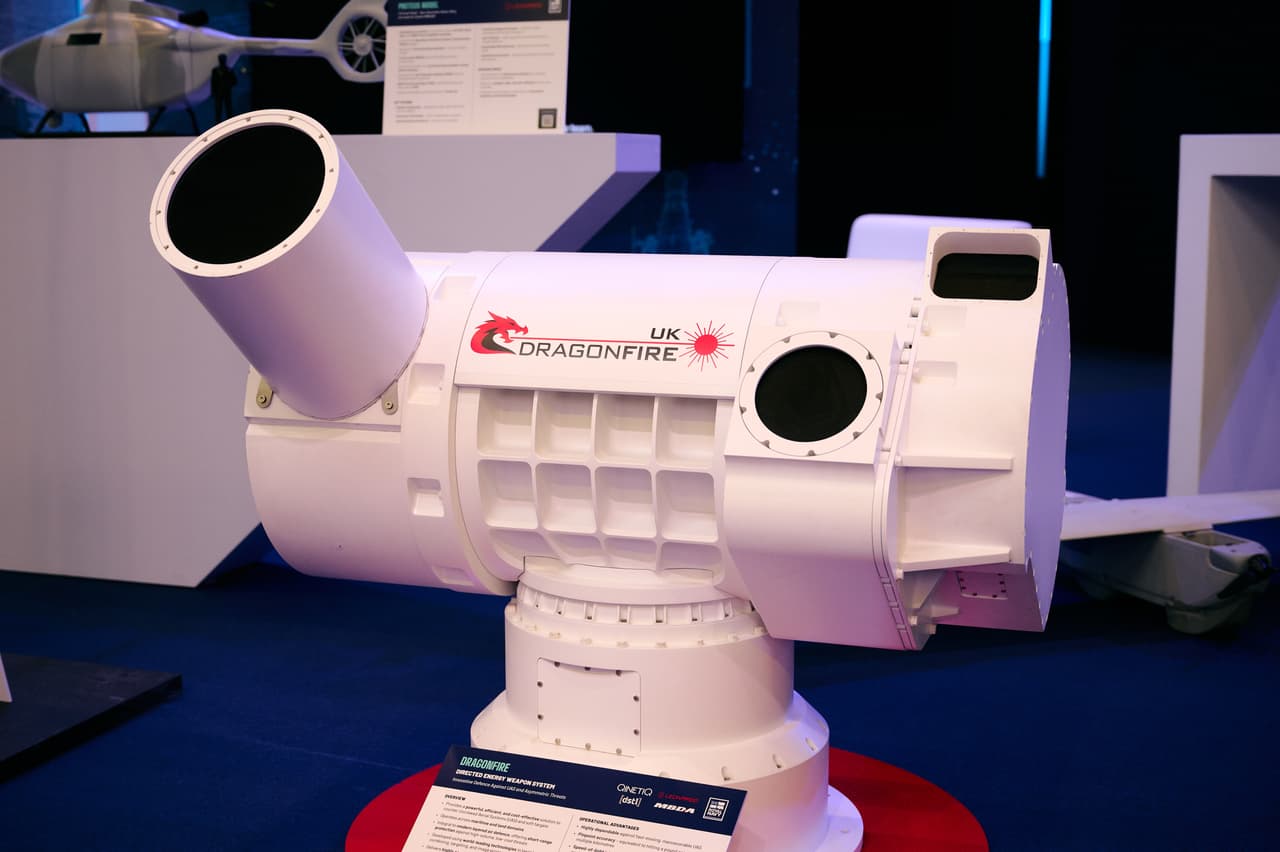
UK's Dragonfire laser directed energy weapon. (DSEI Gateway)
In November 2025, MBDA UK received a GBP316 million contract to deliver two DragonFire fits from 2027, one each onboard two Type 45s. Previously, the UK had committed to two more DragonFire fits onboard two more Type 45s.
For the Royal Navy, an LDEW capability provides a cost-effective procurement and operational option for countering UAV and other at-sea missile threats.
Once these systems enter service at scale, they will reshape how navies operate.
Ships will be able to stay on station longer because they will not be “exhausting their kinetics”, Graeme McNaught, Leonardo’s Campaign Manager for Electro-Optical, Infrared, and LDEW, told DSEI Gateway.
Other Royal Navy-specific elements within the Defence Investment Plan include developing Type 31 future frigate main gun ammunition to provide C-UAS capability.
The three examples show how navies are exploring a range of C-UAS approaches. The crucial factor remains matching the technology to the requirement and getting capability into operational service quickly, to counter the persisting threat.
Dr Lee
Willett
Independent naval writer and analyst
Dr Lee Willett is an independent defence and security writer with extensive experience covering international issues, specialising in naval affairs. His work appears in leading publications including Janes and Naval News. He has previously held roles at Janes and RUSI.