
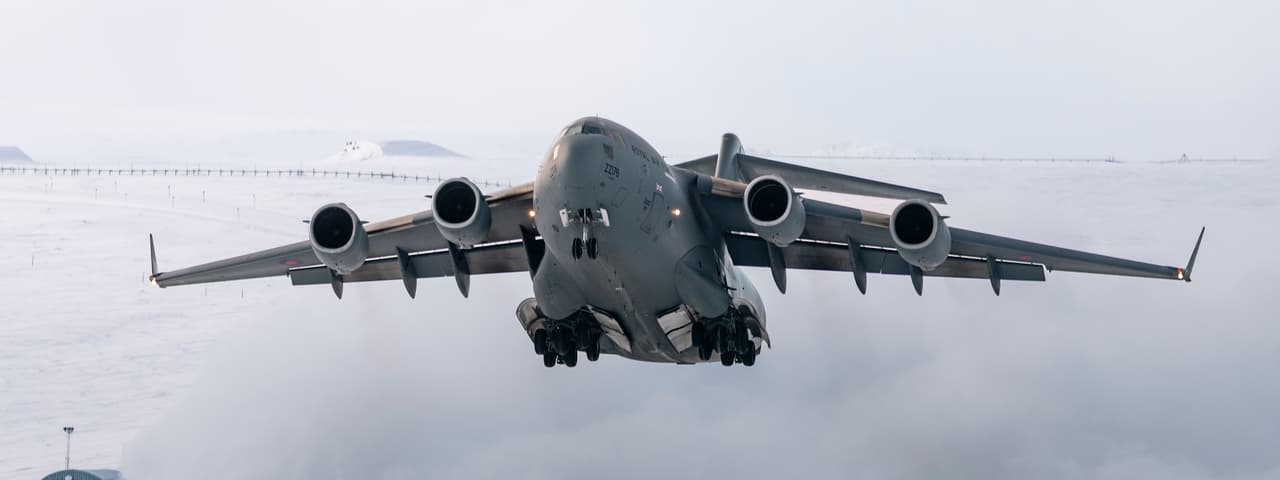
A Royal Air Force C-17 Globemaster. (UK MoD Crown Copyright 2026)
UK unveils GBP300bn Defence Investment Plan
Drones and autonomous systems take centre stage in the UK's spending plan.
30 JUN 2026

By
Olivia
Savage
Editor in Chief, DSEI Gateway
The UK unveiled its long-awaited Defence Investment Plan (DIP) on 30 June, confirming an additional GBP15 billion for defence over the next four years, taking the total spend to GBP298 billion.
It follows last year's Strategic Defence Review (SDR), which set out the government's strategic priorities. The DIP, which has been repeatedly delayed since last autumn, now confirms how that funding will be allocated.
“This record investment puts the security of the British public first, transforming our armed forces and giving them the funding and equipment they need to fight and defend our nation,” UK Prime Minister Sir Keir Starmer said at Malloy Aeronautics' manufacturing site, where he launched the plan.
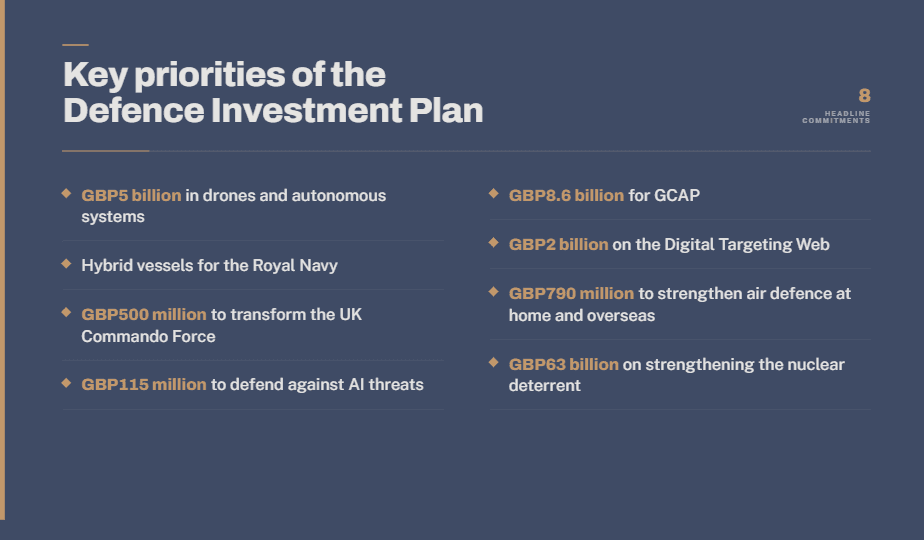
Infographic created by DSEI Gateway
Breaking down the investment
The DIP reiterates and builds on the SDR, with funding for uncrewed systems rising from GBP4 billion to over GBP5 billion, and funding for the Digital Targeting Web (DTW) rising from GBP1 billion to nearly GBP2 billion. Of this, GBP740 million will be spent on the DTW over the next four years, with the remainder allocated from 2030 onwards.
Uncrewed systems, AI and the deterrent
Uncrewed systems remain a top priority alongside the nuclear deterrent. Investment will fund one-way attack drones, uncrewed ground vehicles, up to 24 new surveillance drones replacing the Watchkeeper, and 'loyal wingman' drones for the Typhoon fighter aircraft.
Of this, GBP650 million allocated specifically to "inexpensive expendable autonomous systems," Starmer said.
For the land domain, many of the newer programmes are uncrewed or DTW-focused, with ringfenced funding now confirmed in the DIP, though most were announced over the past year. Project Asgard, which has GBP370 million attached to it, is one example. Conventional armoured programmes also feature, though these are largely a continuation of existing commitments.
However, the plan does confirm the early retirement of the Wildcat battlefield reconnaissance helicopter from 2027 and the oldest Chinooks, offset by investment in Project Nyx – an Apache loyal wingman programme – Project Corvus, focused on long-range UAVs, and the New Medium Helicopter procurement.
Aside from uncrewed, the UK is planning to invest GBP115 million on raising the UK’s “defences against the threats from AI,” Starmer said.
For its strategic deterrent, the UK is committed to buying 12 nuclear-capable F-35A fighter jets and new SSN-AUKUS submarines – as was outlined in the SDR. The DIP confirms GBP63 billion will be allocated to these and other nuclear-related efforts.
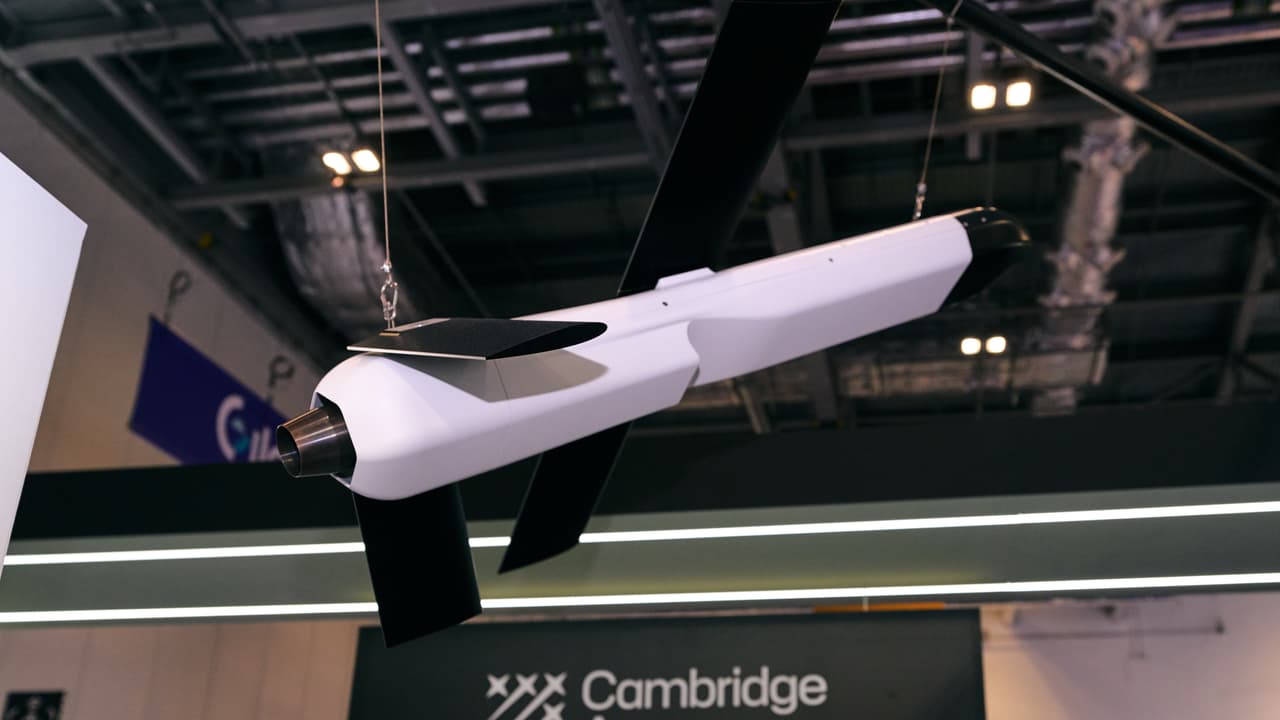
The Skyhammer interceptor. (DSEI Gateway)
Counter-drone defence is also a core priority. The UK will spend over GBP750 million on short-range counter-drone systems, including a suite of "low-cost ground-based effectors" such as the Skyhammer from Cambridge Aerospace, and a further GBP200 million on "deployable" technology, the plan said.
A further GBP240 million will go towards the military's Presagium counter-drone programme – focused on protecting fixed infrastructure.
Navy, air and space
Meanwhile, for the Royal Navy, the UK is planning to procure at least six ‘Common Combat Vessels’ to replace the current Type 45 destroyers from the early 2030s, rather than proceeding with buying larger Type 83 destroyers.
Billed as the Royal Navy's first 'hybrid' warships, the vessels will coordinate uncrewed systems in the air, on the surface, and undersea to deliver more resilient air defence. GBP1.5 billion is being allocated to the ‘Hybrid Navy’ concept.
Autonomous systems will also be invested in to build out a "Hybrid Carrier Air Wing", while GBP330 million is allocated to the protection of undersea infrastructure.
In the air, the Typhoon fleet will receive a GBP1.1 billion upgrade and GBP360 million will be invested into a new ‘Future Jet Training System’.
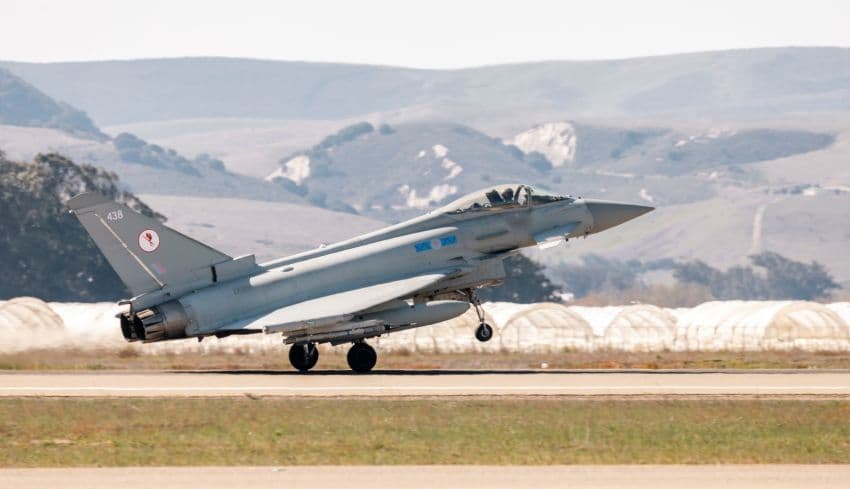
Typhoon fighter jet. (UK MoD Crown Copyright)
For space, GBP2.3 billion will be allocated to space communications, and GBP880 million for space-based intelligence and space control. The majority of the programmes listed are as expected, although the UK has chosen not to proceed with developing the Skynet 6 Narrowband Satellite System.
What does the DIP mean for industry?
For industry, UK Export Finance will launch a new GBP50 billion Defence Export Fund – on top of its existing GBP80 billion limit – taking its total capacity to GBP130 billion. The fund will be used to guarantee bank loans for UK defence exporters, or to finance other countries purchasing UK defence products, the government said.
This forms part of efforts to "back British", Starmer said, adding that "with every pound spent, wherever possible," the money will go to UK workers, businesses, and innovators.
How is it being funded?
To fund the plan, the government said it will reallocate resources from other departments, including from major capital projects such as “roads and energy", which Starmer described as “important but not immediately vital.”
While defence bonds are seen by many as a way to fund investment, Starmer ruled this out, saying "defence bonds are just borrowing by another name."
Instead, the government will invest GBP400 million in a new “Multilateral Defence Mechanism to finance and procure defence equipment with our allies.” Starmer is referring to the joint initiative between Finland, the Netherlands, and the UK which aims to aggregate demand, drive joint procurement, and accelerate defence investment by 2027. It is similar to, but distinct from, the Defence, Security and Resilience Bank that Canadian Prime Minister Mark Carney has been proposing to support NATO-wide defence spending.
However, the DIP does note that, of the GBP15 billion increase, only GBP10.3 billion has been confirmed with the remainder outlined in the October Budget.
The release of the DIP comes a week before the NATO Summit in Ankara, Turkey, on 7–8 July, where UK and European spending will be in the spotlight.
Olivia
Savage
Editor in Chief, DSEI Gateway
Olivia Savage is the Editor in Chief of Clarion Defence & Security, organisers of DSEI and other defence events. Previously, she was a Senior Defence Journalist at Janes, specialising in electronic warfare, uncrewed systems, and space.