
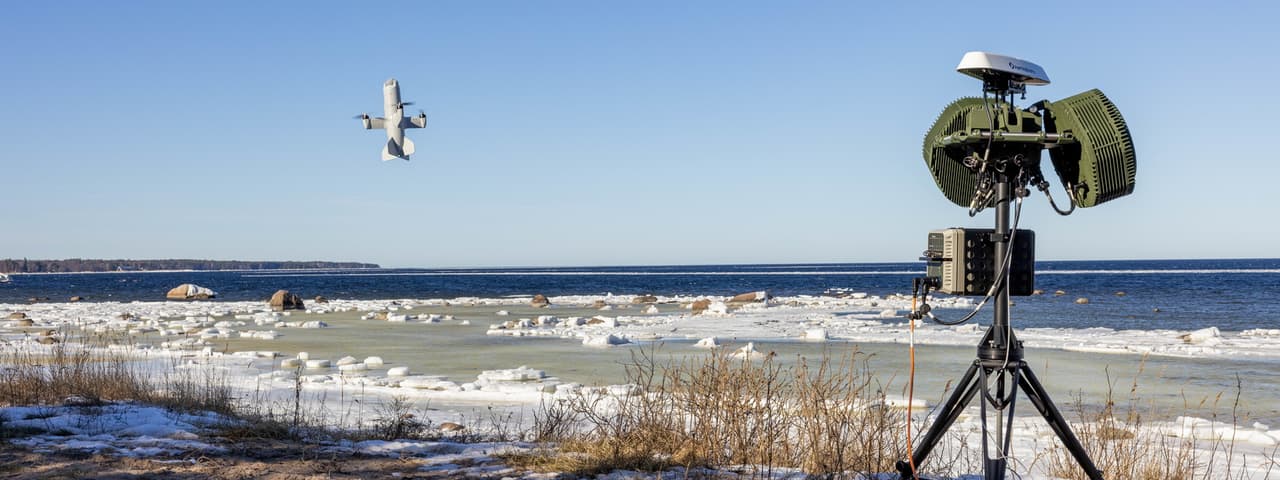
A C-UAS system trialled during Estonian exercise Digital Shield 2.0 in March 2026. (Estonian Defence Force)
Europe’s eastern flank: how the Baltic states are countering the drone threat
DSEI Gateway spoke with military and border officials in Estonia and Latvia about how they are countering the drone threat.
15 SEP 2026

By
Tom
Barlow-Brown
Defence Journalist, DSEI Gateway

By
Olivia
Savage
Editor in Chief, DSEI Gateway
The Baltic states play a critical role in NATO's eastern defences.
Together, Estonia, Latvia and Lithuania share a 1,700km border with Russia and Belarus over varied terrain.
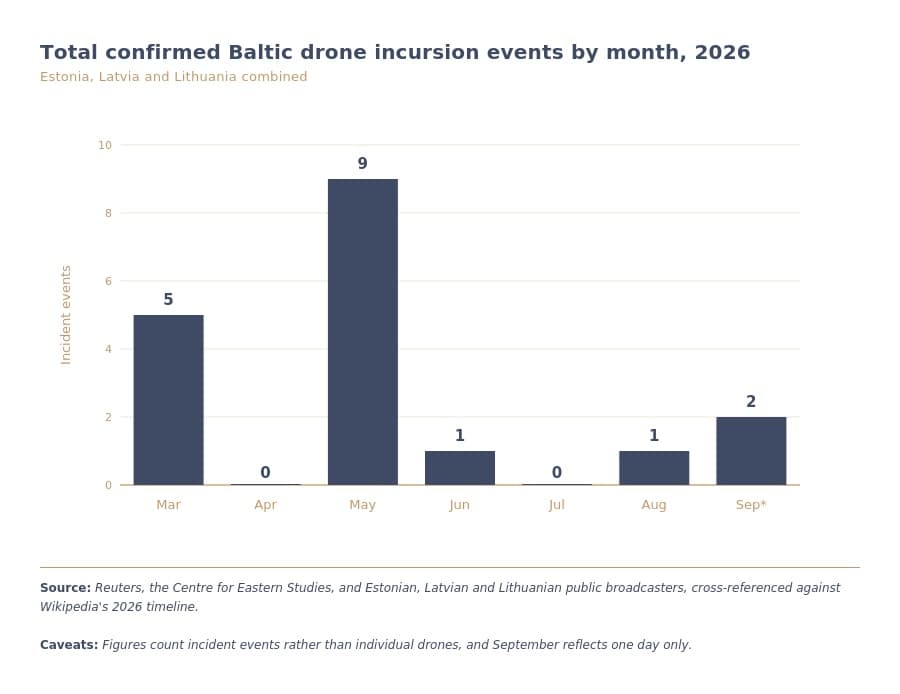
All three countries have seen an increase in drone incursions this year, widely attributed to Russia. Largely, this is because Ukrainian drones are being knocked off course due to Russian electromagnetic interference and GPS jamming.
The Drone Wall and C-UAS response
As a result, the Baltic countries and other nations along NATO’s eastern flank, such as Finland, Poland and Norway have increased efforts to counter the drone threat.
(DSEI Gateway)
Though each nation is pursuing its own approach, their responses share a similar starting point – the so-called “Drone Wall”. In May 2024, interior ministers from the countries all agreed to build the wall, using a range C-UAS to protect its borders from hostile drones.
However, Major Modris Kairišs, who heads Latvia’s military Autonomous Systems Competence Centre, told DSEI Gateway during a NATO drone trial in May that while “there are a lot of political discussions in a lot of countries about the Drone Wall,” many countries are “starting their own national programmes” instead.
Adding to this, Arbo Probal, the Estonian Defence Force’s UAS and C-UAS Programme Manager, told DSEI Gateway that the Drone Wall has become “an umbrella term for defence industry initiatives.”
DSEI Gateway explores the different efforts taking place in Estonia and Latvia to protect their borders from hostile drones.
Estonia's C-UAS efforts
Estonia has faced several high-profile drone incursions in its airspace this year, including a stray drone strike against its Auvere power plant in March, and several other incursions in May.
Funding and legislation
Estonia’s counter-drone planning has therefore intensified this year, allocating new funding and introducing legal reforms.
In April, former Defence Minister, Hanno Pevkur, suspended a EUR500 million (GBP428 million) programme to replace its CV90 infantry fighting vehicles, instead redirecting the investment to fund uncrewed systems, C-UAS, and air defence.
Following this, in May Estonia’s Prime Minister, Kristen Michal, told the country's parliament that EUR364 million in drone-related defence investment is planned over the next four years under a new Drone Draft act.
This draft act had its first reading in May and remained before parliament as of writing.
The act, once adopted, would lay the foundation for a multi-layered counter-drone defence system, splitting responsibility as follows:
Estonia’s Police and Border Guard Board would be the first to respond to civilian drones. If the border force is unable to counter the threat, Estonia’s military would take over.
In the case of military drones, the roles are reversed – these would mainly be the responsibility of the Estonian military, but if it is faster and more expedient for the border force to respond, then they would do so as the general law enforcement agency. The draft act focuses on addressing the most time-critical bottlenecks – monitoring, response and protection of critical infrastructure, according to the Estonian Government.
Alongside the legislation, a drone roadmap has also been sent to the public and private sector to strengthen national security, modernise public services, and develop the sector.
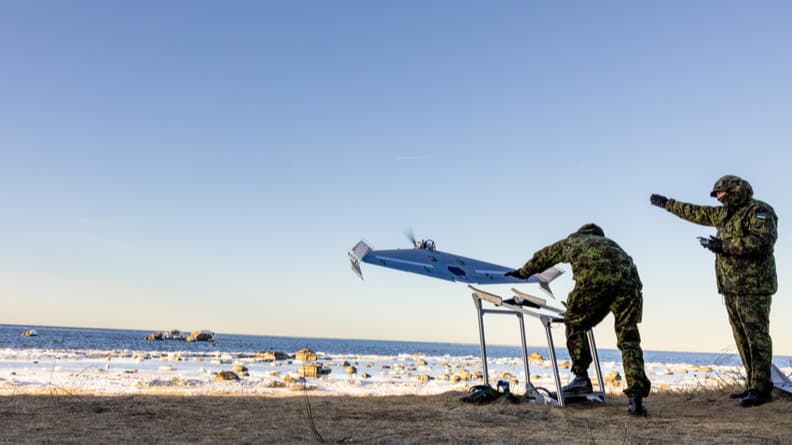
Estonian soldiers operate a UAS during counter drone exercise Digital Shield 2.0 in March. (Estonia Defence Forces)
On the ground, this legal effort is already translating into change. Speaking to DSEI Gateway, Veiko Kommusaar, deputy director general for border management at Estonia’s border force, said the border guard are using radio frequency detectors and remote ID sensors to monitor airspace along the border and around critical infrastructure, picking up the signals civil drones are required to broadcast.
The agency is also testing different solutions to counter drones in real conditions, since, as Kommusaar put it, "[industry] presentations promise much, but in real conditions, solutions do not always function as expected.”
A multi-layered C-UAS system
While investment is being channelled into C-UAS, the challenge for the Estonian military lies in the ability of modern drones to exploit the varied terrain along the country’s border, helping to minimise their radar signature. “There is not a single sensor, interceptor or kinetic solution which will solve this problem,” Probal said.
Therefore, an effective counter-drone approach means “multiple layers working together,” Probal said. These layers encompass surveillance, electronic warfare, command and control (C2), interceptors and trained troops.
In May, the border force installed its first operational fixed counter-drone detection systems along three sections of the southeastern land border, between the Estonia-Latvia-Russia tri-border point and the Luhamaa crossing. This is “just the beginning... we are moving towards a nationwide drone-monitoring network,” Interior Minister Igor Taro said.
Additional procurement projects are being run by the border force to provide full coverage of its border with Russia by the end of 2026, the minister added.
Estonia’s military is also investing in passive measures, which Probal states the wider Drone Wall concept leaves out: camouflage, hardened positions, and protected infrastructure.
While Probal declined to name specific suppliers involved in supporting Estonia, he did explain that only equipment from Estonian, Latvian and western companies are being considered.
Estonia’s efforts to strengthen its drone defences have no fixed finish line, with Probal describing it as a rolling cycle of procurement and integration.
“It’s not a matter of the product, or the company. It’s a matter of the capability,” Probal said. “We are building the entire ecosystem, not just buying the products themselves.” As drones get cheaper, investment in countering them must also stay affordable, he stressed, “so we don't fight ourselves into the bankruptcy.”
Latvia's C-UAS efforts
Latvia is taking a similar approach to the UAS threat, prioritising C-UAS detection while working through the regulatory hurdles that determine how these systems can be deployed.
Drones are “not a hard target”, Major Kairišs said, adding that detection is “the hardest part”, especially with smaller UAS.
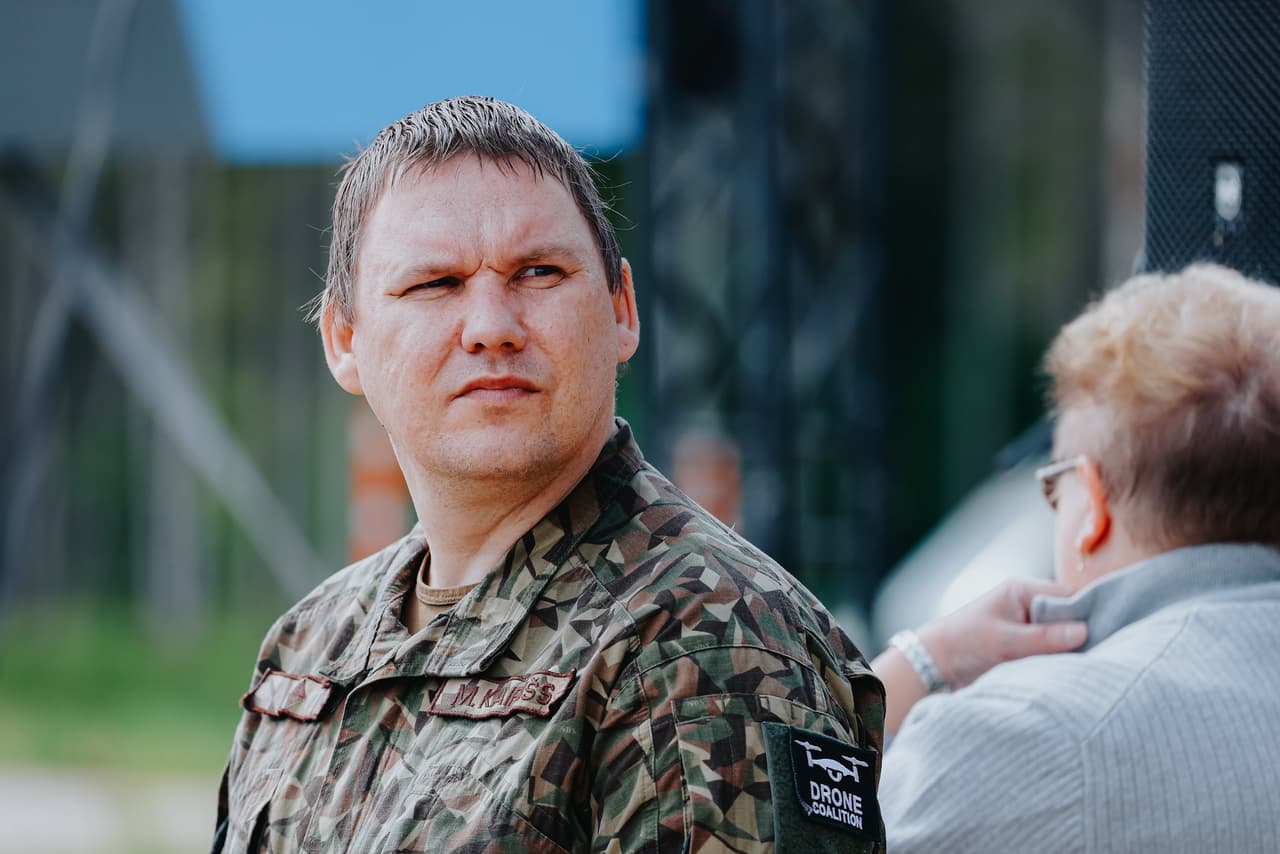
Major Modris Kairišs, head of Latvia's Autonomous Systems Competence Centre. (Latvian Ministry of Defence)
That assessment is shaping Latvia’s investment priorities. The country is building an acoustic sensor line on its eastern border – making it one of the first nations to field the technology, Major Kairišs believes – and supplementing it with small tactical radars to close coverage gaps.
Latvia is also deploying mobile teams to its eastern border to tackle any drones. These will operate from 4x4 vehicles equipped with interceptor drones from Origin Robotics and Eraser, another Latvian company. While manpower is a constraint – Latvia cannot match the density of mobile teams Ukraine deploys – the focus is on systems that need fewer operators, supported by optical and acoustic sensors.
As well as acquiring its own C-UAS capabilities, Latvia is also reforming the test and evaluation process for uncrewed systems.
Central to this is the country's new Sēlija uncrewed testing range, one of five NATO Innovation Ranges established under the alliance's Rapid Adoption Action Plan to expediate the development of technology.
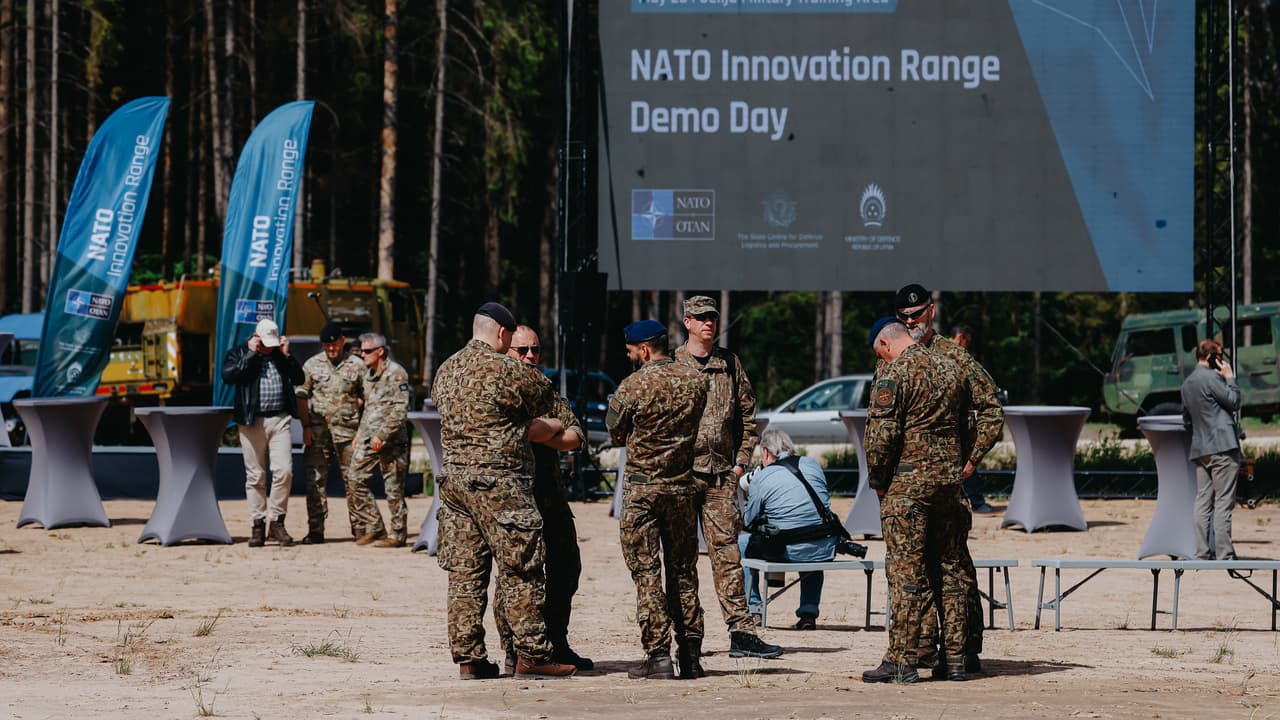
NATO drone trial at Latvia's Sēlija testing range in May 2026. (Latvian Ministry of Defence)
Detection, interception and test reform, however, only solve part of the puzzle.
For Major Kairišs, integration is an important priority, ensuring information is delivered to the right place, with sensor feeds fused together to create a single integrated air picture.
The Baltic states, along with other NATO members, are therefore building parallel C-UAS C2 systems.
Integration deciding factor for C-UAS
Estonia is working towards a national, single C2 network to give its armed forces a common, standardised airspace picture, according to Kommusaar, Estonia’s deputy director general for border management.
Similarly, Lithuania is acquiring its own C-UAS capabilities within a broader national air defence picture.
On 2 September, its government authorised the country's Defence Resources Agency, under the Ministry of National Defence, to buy short-range and passive radars, and trial batches of interceptor drones. This is part of efforts to create "a unified system in which different means of airspace surveillance, target detection and destruction work together," Lithuania’s Minister of National Defence Robertas Kaunas said. The purchase also covers integrating the equipment into existing Lithuanian Armed Forces systems and training personnel.
However, Major Kairišs from Latvia’s military said that a focus on national, rather than multi-national, capability is becoming a key issue.
Many countries are “starting their own national [drone] programmes”, but the risk is that these systems develop in isolation. To avoid that, countries must prioritise standardisation, ensuring each operates through a single C2 network so different sensors, effectors and platforms can function as part of a shared system, he said.
An industrial collaboration
Recognising the need for joint, cross-border C-UAS integration to defend the Baltic states and NATO’s eastern flank, a group of mainly Estonian companies formed a consortium in February 2025.
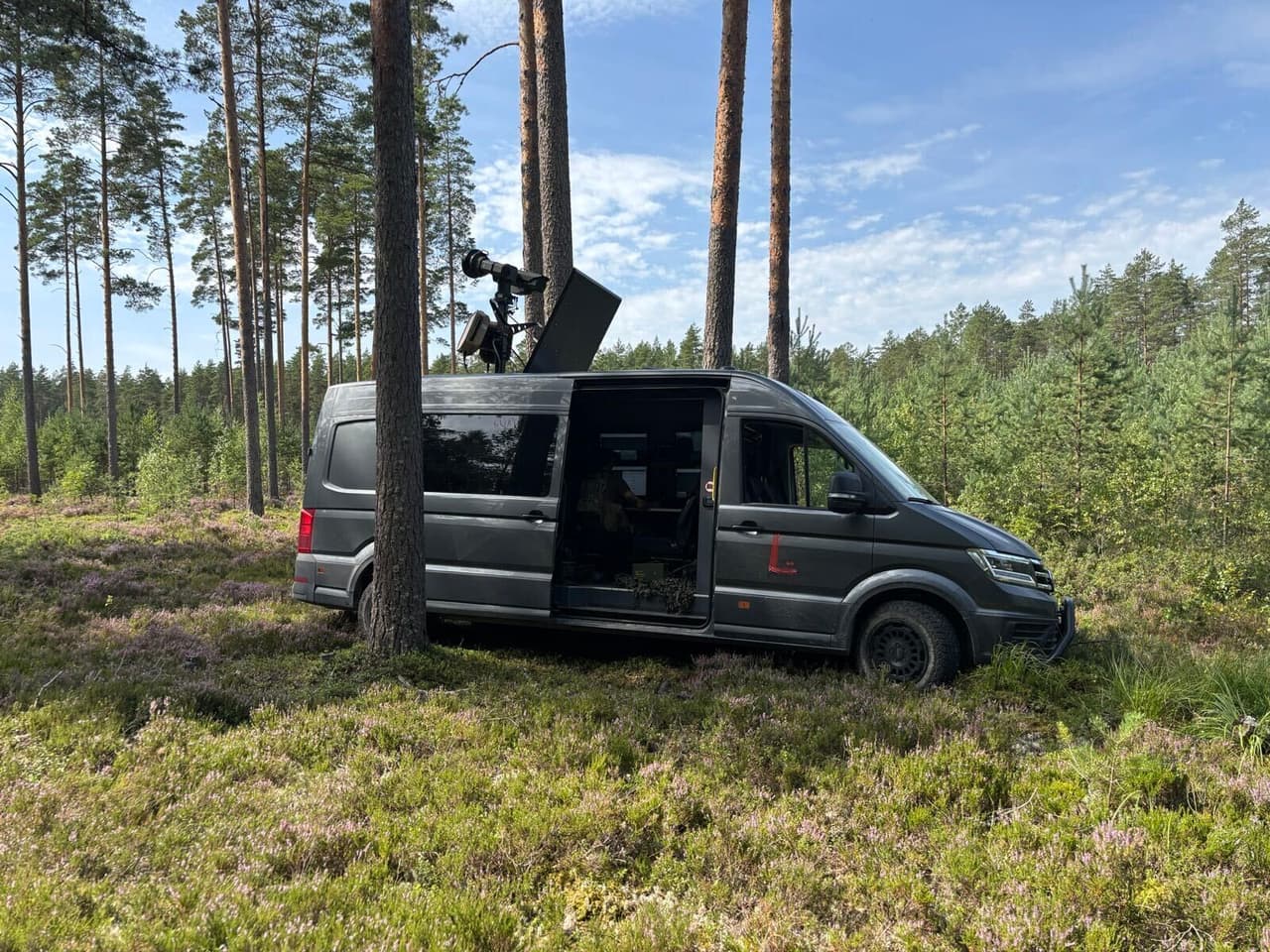
DefSecIntel’s vehicle-based multi-layer C-UAS solution called Eirshield. (DefSecIntel)
Together, through the Estonian Defence Industry Cluster, the companies are pitching an integrated multi-layered system to NATO and the Baltics. At its core is DefSecIntel’s vehicle-based multi-layer C-UAS solution called Eirshield that detects, tracks, classifies and neutralises hostile threats, which can plug-and-play different sensors and interceptor solutions.
Other Estonian companies involved in the consortium include Rantelon, Marduk Technologies, Lendurai, Hevi Optronics, and Frankenburg Technologies, as well as Lithuanian company Telekonta.
Following this, in September 2025 Latvia’s Origin Robotics signed a memorandum of understanding to integrate its Blaze interceptor into Eirshield.
Commenting on this partnership, Jaanus Tamm, CEO of Defsecintel Solutions, said: “Politicians have called for a Drone Wall. We are ready to build it. This is not a concept. This is a live, integrated system that’s ready today and already protecting Europe’s eastern flank.”
What next?
All three countries are now spending heavily on drone defence, with established C-UAS procurement programmes moving forward at different levels. The key test will be whether those national systems can work together to form a unified regional Drone Wall against drones.
Asked when Estonia’s C-UAS defences would be ready Probal emphasised: “We have to be ready for today.”