
News · C4iSR · NATO
Warfighting cloud most urgent NATO priority next year, officials state
The alliance pledged to develop the warfighting cloud at the NATO Summit in Ankara, Turkey in July.

News · C4iSR · NATO
Developing the alliance’s warfighting cloud is NATO’s most pressing priority for 2027, senior NATO officials told DSEI Gateway and other media at the NATO Edge conference in Izmir, Turkey, on 17 November.
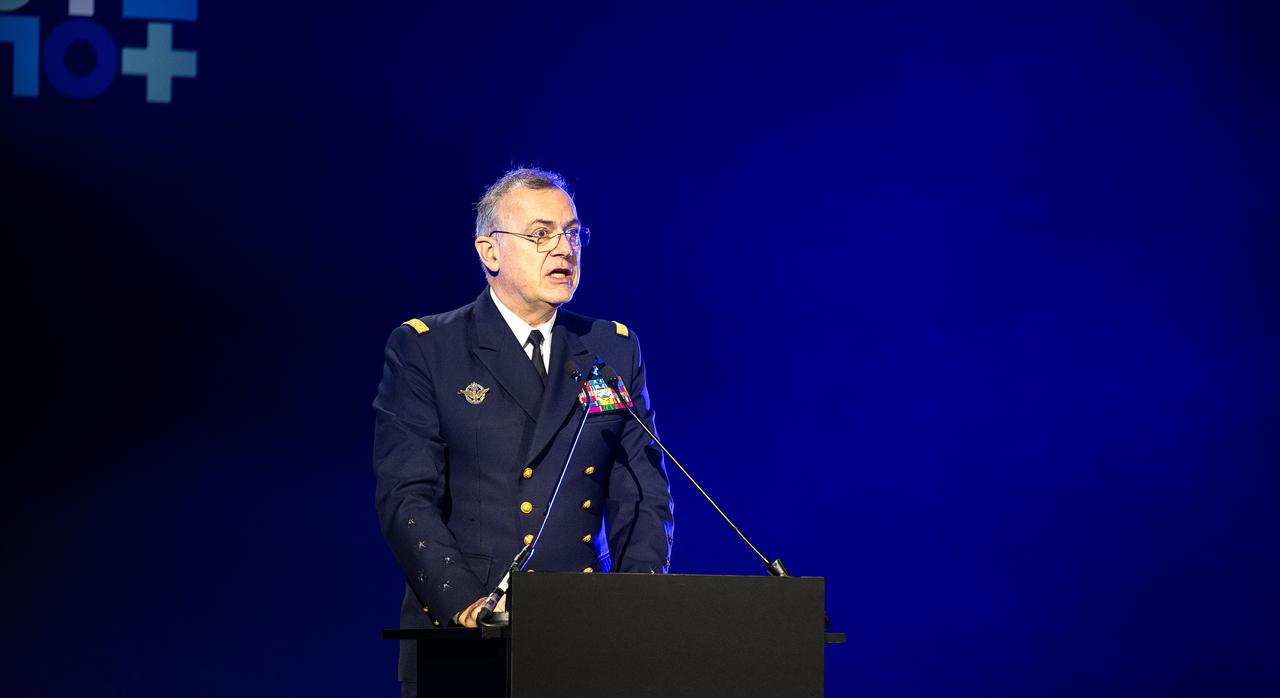
Admiral Pierre Vandier, NATO's Supreme Allied Commander Transformation, said delivering the cloud this summer was the “absolute top priority” for NATO, and specifically for Allied Command Operations (ACO).
Dylan Browne, who leads NATO’s Communications and Information Agency (NCIA) and Jean Charles Ellermann-Kingombe, NATO’s Assistant Secretary General for Cyber and Digital Transformation, echoed the admiral’s point.
What is NATO’s warfighting cloud?
NATO’s warfighting cloud is intended to connect all 32 member states’ national clouds and data together, providing the alliance with flexibility, resilience, and decision advantage, Browne said.
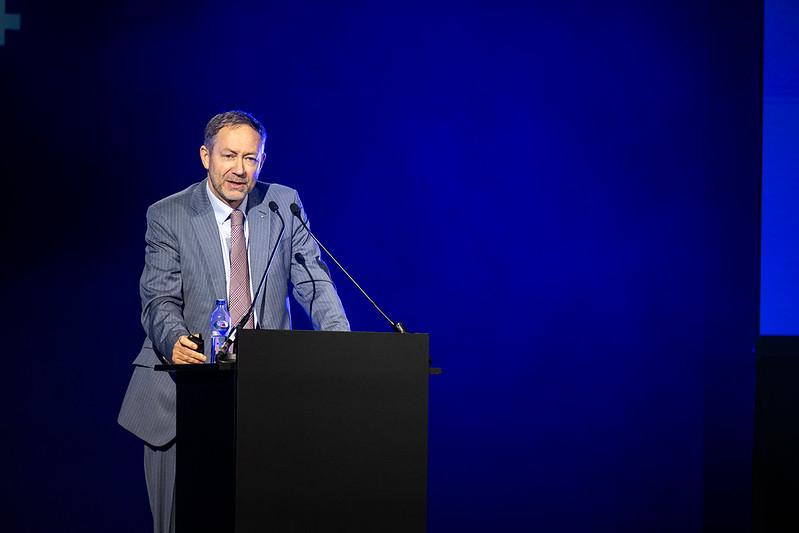
Dylan Browne, head of NATO’s Communications and Information Agency, speaking at NATO Edge 2026
At the NATO Summit in Ankara, Turkey, in July all member states formally committed to developing the system.
NATO’s warfighting cloud is critical because data now drives modern warfare.
One NATO official, who could not be named, said at the event that most activity on today’s battlefields, including in Ukraine, is driven by data and supported by AI.
What matters, the official said, is making the right decisions “faster than our adversaries”, adding that “cloud is the enabler” for this.
The official continued by explaining that NATO was not looking for “one single, giant cloud”, but rather a “federated, interoperable architecture, where different cloud deployments meet operational requirements at the edge… and core."
NCIA is helping to manage the warfighting cloud’s development.
NCIA is investing EUR2.7 billion over the next two years into the cloud alongside other emerging technologies, including cyber, AI, space, command and control, and the “networks that connect them all,” Browne said.
How will the warfighting cloud be delivered?
The warfighting cloud has two “very important” pillars, the NATO official said.
The first covers political and military consultation, including sharing strategic intelligence across allies and within NATO.
The second element focuses on directly supporting the Supreme Allied Commander’s mission, and the operators on the battlefield, the official said.
However, Admiral Vandier stressed that NATO must first “work out the appropriate data sharing approach”, describing data as the “fuel to the rocket” – the rocket being the cloud.