
News · C4iSR · UK
Novel electro optic sensors sought by UK
The sensors should offer advantages such as an expanded range of detection.

News · C4iSR · UK
The UK is seeking proposals for innovative electro optic sensors to strengthen the ability of its armed forces to detect threats in contested environments.
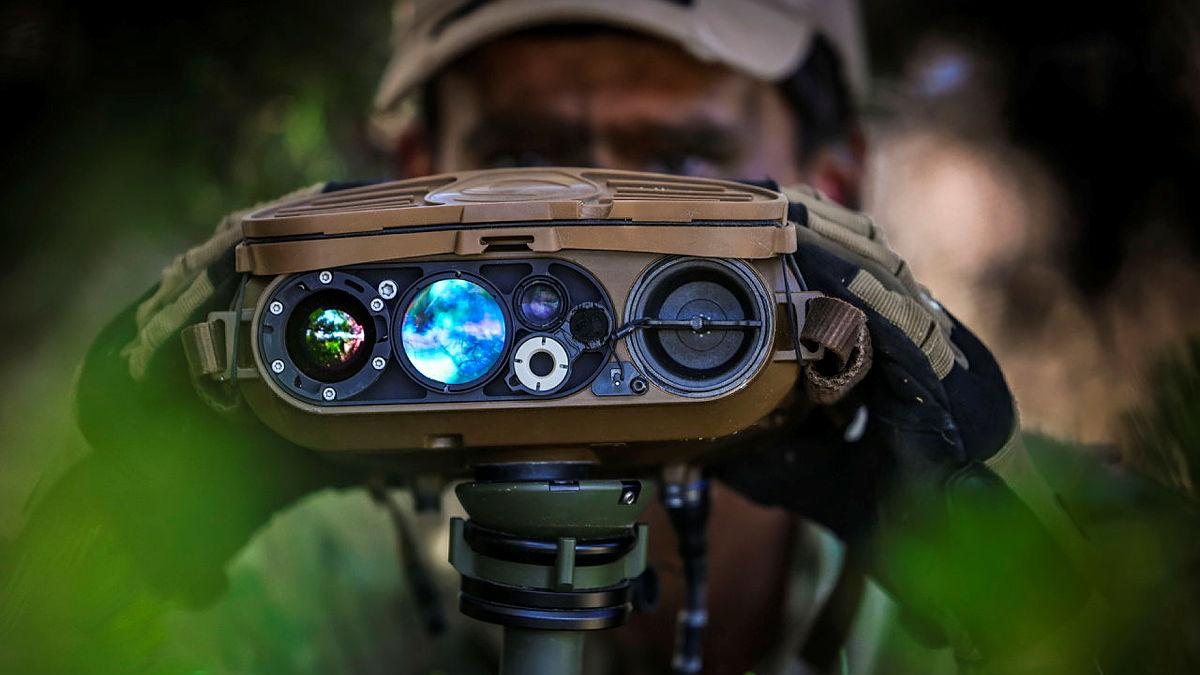
UK Defence Innovation (UKDI), part of the UK defence ministry, says that electro optical sensors can detect electromagnetic radiation emitted from objects, ranging from ultraviolet to infrared wavelengths.
These sensors can be used in environments where radar is challenged or to identify targets that have a lower radar signature.
To further increase this tactical advantage, UKDI launched a competition on 9 November specifically calling for “novel” sensors that can be used across air, land, maritime, and space.
Proposed sensors should have an expanded range of detection, be able to detect a higher variety of objects, provide more information on targets, or accelerate the gathering of information.
Submissions may include imaging or non-imaging sensors such as light detection and ranging (LiDAR), neuromorphic, spectral, and vibrometry technologies.
What electro optic technologies are sought?
According to UKDI, there are nine challenge areas within the competition. These are:
- Automatic target recognition for 3D LiDAR data
- Cost-effective day and night sensing through challenging environments
- Detection and characterisation of laser sources and technologies to counter electromagnetic jamming
- Detection and identification of dim and distant targets in cluttered environments
- High resolution imaging through aperture synthesis
- Infrared active imaging
- Low size, weight, power, and cost hyperspectral sensors for tactical platforms
- Machine learning approaches for hyperspectral imaging
- Undersea environmental sensing and technologies
Proposals may address more than one challenge, although UKDI emphasises that companies may submit up to three separate submissions under different challenges.
A total of GBP2.8 million is available to selected companies, with UKDI expecting to award five to seven projects with funding. Individual proposals may receive up to GBP600,000 in funding.
Over the course of the projects – expected to last between 12 and 24 months – proposals are expected to mature from a technology readiness level of three to six.
At the end of the projects, the selected companies will present their technologies to UK Ministry of Defence stakeholders.
The deadline to enter the competition is 9 December and only organisations based in the UK may apply.