
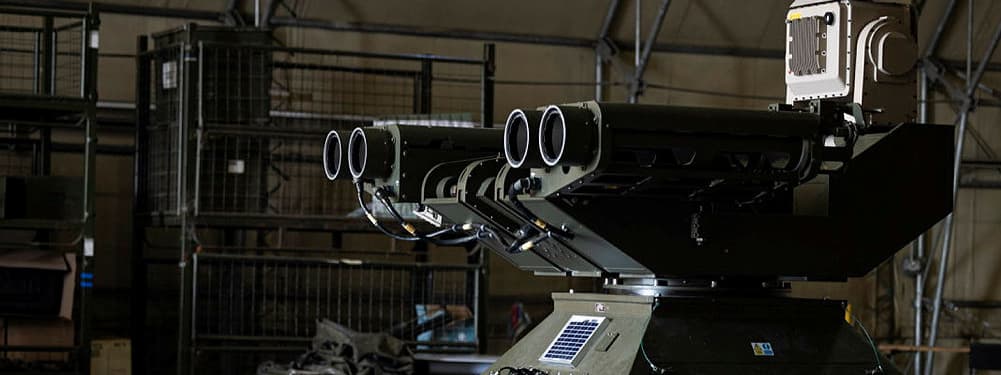
A Royal Air Force counter-drone system, combining sensors and kinetic effectors. (UK MoD Crown Copyright 2026)
NATO to invest USD40bn into counter-drone tech
The alliance will also establish a counter-drone marketplace.
08 JUL 2026

By
Victoria
Hanscomb
Editor, DSEI Gateway
NATO member countries will invest over USD40 billion into counter-drone capabilities over the next five years to expand their capacity to deploy drones at scale.
This investment comes as part of NATO’s new, wider Drone Edge initiative to produce, operate, and neutralise drones, announced by Mark Rutte, NATO Secretary General, at the NATO Summit Defence Industry Forum in Ankara, Turkey on 7 July.
While Rutte provided no details on which specific counter-drone capabilities will be procured, he emphasised that “repeated” drone incursions in NATO-allied countries require the organisation to detect, identify, and neutralise these threats.
The Drone Edge Initiative
Under the Drone Edge initiative, Rutte said that a counter-drone marketplace will also be established. This is intended to support the procurement of NATO-tested and NATO-compatible systems at “scale and speed”.
As part of Drone Edge, NATO member countries have additionally committed to a fivefold increase in training drone operators within their armed forces by the end of 2027.
To support this goal, the NATO Flight Training Europe (NFTE) project will be expanded to include drone operators. NFTE is an initiative to synchronise and connect training for aircraft and helicopter pilots across NATO, through 16 flight centres in eight countries. It now has 20 members after Finland, France, and Sweden officially joined NFTE at the NATO forum.
Rutte also announced that NATO’s Supply and Procurement Agency will award contracts worth “hundreds of millions” of euros for the procurement of surveillance drones for its allies.
Victoria
Hanscomb
Editor, DSEI Gateway
Victoria Hanscomb is an Editor at DSEI Gateway, reporting on the defence industry. Her previous experiences as an Editor include covering the international security market and pharmaceutical sector.