
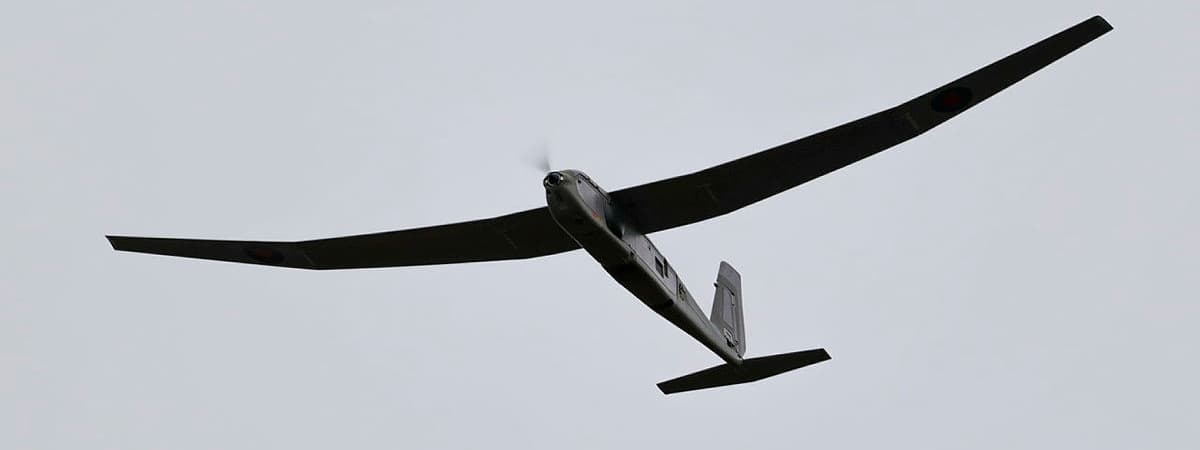
AeroVironment Puma surveillance drone. (UK MoD Crown copyright 2026)
Ukraine to procure UAVs based on frontline data
The approach aims to prevent subjective purchasing decisions.
08 APR 2026

By
Victoria
Hanscomb
Editor , DSEI Gateway
Ukraine is adopting a new data-driven, operational approach to drone procurement to reduce UAV underperformance and corrupt purchasing decisions.
The procurement system will follow an automated model and will deliberately not include brand or manufacturer names.
This is to ensure only UAVs that “perform reliably, strike targets, and have proven their effectiveness” are procured, the Ukrainian Ministry of Defence said on 10 March.
It is also intended to eliminate corruption, a problem the country has faced for many years. In August 2025, four arrests were made by anti-corruption authorities in connection with a fraudulent drone procurement scheme.
How will it work?
UAV ratings, based on combat data from several different digital systems, will be applied, ensuring only proven products are selected for frontline tasks.
One system contributing to this rating is e-Points, a programme which tracks the combat effectiveness of equipment.
Other systems include DOT-Chain and Brave1 Market – essentially digital marketplaces that enable military units to rapidly procure equipment. These will provide data on which UAVs are being procured by military units.
Further information will come from 'DELTA', a battlefield management system, and Mission Control, a real-time tracker of Ukraine’s drone operations.
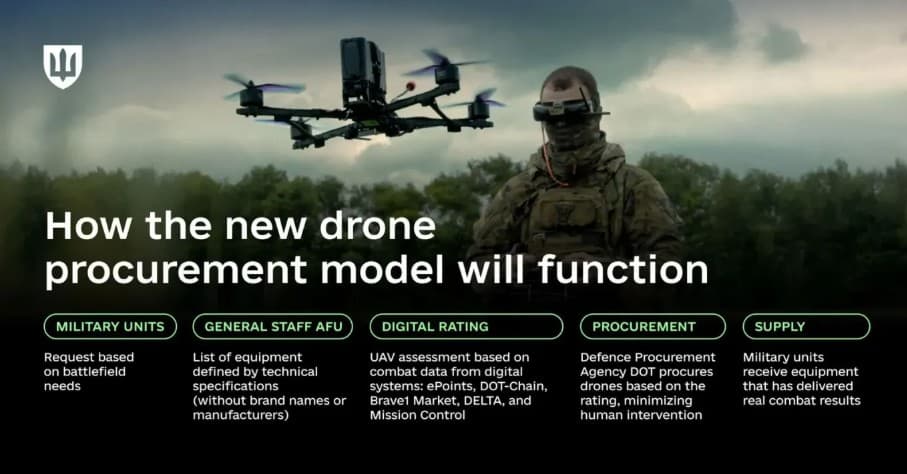
The new Ukrainian UAV procurement process. (A screengrab from Ukraine’s Ministry of Defence)
“This is the first time procurement decisions are generated automatically based on real combat data,” Ukraine Minister of Defence, Mykhailo Fedorov, said.
“If a drone does not fly or does not strike targets, the system simply will not generate demand for it. What matters is real combat performance.”
Budgeting
Ukraine says that it will direct 80% of its UAV funds towards solutions that have proven combat effectiveness.
The other 20% will be spent on R&D and to procure new technologies for testing in combat conditions.
This is to enable new technologies to be trialled without “unnecessary bureaucracy”.
Victoria
Hanscomb
Editor , DSEI Gateway
Victoria Hanscomb is an Editor at DSEI Gateway, reporting on the defence industry. Her previous experiences as an Editor include covering the international security market and pharmaceutical sector.