
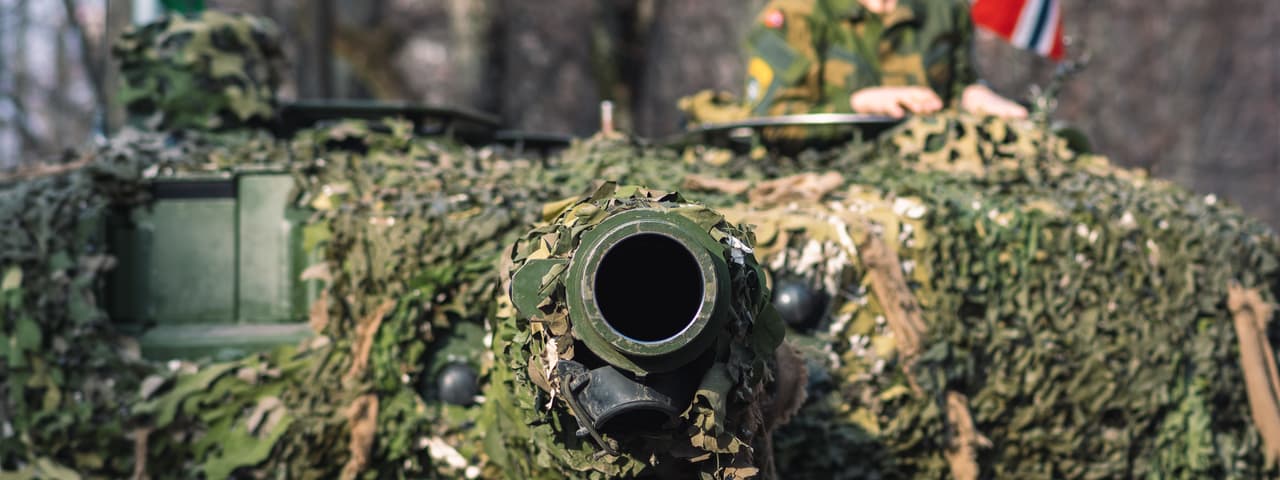
Troops from the Norwegian Armed Forces operating in Vilnius, Lithuania, as part of the NATO Response Force in 2022. (Shutterstock.com)
Norway outlines acquisition priorities
Eight priority technology areas have been identified.
23 FEB 2026

By
Benjamin
Howe
Defence Journalist, Clarion Defence & Security
Norway’s Ministry of Defence (MoD) released its annual defence materiel equipment plan on 10 February, covering the 2026 to 2033 period.
Known as the ‘Future Acquisitions for the Defence Sector’, the document stresses the increasingly unpredictable world, acknowledging that “Europe is at war, [and] competition among the great powers is intensifying”.
With this in mind, and building on the country’s 2025 National Security Strategy, the MoD seeks to further develop Norway’s military and industrial capabilities by investing in the following eight priority technologies:
- Command and control, communications, information, and battle management systems
- System integration
- Autonomous systems and AI
- Missile technology
- Undersea technology
- Ammunition, rocket motors, and military explosives
- Materiel technology specially designed and/or processed for military purposes
- Life-cycle support for military systems
It is worth noting that projects under the eight priority technology areas are being planned, but not yet confirmed, signed, or committed to.
Novel capabilities within these technology areas will be developed to complement existing acquisition plans, while ongoing collaborative projects will continue to dominate much of Norway’s defence focus.
Such projects include the Type 212CD submarine programme being undertaken with Germany, the country’s participation in the F-35 programme with the US (for ongoing aircraft support), and it's acquisition of Type 26 anti-submarine frigates from the UK.
Accounting for these programmes and the planned investments in the materiel plan, Norway’s acquisitions will be largely distributed towards naval (43%), aerospace (27%), and land (19%).
The remainder (11%) is split between other functions such as IT, logistics, and support.
Norway’s MoD intends to bolster cooperation with its industry partners to deliver on these capabilities as well as drawing on those outside of the sector.
The ministry expects this collaborative approach will drive modernisation, particularly by leveraging opportunities in the technology sector.
While the plan recognises the modest size of Norway’s domestic defence market, it aims to empower companies to export their products to bolster competitiveness.
Essential to this is ensuring industrial access to “essential raw materials, both nationally and through co-operation with allies”, the plan says.
Along with industrial partners, the plan calls for an enhanced relationship with its northern European neighbours, specifically the Nordic countries as well as France, Germany, and the UK.
It also highlights “major tensions in the transatlantic relationship” but goes on to recognise the US as Norway’s “most important ally”.
Overall, the plan aims to “balance the advantages of international co-operation with the necessity of controlling critical technologies and supply chains, especially concerning import dependency, export control, and national security interests”.
Benjamin
Howe
Defence Journalist, Clarion Defence & Security
Benjamin is a UK-based Journalist working for Clarion Defence and Security, having previously worked as a Content and Community Manager on Clarion's digital products.