
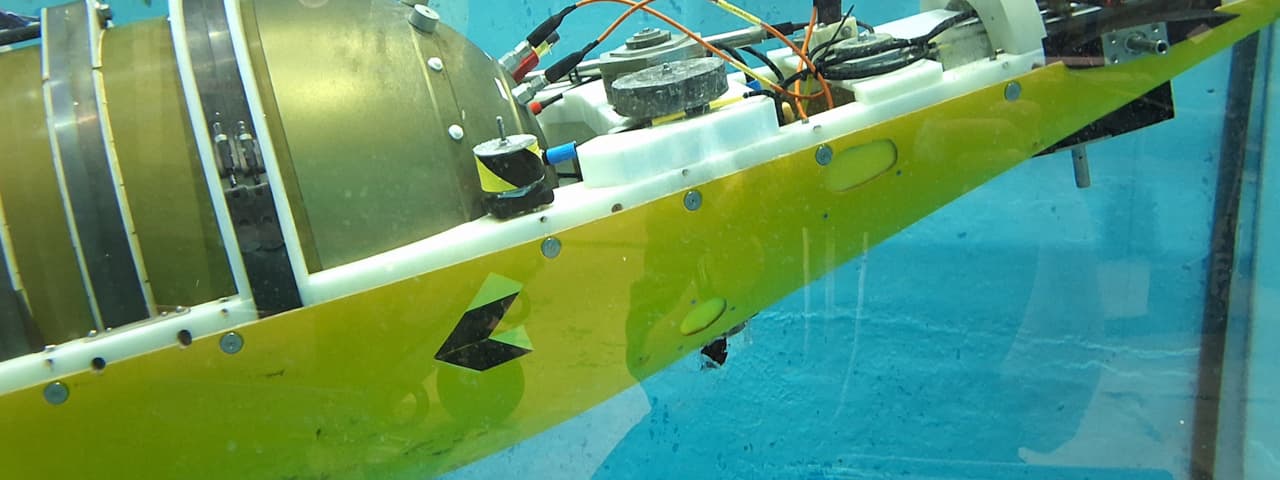
NOC's Boaty McBoatface equipped with the AQuest system. (Aquark Technologies)
Tech Quarterly: Aquark’s cold-atom technology for a GNSS-denied world
Aquark features in DSEI Gateway's Tech Quarterly for its deployable quantum timing technology, giving militaries a critical GNSS-independent PNT capability
09 OCT 2026

By
Kate
Tringham
Freelance Defence & Security Journalist
In just five years, UK quantum start-up Aquark Technologies has used an atom-trapping technique developed at the University of Southampton to create the UK's first industrially designed and built cold-atom atomic clock, which provides precise timing in GNSS-denied environments.
Maintaining reliable timing is critical to radar, communications and navigation, particularly as GNSS jamming and spoofing pose growing challenges for military operations.
Dubbed AQlock, the atomic clock is built on Aquark’s patented Super Molasses Trap (SMT), a simplified method of trapping and cooling atoms that removes around half the hardware and 90% of the power needed by conventional cold-atom systems, making the technology smaller, cheaper and more portable. The platform has already been tested on a drone, an uncrewed underwater vehicle, warships and a tank.
The Royal Navy has bought two AQlock systems for trials, and the British Army is working with the company on navigation applications.
Founded in 2021 by quantum physicists Andrei Dragomir and Alexander Jantzen, who met while completing their PhDs at Southampton, the university spinout has grown from two people to a team of 35. The SMT innovation was developed during Dragomir's doctorate, building on more than a decade of research within Southampton's Integrated Atom Chip group.
How the technology works
Speaking to DSEI Gateway, Dragomir, now Aquark’s CEO, said that conventional cold-atom systems typically use a magneto-optical trap, combining laser light with magnetic fields to cool and confine atoms. While highly effective in the laboratory, this method requires additional magnetic-field-generating hardware, adding to the size, complexity and power demands of the system.

CEO Andrei Dragomir. (Aquark Technologies)
Aquark’s SMT removes the magnetic-field element, instead using only optical fields to trap and cool atoms.
“The discovery we made not only eliminates half of the hardware but also reduces power consumption by 90%,” he said. "That was the spark that created the company, because we realised that we could deploy the technology in a way that was not possible before. We could start looking at new applications and enabling new capabilities, making the technology cheaper and more accessible to everyone.”
The SMT technology underpins the company’s cold atom engine, dubbed AQuest, which currently uses rubidium atoms and provides a common foundation from which different sensing applications, such as the AQlock atomic clock, can be developed.
From laboratory to field trials
From the outset, Aquark’s development strategy was focused on making its cold-atom technology robust enough to operate outside controlled laboratory conditions. Rather than first optimising performance in the lab and subsequently attempting to ruggedise the systems, the company took the reverse approach.
“If we build something that doesn’t survive, it doesn’t really matter how good it is,” Dragomir said. “We’re just not going to be able to use it anyway.”
Aquark’s CEO Andrei Dragomir
That philosophy shaped Aquark’s early test programme, which Dragomir said involved “trying to break the systems using very strange methods” to identify their limits, before progressively moving into more demanding real-world environments.
The first significant milestone came in November 2022, when Aquark mounted its cold-atom platform on a prototype quadcopter for flight trials with MBDA. In a world first, the system continuously trapped atoms in flight.
“The trial was very successful and told us the technology was ready to leave the lab. We could build something that survived in application,” Dragomir said.
Aquark was subsequently selected to join the first cohort of NATO’s Defence Innovation for the North Atlantic (DIANA) accelerator programme, which helped the company gain access to defence users. It also supported the first test of a cold atom trap underwater using the National Oceanography Centre’s Autosub AUV Boaty McBoatface.
Royal Navy: from survivability to capability
The company’s relationship with the Royal Navy has been particularly important in moving Aquark from demonstrating that the technology can survive the maritime environment towards applying it to specific military requirements.
In trials undertaken with the service’s Disruptive Capabilities and Technologies Office (DCTO) and supported by the UK’s Defence Science and Technology Laboratory, Aquark has progressed through three broad stages.
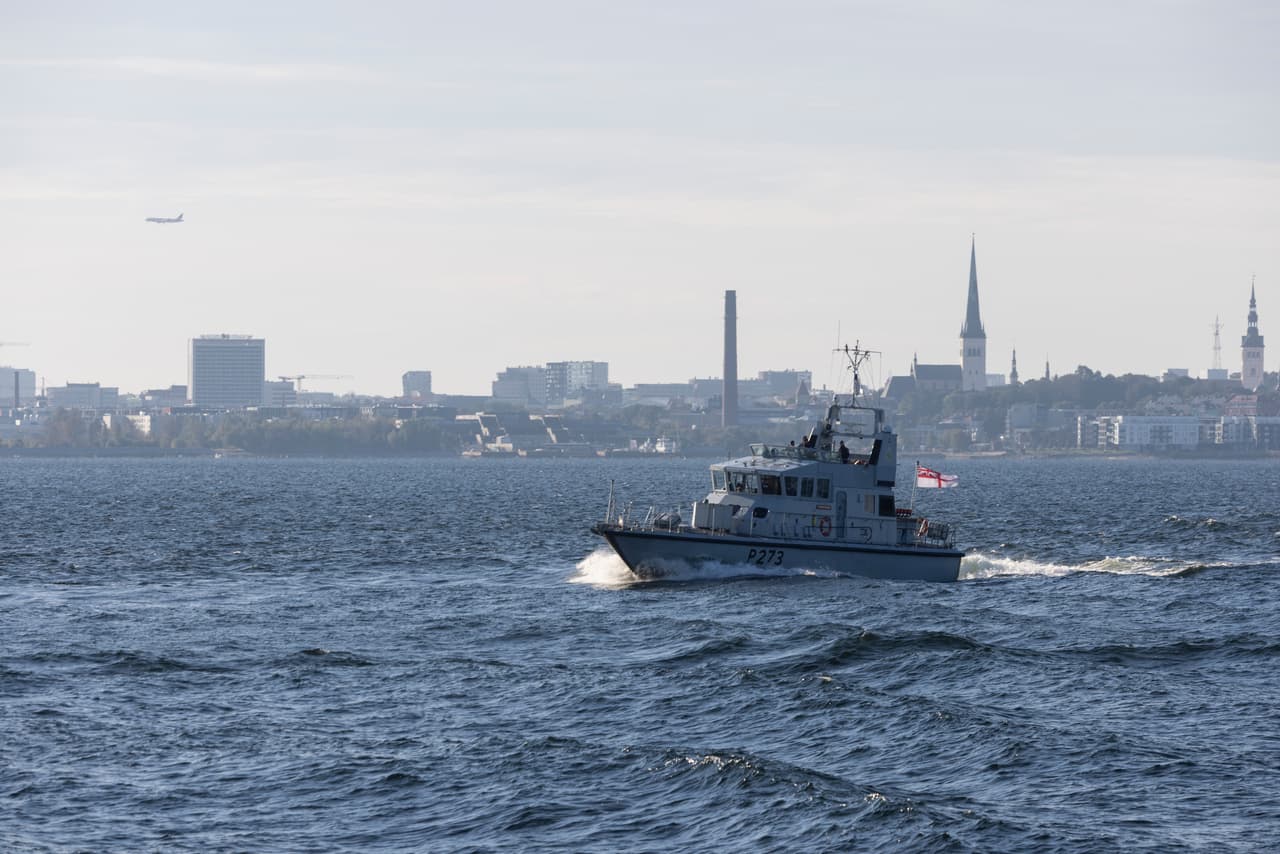
HMS Pursuer. (UK MoD Crown Copyright)
During two three-day trials carried out in 2024 and 2025, Aquark tested AQuest and AQlock onboard HMS Pursuer off the south coast of England, assessing the stability and performance of the technologies in rough sea conditions.
The next phase addressed a specific operational application. In 2025, DCTO awarded Aquark its first major commercial contract, purchasing the company's first two AQlock 2 atomic clocks.
In June 2026, the clocks provided independent timing to two Saab Giraffe 1X radars operating at geographically separate locations, with access to GNSS-derived timing deliberately removed.
The radars were able to create a single, accurate air picture while relying solely on the AQlocks for timing.
For Dragomir, the distinction between supplying equipment and developing a usable capability is important. “In the end, the user doesn’t care what’s in the box – it’s all about the capability; it’s all about the application,” he said.
That focus is also reflected in Aquark’s work with the British Army. Dragomir said the company began a commercial contract with the service in March 2026 focused on deploying atomic clocks for navigation in GPS-denied environments, with work expected to continue into 2027.
Dual-use applications and investment
Aquark’s platform technology also has dual-use application across 5G/6G telecoms, financial markets and energy grids, where precise timing is critical.
In 2025, Innovate UK awarded the company a GBP1.4 million contract to deploy AQlock 2 at a major UK telecoms site.
The company has also attracted investment from the NATO Innovation Fund – its first investment in a DIANA company and its first quantum investment – alongside MBDA, the UK Innovation & Science Seed Fund, and Denmark’s Export and Investment Fund.
Additionally, in May 2026, Aquark was one of 13 companies awarded contracts through an accelerated procurement process led by the UK Ministry of Defence’s Commercial X initiative, aimed at supporting the future UK ‘defence unicorns’.
Expanding the platform
Building on these successes, in May Aquark launched its first overseas subsidiary in Copenhagen, Denmark. Dragomir called the move “a smart strategic decision”, citing the country’s commitment towards quantum technology and northern European reach.
Looking ahead, Aquark is raising a new funding round as it looks to expand its 35-strong team and broaden its technology development.
While AQlock currently represents the company’s biggest commercial opportunity, other applications such as radio-frequency sensing, gravimetry, and eventually what Dragomir describes as “the holy grail” of full inertial navigation are on the roadmap.
These could be developed internally or through partnerships, with Aquark providing its platform to enable other companies to develop applications around it, he said.
“Either way, we want to see these applications make it to end users in the quantum space,” he said. “The main goal is always scalability of the technologies and making them accessible and part of our everyday lives.”
Kate
Tringham
Freelance Defence & Security Journalist
Kate Tringham is a freelance defence and security journalist specialising in the maritime domain. She has previously held roles at Janes, where she was the EMEA naval desk lead and former editor of Janes Navy International.