

A graphic representation of the UK’s Defence BattleLab in Dorset. (Created with Google Gemini AI)
The ‘battle lab’ concept – bringing militaries closer to innovation
DSEI Gateway analyses the ‘battle lab’ approach and how it's attempting to accelerate defence innovation.
12 MAR 2026

By
Benjamin
Howe
Defence Journalist, Clarion Defence & Security
In a period of intense geopolitical tension and major conflict, in both Europe and the Middle East, defence ministries require rapid, affordable, and more adaptable technologies.
Achieving this goal hinges on transforming procurement, strengthening collaboration between military end-users and developers, and backing small agile companies able to deliver at pace.
One approach aiming to achieve this is the ‘battle lab’. DSEI Gateway explores its origins and analyses its effectiveness in meeting these demands.
Origins of the battle lab
At the end of the Cold War in 1992, the then US Army Chief of Staff, General Gordon Sullivan, established the first battle labs to explore the art of the possible in military innovation.
Inspired by the Louisiana Manoeuvres – major US military exercises held in Louisiana in 1941 to test the military’s readiness for war – the concept aimed to embody a fail-fast field-lab mentality.
Central to the achievement of this is the move away from purely prescriptive, requirements-based technology development.
This approach continued into the following decades, when the concept spread to Europe, with France establishing its ‘Battle Lab Terre’ (BLT) in Versailles in 2018, followed by the UK Defence BattleLab located in Dorset, England, in 2021.
Importantly, these retain the characteristic fail-fast, real-time, iterative mentality of their US counterparts, with some differences to account for national priorities.
Battle Lab Terre
For France, the BLT was created to identify “innovations from the civilian world that could meet the operational needs of soldiers”, according to the French Army.
It does this by bringing companies – often startups – together in a practical setting alongside academia, government, and the military, to work on specific themed challenges, with the aim of providing a rapid test and acquire facility.
Its primary focus is on the development of low-cost, high-tech capabilities, while looking to break the trends of long procurement cycles often associated with the sector. Notably, the French Army was able to procure ballistic calculators for sniper rifles within months rather than years, as a result of the BLT’s ‘test and buy’ approach.

Shark Robotics’ Rhyno Protect robot. (Frederic Legrand COMEO/ Shutterstock.com)
Progress and success
Primarily participants take part in both explorative efforts and physical-capability demonstrations. In the past year, these included a variety of innovation-centric events, such as the lab’s flagship annual Collaboration-Man-Machine (CoHoMa) challenge.
The CoHoMa challenge empowers startups to bring their drones and robots to a specialised environment to solve tactical scenarios. It successfully identified specialised robotics companies, such as Exail and Shark Robotics, that the French Army now works with directly.
The lab has seen success in avoiding the so-called ‘valley of death’ – a term used to describe the failure of startup projects, according to director of the lab, Colonel Thomas Brucker last April.
The colonel confirmed that the lab will now become a permanent part of the French Army’s procurement architecture.
Going forward, the success of the lab will be measured by its ability to accelerate the testing of low-cost innovations, especially amid the proliferation of low-cost uncrewed systems being observed in theatres from Ukraine to the Middle East and beyond.
UK Defence BattleLab
In a similar fashion to its French counterpart, the UK Defence BattleLab is a self-described “collision space” where small and medium-sized enterprises (SMEs) and military end users work collaboratively.
However, when compared to the Battle Lab Terre, the UK Defence BattleLab operates as a broader tri-service asset, prioritising the growth of the UK's small supplier ecosystem alongside military utility.
It does this through themed competitions, hackathons, and challenge-led problem-solving sessions that focus on specific capability gaps.
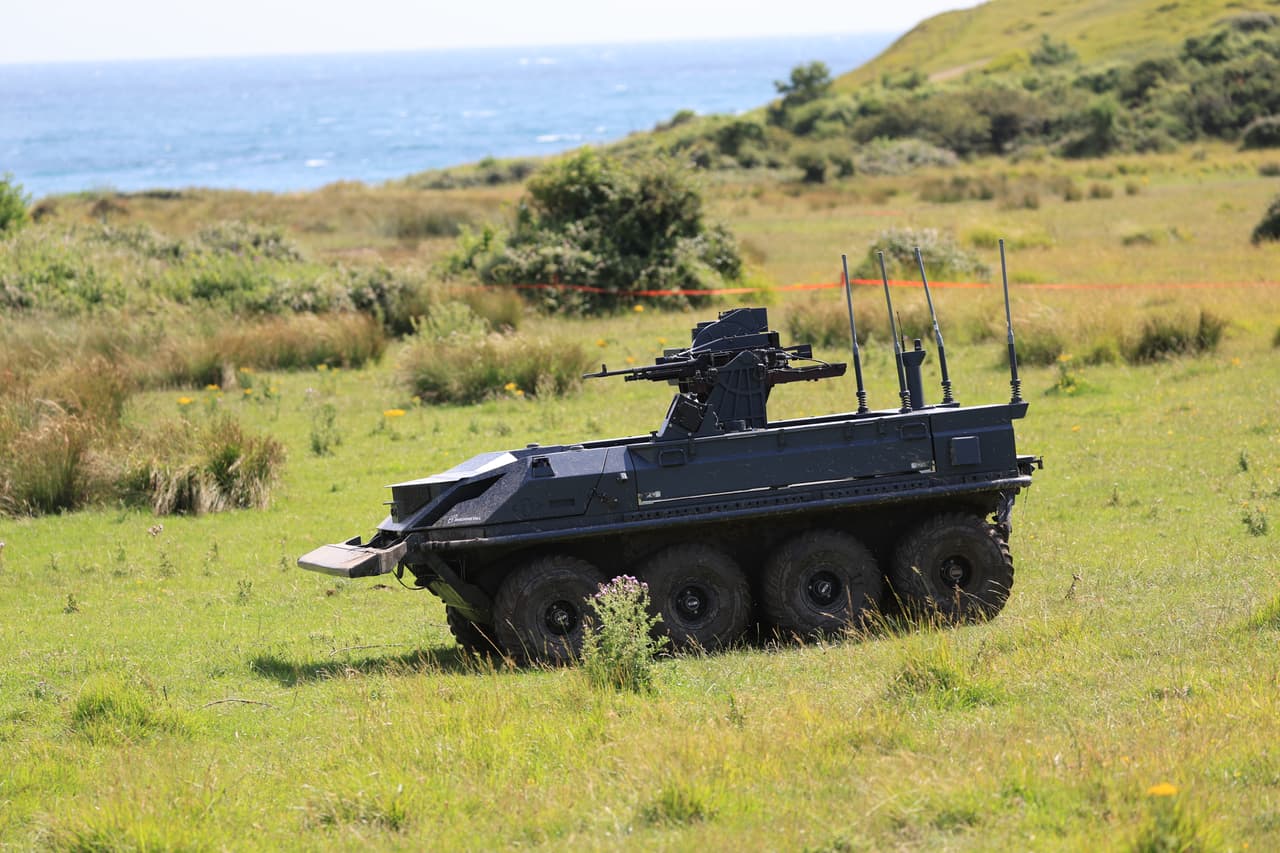
A Mission Master UGV being tested on Lulworth testing range. (UK MoD Crown Copyright 2023)
The lab itself features dedicated facilities which the Ministry of Defence (MoD) says are designed to lower the barrier to entry for non-traditional suppliers to test their equipment. These include a 450-square-metre engineering workshop, 5G testbeds, and access to the Lulworth testing ranges, allowing for live-fire and multi-domain testing in cleared airspace.
Using these grounds, the lab provides a space for innovators to put their solutions to use, and iterate them in real time alongside military users, with the intent of reducing the time from concept to frontline feedback.
Has it been successful?
Since its inception, the lab has run several events, including a 2023 telexistence “demo-day” run by the Defence Science and Technology Laboratory, which saw novel remotely operated technologies tested.
The GBP2.3 million telexistence competition involved several companies demonstrating how operators can remotely deal with hazardous materials within a complex environment, using BattleLab facilities.
Despite these activities and initiatives, the battle lab has reportedly not met expectations. Participants – including MoD personnel – reportedly do not understand the lab’s exact offerings, and see its location as a barrier to engagement, according to a report published by defence consultancy company MilUX.
The report also highlighted confusion around how the lab’s efforts would interact or overlap with existing MoD innovation initiatives. SMEs in particular said that they found it hard to interact with the end users – one the key goals of the initiative.
Going forward, questions remain around how often the BattleLab innovation events take place and how SMEs might get involved, as – at the time of publishing – the facility’s website solely lists its regular coffee mornings with no testing events listed.
A tool for innovation
In the current climate, battle labs stand out for their ability to reduce procurement risk.
By testing a minimum viable product in a representative military environment before committing to a multi-year contract, militaries can identify failures early and cheaply.
Companies can also learn from soldiers directly, helping to evolve their technology and ensuring it is suited the demands of the battlefield.
This agility is essential as the pace of technology development – particularly in AI and autonomous systems – is happening in months and sometimes weeks. This speed significantly outstrips traditional defence procurement, which typically spans years, leaving critical technologies at risk of obsolescence before they even reach the field.
With this in mind, battle labs provide a buffer where technology, including from the civilian world, can be operationalised in close collaboration with users. However, greater visibility of testing and evaluation opportunities at their respective facilities will be key to ensuring industry participation.
No silver bullet
Battle labs are not a silver-bullet for efficient defence procurement, however, rather they are a useful tool within a wider innovation ecosystem.
They complement accelerators (which focus on business and tech acceleration) and the efforts of innovation organisations – such as the UK’s Defence Science Technology Laboratory – which focus on long-term research and development.
While an accelerator might help a startup secure funding, the battle lab provides real-time validation that a product works in the hands of a user.
By functioning as a bridge between technology development and frontline reality, battle labs ensure that military equipment is defined by utility rather than just specification.
Given the pace and scale of modern conflict, and the need to develop new – often commercially-adapted – capabilities at pace, battle labs should play a bigger, more visible part in the future of defence procurement.
To deliver this, ministries of defence should increase the amount of testing days and challenges hosted at these sites, ensuring that the relevant personnel are in place, while advertising these opportunities as broadly as possible to industry.
Benjamin
Howe
Defence Journalist, Clarion Defence & Security
Benjamin is a UK-based Journalist working for Clarion Defence and Security, having previously worked as a Content and Community Manager on Clarion's digital products.