
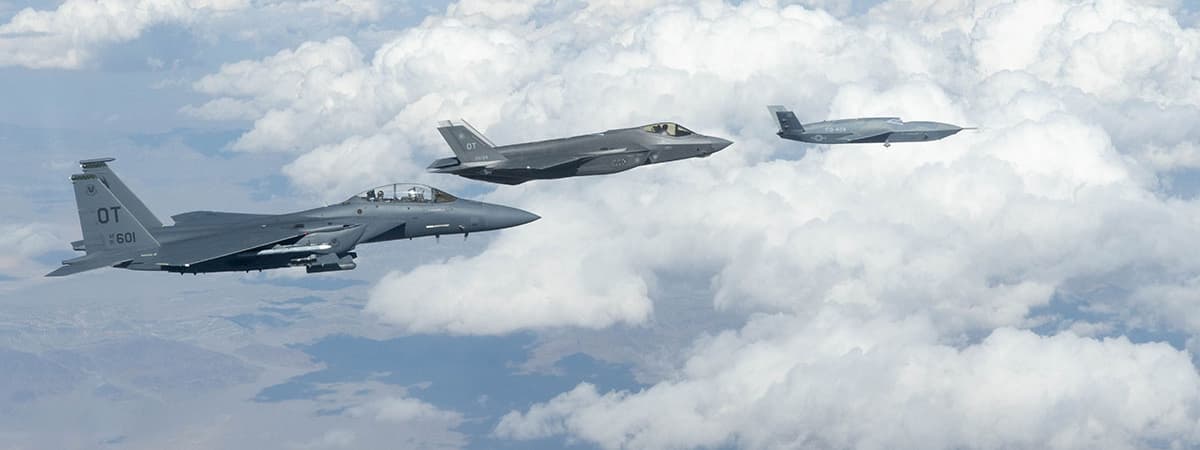
A General Atomics FQ-42 Vengeance CCA (right) flies in formation with F-35A and F-15E fighter jets. (General Atomics)
Collaborative combat aircraft: mapping the global programmes taking shape
As collaborative combat aircraft move from concept and demonstration towards operational service, DSEI Gateway examines some of the major programmes under development.
25 SEP 2026

By
Kate
Tringham
Freelance Defence & Security Journalist
Collaborative combat aircraft (CCA) are emerging as an increasingly important element of future combat air forces, offering militaries a way to add mass without relying solely on sophisticated and expensive crewed fighters.
Broadly, CCA describes uncrewed combat aircraft designed to operate collaboratively with crewed fighters and other platforms, extending their reach, sensing, weapons capacity or electronic-warfare capabilities while reducing the risk to aircrew.
Often associated with the ‘loyal wingman’ concept, they are intended to complement rather than replace crewed combat aircraft, enabling larger numbers of platforms to be fielded at lower cost.
There is, however, no single definition or model. Programmes differ considerably in size, cost, survivability, autonomy and intended role. With programmes now moving from concept development and flight demonstration towards production and operational fielding, DSEI Gateway examines some of the major efforts under way globally.
US: building CCAs at scale
The US Air Force (USAF) was the first US service to establish a dedicated CCA programme in 2023 and is the most advanced in developing the concept. Envisaged as uncrewed fighter-class aircraft designed to team with the F-35A and future F-47 fighter jets, CCAs form a core element of the USAF’s Next Generation Air Dominance (NGAD) family of systems.
NGAD is designed to replace the Lockheed Martin F-22 Raptor and secure future air superiority by embedding a sixth-generation crewed fighter within a networked ecosystem of autonomous drones, advanced sensors, and next-generation weapons.
The USAF has adopted a multi-increment approach for the CCA programme, with an overall ambition to field approximately 1,000 CCAs.
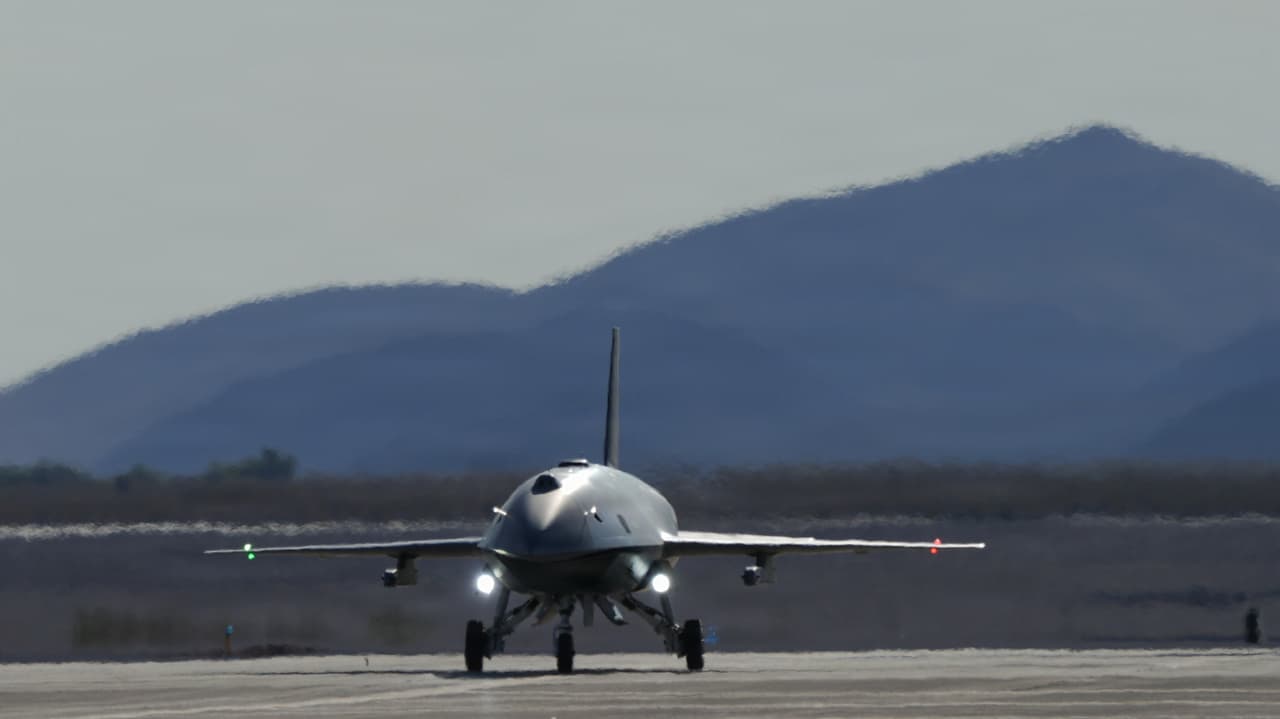
Anduril’s FQ-44 Fury platform will form half of the USAF’s Increment 1 CCA fleet. (USAF/Senior Airman Renee Blundon)
Increment 1 is focused on an initial air-superiority capability, with the CCAs designed to carry weapons and operate semi-autonomously alongside crewed fighters. More than 150 CCAs will be procured by the end of the decade and at least 500 will be in service by 2032.
In June 2026, the service awarded engineering and manufacturing development and production contracts to Anduril and General Atomics for their FQ-44 Fury and FQ-42 Vengeance aircraft respectively, putting Increment 1 into production.
Meanwhile, concept refinement is under way for Increment 2 with nine unnamed suppliers. The current phase is expected to run until roughly mid-2027, when the USAF plans to narrow the field to around six conceptual designs for prototyping.
Increment 2 will address more demanding requirements, although these are yet to be defined. Nevertheless, the aircraft are expected to have greater range and payload capacity, more multi-mission versality, and autonomous electronic warfare capabilities.
A subsequent down-selection will determine the final variant chosen for production.
An expeditionary CCA
The US Marine Corps is pursuing a more focused CCA capability under its 'Marine Air-Ground Task Force Uncrewed Expeditionary Tactical Aircraft' programme. In January 2026, it selected Northrop Grumman, partnering with Kratos, to develop its first operational CCA.
Under the initial 24-month development effort, Northrop Grumman will integrate its mission systems and autonomy software onto Kratos’ XQ-58 Valkyrie UAS, building on earlier Marine Corps experimentation with the platform in roles including electronic warfare and crewed-uncrewed teaming with F-35B/Cs. The Marine Corps is looking to field its first CCA prototype and start operational testing in 2029.
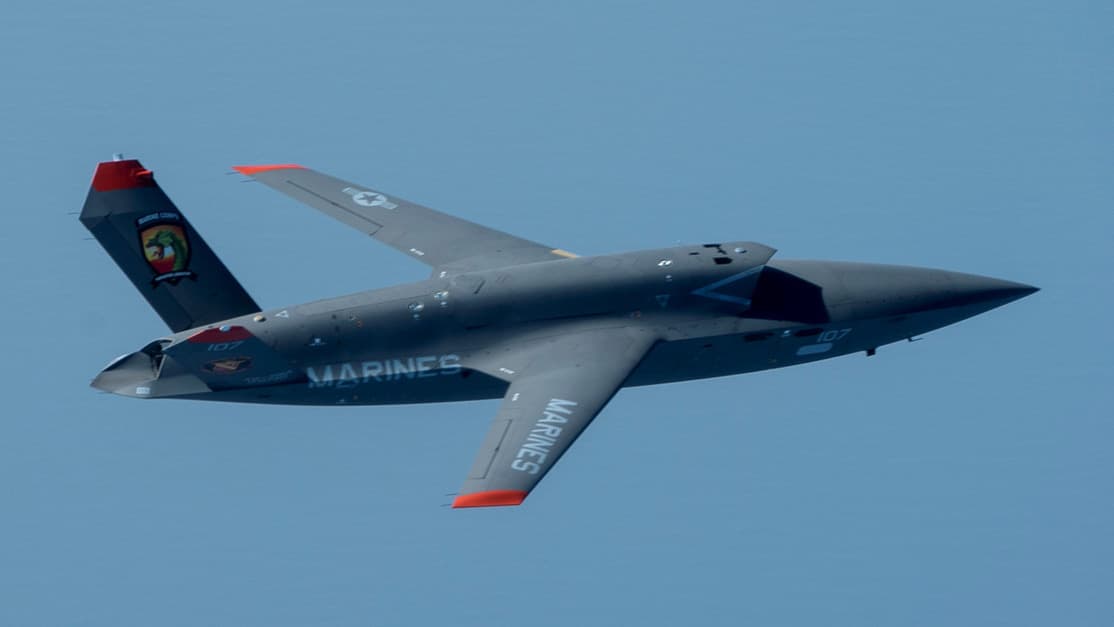
Kratos’ XQ-58 Valkyrie UAS. (Kratos)
Taking CCAs to the carrier deck
The US Navy, meanwhile, is progressing plans for a carrier-based CCA capability to augment its F/A-18E Super Hornet and F-35C Lightning II aircraft. In August 2026, Naval Air Systems Command issued a request for information for CCA Increment 1, seeking industry input ahead of a planned effort to develop and demonstrate two fully functional autonomous prototype aircraft capable of operating from Nimitz- and Ford-class carriers.
The navy wants the prototypes to achieve a first flight within 24 months and shore-based carrier certification within three years of award. The service has been working with several companies on conceptual designs since 2025. While Anduril, Boeing, General Atomics, and Northrop Grumman are under contract for early-stage conceptual CCA design work and Lockheed Martin is developing a common control system, the August request for information marks the next step towards a carrier-capable CCA.
UK: CCA ambitions gather pace
The Royal Air Force (RAF) is leading the UK’s CCA effort through its Storm Fighter programme, launched in July 2026 and backed by GBP300 million allocated in the Defence Investment Plan. Building on the RAF’s in-service StormShroud autonomous collaborative platform, which is based on Tekever’s AR3 UAV, Storm Fighter forms part of a wider family of autonomous systems. This includes Storm Chrome, an electronic warfare platform, and Storm Fire, a one-way attack drone with a range of up to 1,000 miles.
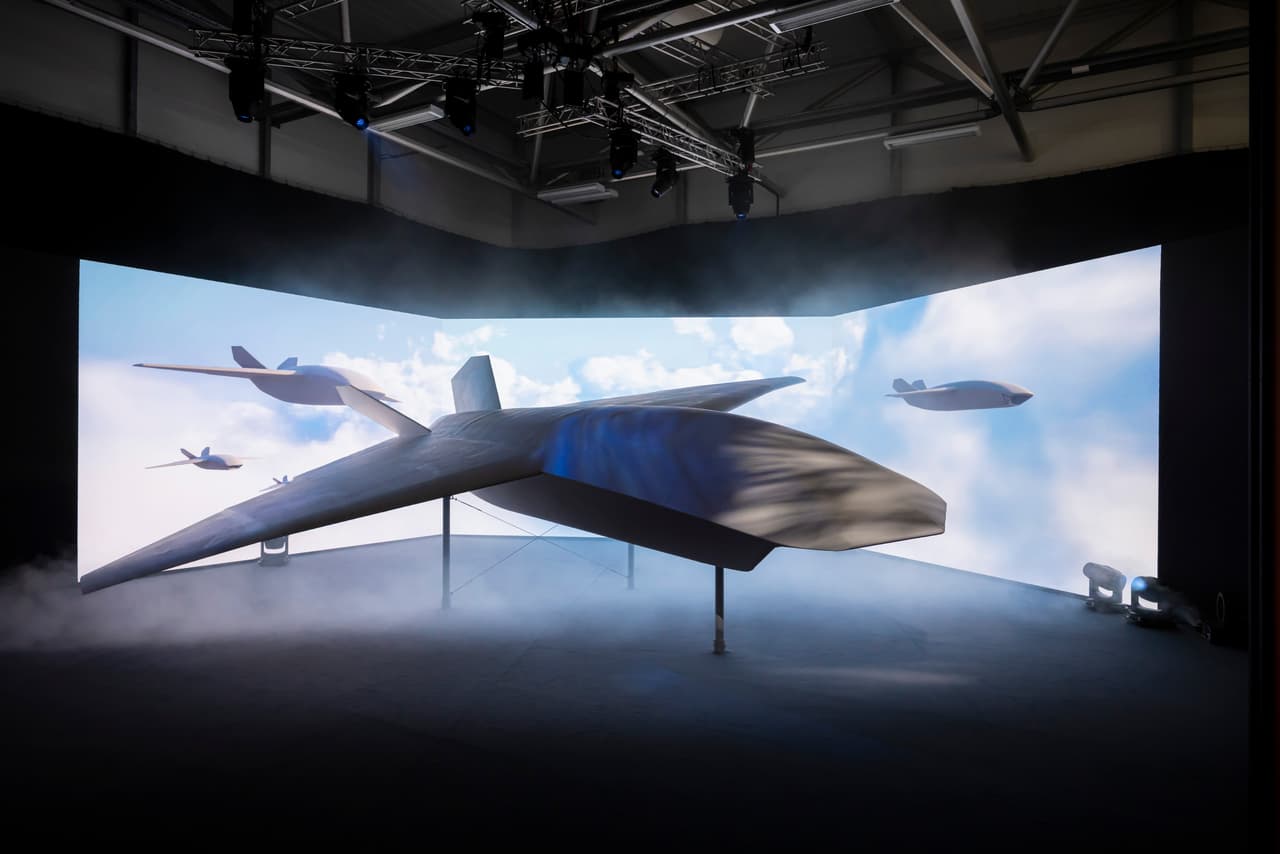
BAE Systems Brontanax CCA demonstrator at Farnborough International Airshow on 22 July 2026. (BAE Systems)
Intended to operate alongside Typhoon, F-35 and future Tempest fighters, Storm Fighter is expected to provide capabilities including electronic warfare and precision strike. While a formal competition is yet to be announced, this year BAE Systems unveiled Brontanax – a company-funded pre-series CCA prototype developed in collaboration with the RAF since 2022.
The RAF has adopted the platform as its operational concept demonstrator, with a maiden flight planned for 2027. The wider Storm Fighter programme is targeting an initial operational capability by 2030.
Building the hybrid carrier air wing
The Royal Navy is exploring a carrier-based autonomous combat aircraft as part of Project Pantheon, its broader framework for developing a hybrid carrier air wing combining F-35Bs with autonomous platforms.
Within this, Project Vanquish is a feasibility and demonstration effort that will undertake flight trials of a jet-powered, fixed-wing short take-off-and-landing uncrewed aircraft from a Queen Elizabeth-class carrier without catapults or arrestor gear. The demonstration, planned by the end of 2027, is intended to inform future capability and procurement decisions rather than deliver an operational system.
Loyal wingmen for Apache
For its part, the British Army is developing autonomous loyal wingmen for its AH-64E Apache attack helicopters under Project Nyx. The aircraft are intended to provide additional sensing and effects across missions including reconnaissance, targeting, strike and electronic warfare while operating autonomously alongside Apache crews.
Following a prequalification phase involving six suppliers, in May 2026, the UK Ministry of Defence shortlisted Anduril Industries UK, BAE Systems, Tekever and Thales UK to further develop their UAS designs, with each receiving a share of GBP10 million to support the effort. Up to two finalists will be selected in the coming months to build prototypes, with the army looking to field an operational variant by 2030.
Australia: Ghost Bat moves towards operations
Australia’s CCA effort centres on the Royal Australian Air Force’s (RAAF’s) MQ-28A Ghost Bat, an uncrewed autonomous combat platform developed by Boeing Defence Australia in partnership with the RAAF and designed to team with frontline combat and support aircraft including the F/A-18F Super Hornet and E-7A Wedgetail.
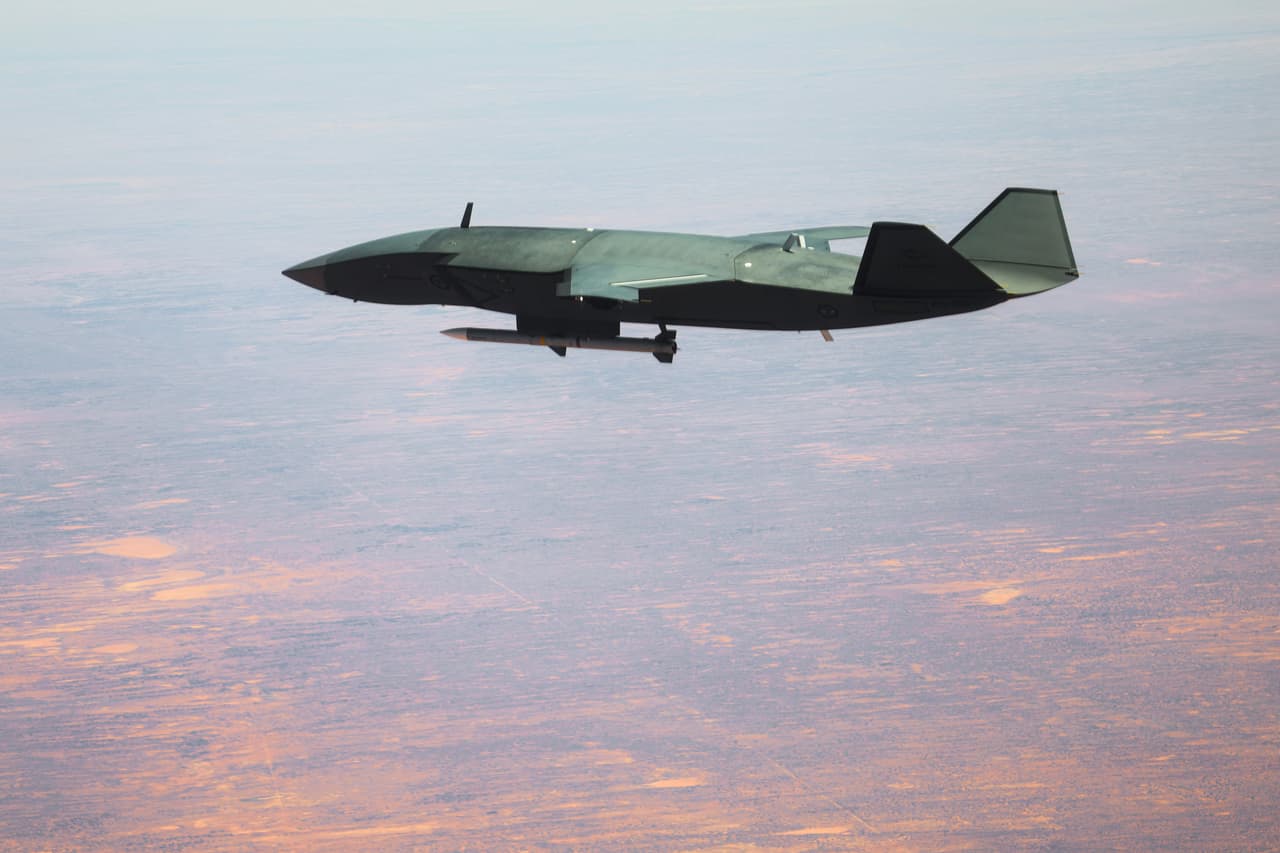
MQ-28A Ghost Bat. (Commonwealth Copyright/Australian DoD)
Development began in 2017, with the first prototype flying in February 2021. Since then, eight Block 1 developmental aircraft have been built, followed by an order in 2024 for three more capable Block 2 aircraft. The programme has progressively demonstrated increasingly complex autonomous operations, including multi-aircraft missions and teaming with crewed platforms.
A major milestone came in December 2025, when the Australian government committed approximately AUD1.4 billion (GBP745 million) to transition Ghost Bat from development and testing towards an operational capability.
This included a AUD754 million contract with Boeing for a third tranche of aircraft over three years, comprising six additional Block 2 aircraft and an enhanced Block 3 prototype, supporting the delivery of an operational capability by 2028.
The investment followed a series of capability demonstrations culminating in a live-fire trial in December 2025. During the test, an MQ-28A – teamed with an RAAF E-7A and F/A-18F – autonomously fired an AIM-120 Advanced Medium Range Air-to-Air Missile to destroy an airborne fighter-class target.
Europe: remote carriers and a new CCA pathway
Europe’s most established CCA effort has developed under the Franco-German-Spanish Future Combat Air System (FCAS), conceived as a ‘system-of-systems’ combining a crewed New Generation Fighter (NGF), uncrewed collaborative platforms known as remote carriers, and a combat cloud linking them with other platforms and sensors.
The future of that architecture was thrown into question in June 2026 when France and Germany abandoned plans to jointly develop the NGF following prolonged industrial disagreements between Dassault Aviation and Airbus.
Work on the remote carrier pillar – led by Airbus, with MBDA and Spanish consortium ‘SATNUS’ as main partners – has meanwhile progressed to flight demonstrations. In March 2026, SATNUS completed a fourth flight-test campaign involving up to three physical and two simulated remote carrier demonstrators, testing capabilities including collaborative navigation, formation flight, evasive manoeuvres and mission replanning.
In parallel, Airbus is developing a phased family of uncrewed CCA aircraft, initially targeting Germany. Its U740 Valkyrie, based on the Kratos XQ-58 platform and equipped with Airbus’ Multiplatform Autonomous Reconfigurable and Secure mission system, is intended to provide the German Air Force with an initial operational capability by 2029, teaming with Eurofighter. This is expected to be followed in the early 2030s by the larger U760 Ravenstorm, unveiled at ILA Berlin in June 2026 and designed for air-to-air, strike and electronic-warfare missions.
Other notable programmes
Elsewhere, a growing number of countries are developing CCAs or related loyal-wingman capabilities.
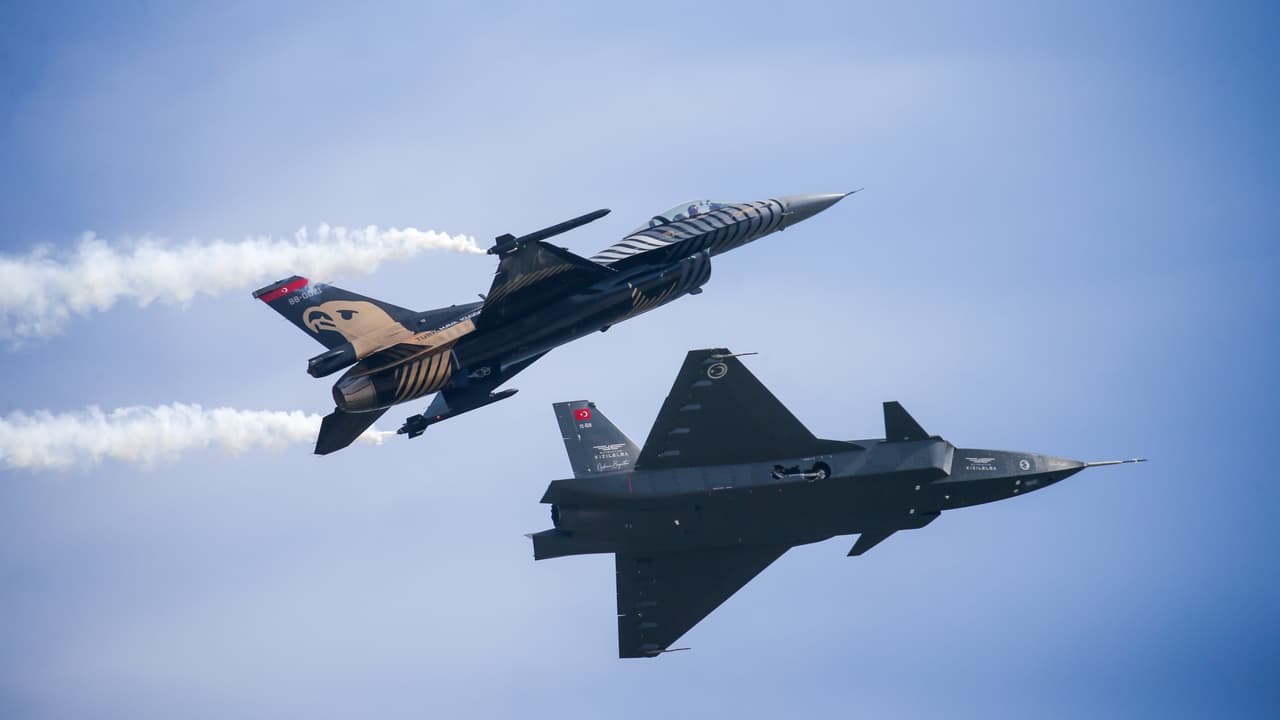
Kızılelma UCAV (bottom). (Baykar)
Turkey’s Baykar is progressing its jet-powered Kızılelma uncrewed combat aerial vehicle (UCAV) towards service, with serial production under way and first deliveries to the Turkish Air Force expected to start during 2026. The aircraft has demonstrated autonomous formation flight and undergone a series of weapons trials, including air-to-air and internal-bay firings.
‘TUSAŞ’ is separately developing its ANKA-3 flying-wing UCAV, including for crewed-uncrewed teaming.
China is also developing several fighter-sized uncrewed combat aircraft, including two tailless designs publicly unveiled in 2025 as “unmanned air dominance” aircraft and assessed by defence analysts to be undergoing operational testing.
South Korea, meanwhile, is pursuing several CCA concepts. Korean Air has built two ‘Low Observable Wingman UAV System’ prototypes for flight testing, while Korea Airspace Industries is developing ‘Medium Unmanned Collaborative Combat Aircraft’ and smaller ‘Small Unmanned Combat Aircraft’ designs intended to operate alongside the KF-21 fighter jet.
India has multiple projects under development, including Hindustan Aeronautics Limited’s Warrior UCAV and the Abhimanyu drone developed by NewSpace Research and Technologies, which has been selected for further development under the Indian Navy’s Naval Collaborative Combat Air Vehicle programme.
Japan is also funding national development of CCAs intended to operate with its future fighter, with conceptual design work under way in FY2026.
Kate
Tringham
Freelance Defence & Security Journalist
Kate Tringham is a freelance defence and security journalist specialising in the maritime domain. She has previously held roles at Janes, where she was the EMEA naval desk lead and former editor of Janes Navy International.