
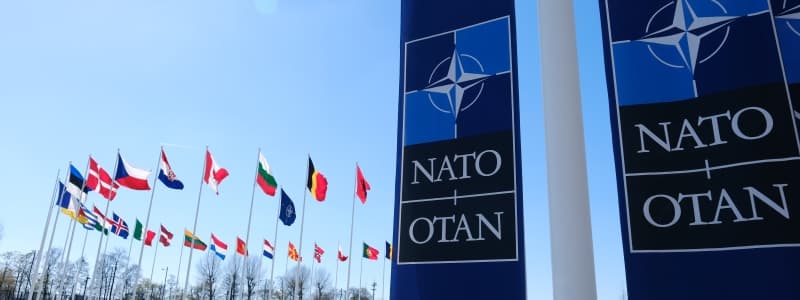
(Alexandros Michailidis/Shutterstock.com)
ITEC 2026: NATO seeks new modelling and simulation system
DSEI Gateway reports from our partner event, ITEC 2026, in London.
17 APR 2026

By
Benjamin
Howe
Defence Journalist, DSEI Gateway
NATO is looking for a new modular, coherent modelling and simulation (M&S) capability, moving away from the stove-piped application-centric tools it currently uses, according to a request for proposals (RFP).
Announced at ITEC 2026 on 16 April, the new system aims to transform defence planning, operational analysis, wargaming/experimentation, and training under the Next Generation Modelling & Simulation programme.
This new M&S “ecosystem” must support multiple application areas such as computer-assisted exercises, operations planning, operational analysis, strategic studies and computer-assisted wargames across all domains, with “physical, virtual and cognitive dimensions, and at multiple levels of classification,” the RFP detailed.
Speaking on the RFP at ITEC, Brian Vogt, the Head of M&S at NATO’s Allied Command Transformation, said that it is moving fast to meet the urgent need for M&S.
The key engagement dates regarding the RFP include:
- 17 April: the deadline to register for the upcoming bidder’s conference
- 23 April: an online bidders conference. This will be a recorded Q&A session
- 24 April: the bidders industry introduction. This is an opportunity for smaller providers to introduce themselves to prime companies with a view to partnering on wider M&S capability delivery
- 29 May: the final deadline for RFP submissions
Once submitted, Vogt says that proposals will be considered through four sprints, with some remuneration available to participants at specific stages.
At first, proposals will be evaluated for their merit, before “a maximum of five bidders” will be downselected to proceed to the second sprint.
During sprint two, demonstrations and further evaluations will take place, with EUR50,000 available in remuneration.
A similar process will take place in sprint three. The companies that complete this sprint but do not progress will receive EUR250,000, while those going on to the fourth sprint will benefit from EUR550,000.
During sprint four, a final vendor will be selected, with participants receiving EUR500,000, while the winner will secure EUR700,000.
Overall, the selection process is expected to last 11 months from sprint one to final selection.
To participate, Vogt recommends that industry reach out to the contacts detailed in the RFP documentation, while asking them to submit questions “as early as possible” amid the rapid turnaround.
Regarding the sprint activities, Vogt suggested that industry focus their demonstrations on the accessibility of their user interfaces, overall simulation capability, and their ability to develop a database.
Benjamin
Howe
Defence Journalist, DSEI Gateway
Benjamin is a UK-based Journalist working for DSEI Gateway, having previously worked as a Content and Community Manager on Clarion's digital products.