
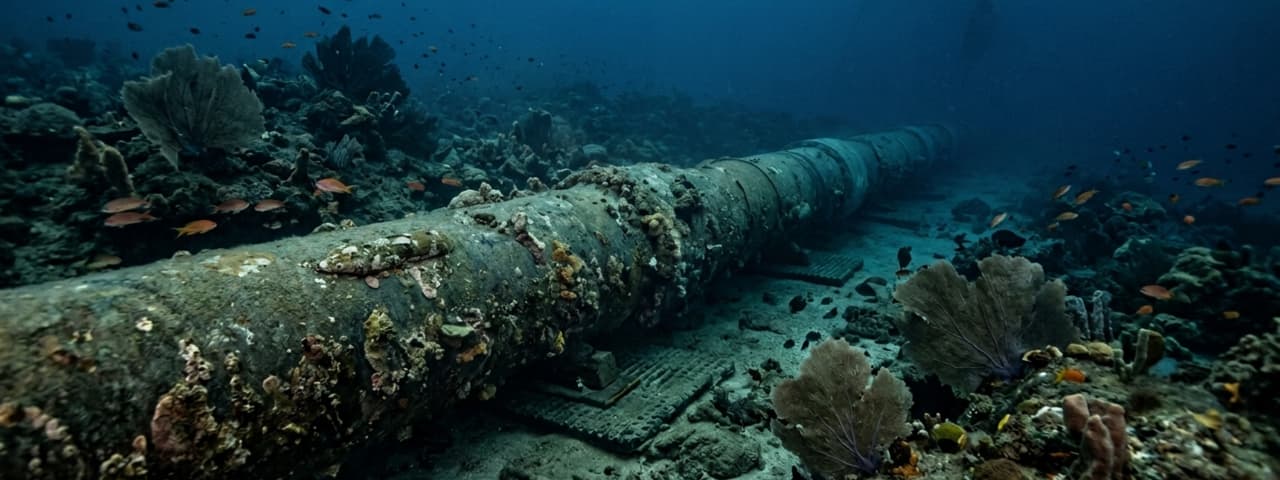
A rendering of an undersea pipeline. (Google Gemini AI)
Securing the depths: the role of uncrewed tech in protecting CUI
As threats to subsea assets grow, DSEI Gateway speaks with innovators developing the technology tasked with protecting this vital maritime infrastructure.
20 MAY 2026

By
Benjamin
Howe
Defence Journalist, DSEI Gateway
The modern world is nearly entirely dependent on critical undersea infrastructure (CUI).
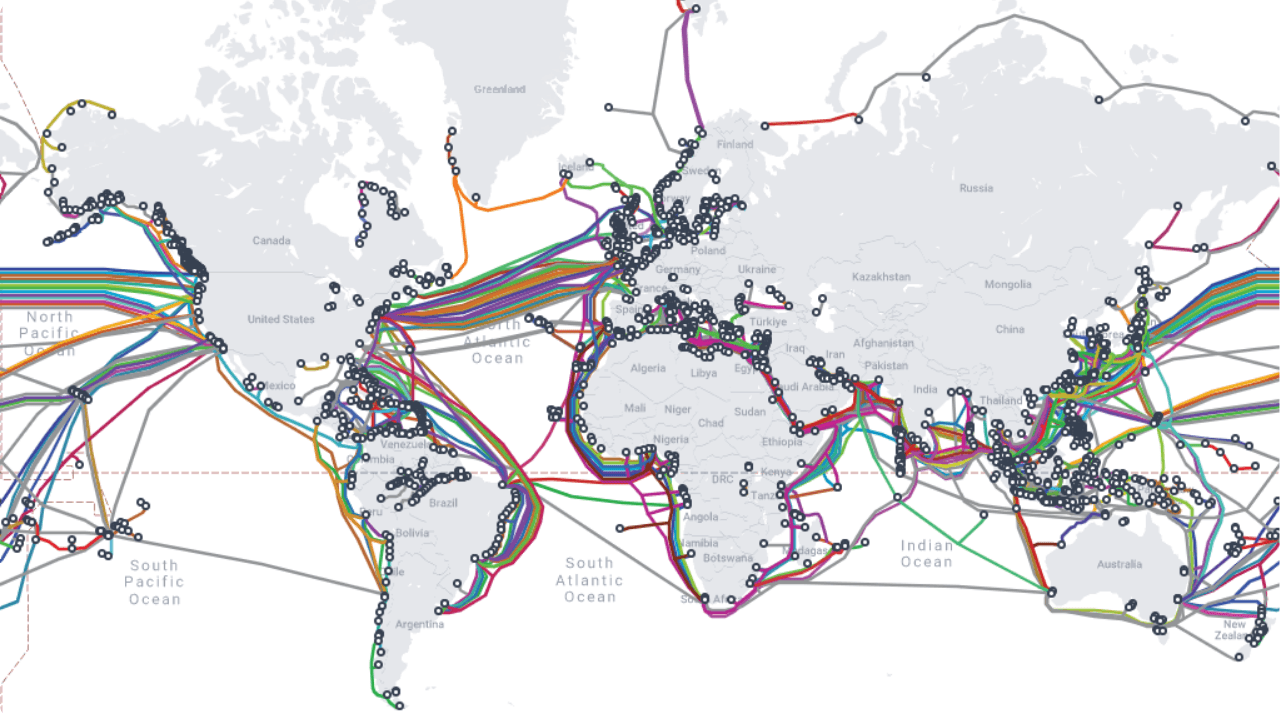
Global subsea cables. (TeleGeography)
It is estimated that 99% of international data traffic, including voice calls and internet data, travel through subsea cables, according to the UK Government.
Meanwhile, many countries depend on subsea pipelines to transport oil and gas from offshore fields to the mainland.
This reliance is increasingly threatened as malign actors intensify efforts to tamper and sabotage CUI.
Speaking about the vulnerability of CUI, Matt Western, the Chair of the UK’s Joint Committee on National Security Strategy, said it was “the soft underbelly of the NATO alliance” in a UK Parliamentary report in September.
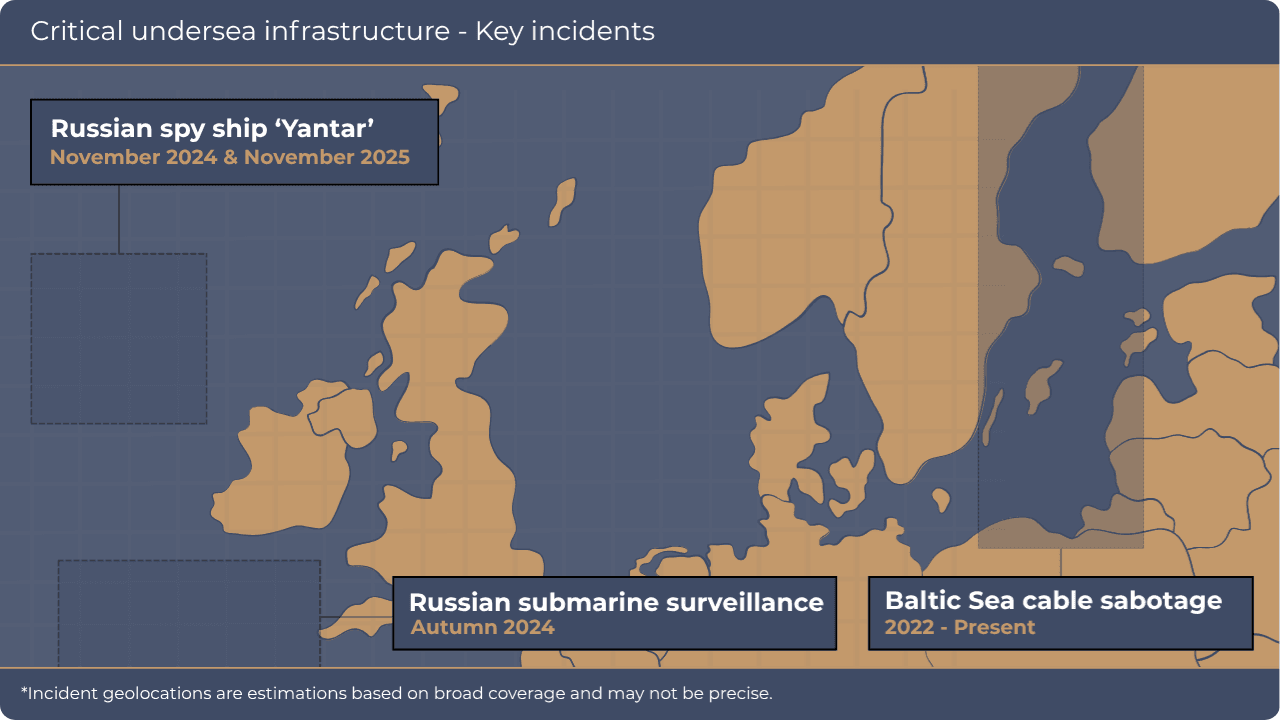
A rendering of major CUI incidents.
To counter this threat, militaries now urgently require new capabilities that can support the mass-surveillance, mapping, and monitoring of this critical infrastructure from the Baltic Sea to the North Atlantic.
Industry has moved rapidly to answer these requirements, leveraging uncrewed systems to offer scale, endurance, speed, and modularity needed to help militaries to counter this threat.
Euroatlas
One company that is developing uncrewed platforms for protecting CUI is Euroatlas – a German company that describes itself as “A 60-year-old defence engineering company, [which is] entering a new phase.”
After a long history of supplying defence power electronics, the company expanded into autonomous platforms in 2023, Verineia Codrean, Euroatlas’ Chief of Strategy, told DSEI Gateway.
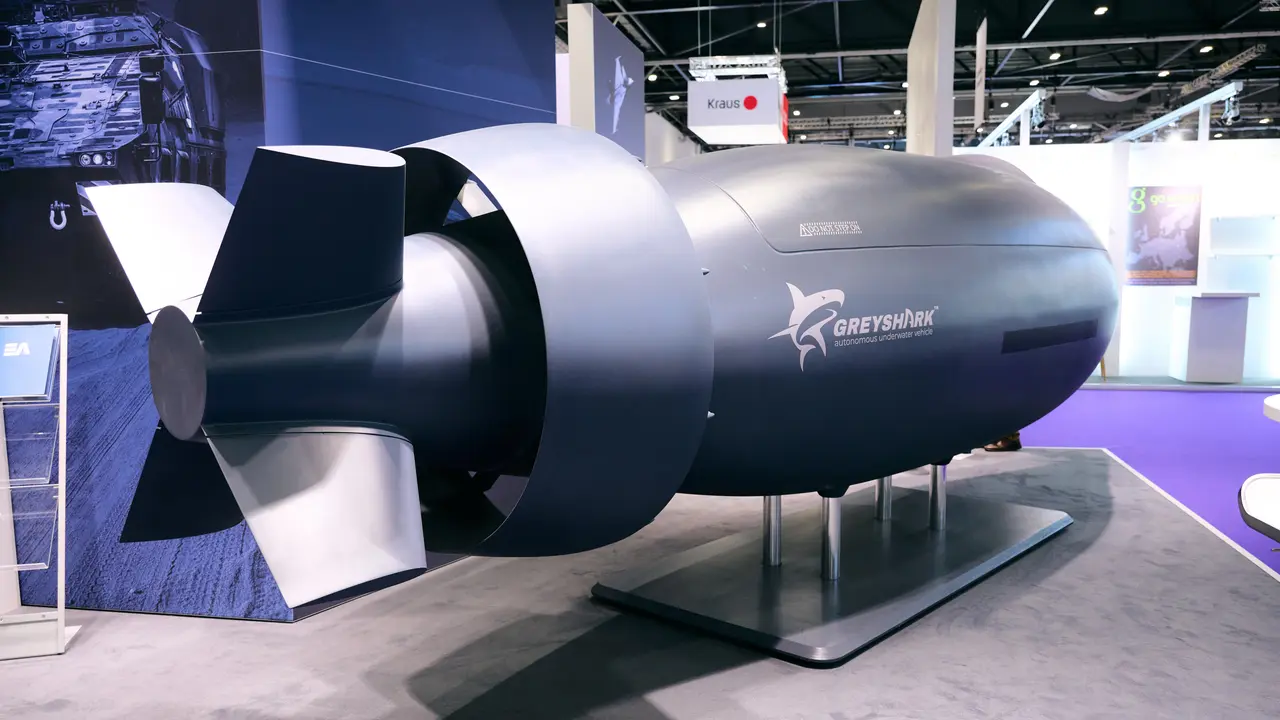
Euroatlas Greyshark UUV at DSEI UK 2025.
That same year, Euroatlas began working alongside Evologics, following a handshake at UDT 2023 in Rostock, Germany; the two companies then went on to co-develop the Greyshark uncrewed undersea vehicle (UUV).
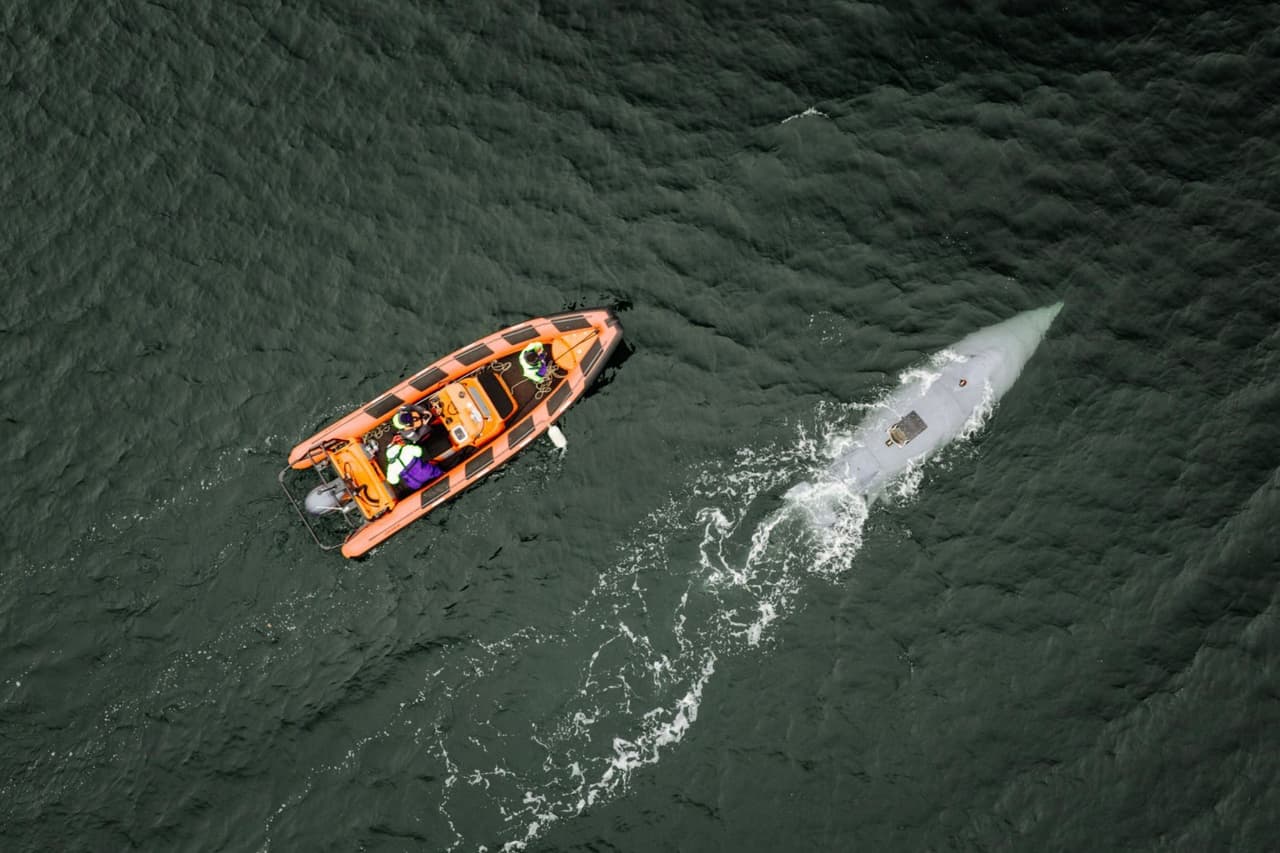
Greyshark comes in two variants: a 6.5m battery-powered version called ‘Bravo’ and a slightly larger hydrogen fuel cell version called ‘Foxtrot’.
Serial deployment of the Bravo variant is planned for July/August this year, while Foxtrot will undergo trials at the ‘Robotic Experimentation and Prototyping with Maritime Unmanned Systems’ NATO exercise in September.
Greyshark is particularly well suited to CUI missions, Codrean explained, as it provides “both protection and monitoring” through modular payloads.
(Euroatlas)
These payloads include a telescopic antenna system for communication purposes that has “anti-jam GNSS” capabilities, as well as synthetic aperture sonar, acoustic antennas, and depth sensors, Codrean said.
It can also be equipped with a laser imaging and measurement system to generate detailed 3D models of the seabed. This technology is especially capable of protecting CUI, as it scans and cross-references real-time data against baseline maps to detect signs of potential sabotage.
Beyond detection, Greyshark’s flooded hull provides it with a sonar signature as low as a jellyfish. It is also designed to have reduced electromagnetic emissions.
These features reduce its operational profile while conducting missions to either monitor infrastructure or track vessels that may damage CUI.
Codrean was unable to provide specifics on the countries that have purchased Greyshark, due to the sensitives around these new capabilities.
However, she could reveal that there is “high interest, of course, from a number of European countries, but also from [a] certain number of Asian countries.”
It is worth noting that Euroatlas and Evologics are working with Rheinmetall, which is acting as a distributor for the Greyshark UUV to help support production and market the system to militaries.
Going forward, Codrean says the companies will continue to develop Greyshark with interoperability in mind to support integration alongside existing naval fleets and their cloud architectures, while progressing the fuel cell variant to maturity.
Kraken Technology Group
Another company helping to support CUI protection is Kraken Technology Group, a UK-based maritime company, which recently transitioned out of SME status following growth in revenue and headcount.
Kraken pivoted from its original position as a primarily powerboat racing company – called Vector Racing – to defence in 2021, after sustained interest from defence ministries.
In a conversation with DSEI Gateway, Mark Exeter, Kraken’s COO, explained that the company has since evolved into what he calls a defence “tech scale-up”, progressing through the typical startup phases in just two and a half years.
He explained that the company’s early defence work with US Special Operations Command helped inform concepts for future capabilities, such as those suited to CUI defence.
These capabilities are embedded in Kraken’s two primary platforms, the K4 Manta and K3 Scout, both of which went from concept to development within “eight to 10 weeks”, Exeter said.
K3 Scout. (Kraken Technologies)
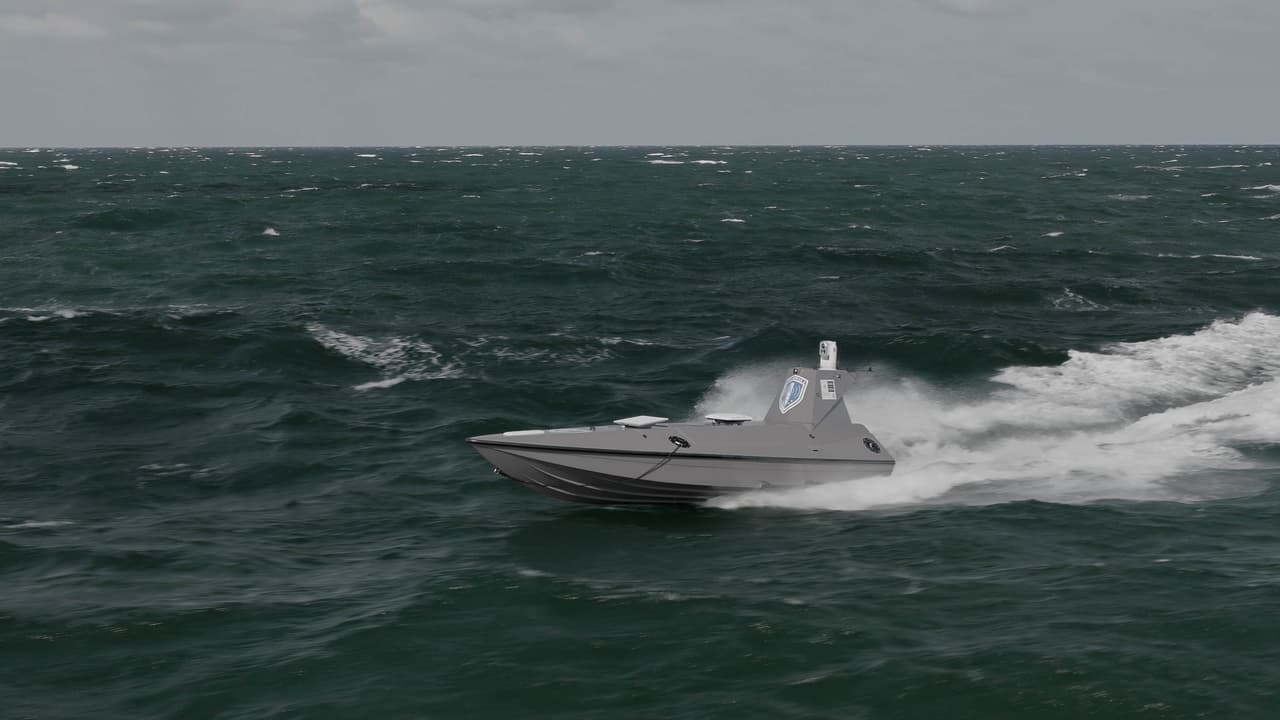
The K3 Scout is an 8.4m uncrewed surface vessel designed to carry modular payloads, capable of speeds up to 55kt and a range of around 650 nautical miles.
Due to its modularity, it can be equipped to support a range of missions, including intelligence, surveillance, and reconnaissance (ISR) as well as interception, and strike – at speed.
It is already in use with a number of undisclosed European NATO countries, Exeter said.
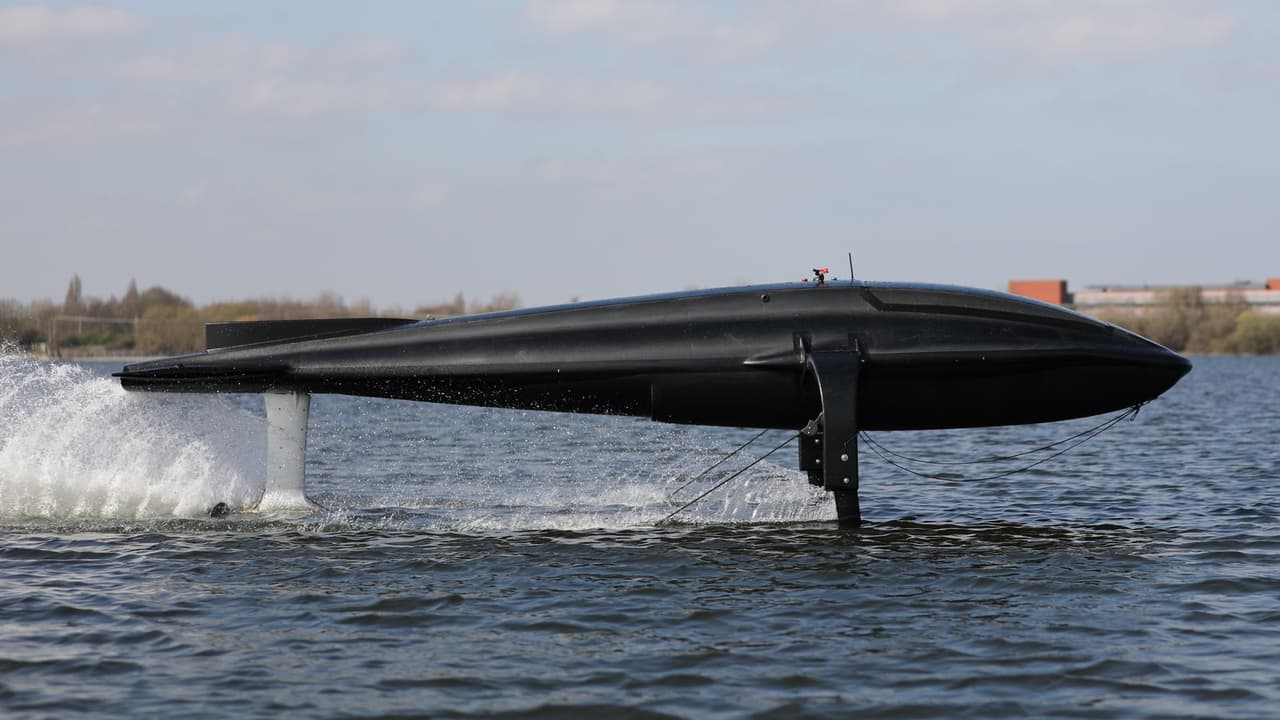
While the K3 Scout is available now, the company is currently developing the K4 Manta – a hybrid uncrewed platform capable of operating on the surface and subsurface.
Standing at 5.5m, the K4 Manta can carry ISR payloads of around 100kg, equipping it for a range of detection and monitoring missions. It can also submerge for covert operations when necessary.
Both platforms are designed with speed in mind, leveraging Kraken’s heritage in waterborne racing, and are intentionally low-cost, he emphasised.
“We don’t believe that buying capabilities should be an expensive exercise,” Exeter said, arguing that affordability is essential if navies are to field enough assets to secure large maritime choke points and protect CUI.
For CUI, the vessels can be equipped with sensors such as electro optical, infrared, and sonar to monitor and detect potential ‘dark vessels’ (ships that do not broadcast their location).
They can also create perimeter areas, utilising ISR capabilities, and can deploy kinetic and non-kinetic effects.
K4 Manta. (Kraken Technologies)
Together, these capabilities allow the platforms to inspect infrastructure or intercept uncrewed undersea vehicles deployed by adversaries to disrupt subsea cables. Speed is a core component, enabling the vessels to rapidly cover large areas to investigate suspicious activity.
The Manta, specifically, can “operate undetected for seven days”, able to trail threats to CUI if directed to.
This continuous sensing and presence also act as a deterrent, Exeter said.
Looking ahead, Kraken is positioning Scout and Manta as vital capabilities that can support the UK Royal Navy’s hybrid uncrewed-crewed vision and NATO’s wider maritime security aims.
To meet these aims, the company is focusing on ensuring the vessels’ interoperability with UK-allied fleets and delivering uncrewed mass at a sustainable cost – key military maritime requirements.
“We are expanding internationally and will be scaling to manufacture 1,000 vessels a year to provide the capability to help defend against hostile actors in our seas and around our critical national infrastructure.”
Mark Exeter, COO of Kraken Technologies.
Looking to the future, Exeter explained that Kraken currently has “over eight” platforms under development.
Meeting the strategic imperative
To meet the strategic requirement for scalable, cost-efficient protection of CUI, NATO launched Baltic Sentry last year.
This programme focuses on persistent subsea surveillance and works in tandem with Task Force X – a NATO uncrewed maritime systems initiative – that together aim to operationalise the use of uncrewed systems and protect CUI.
DSEI Gateway graphic. (UK MoD)
Such efforts complement broader coordination initiatives, including the 2023 EU-NATO Task Force and the NATO CUI Network, designed to unify intelligence and response among allies.
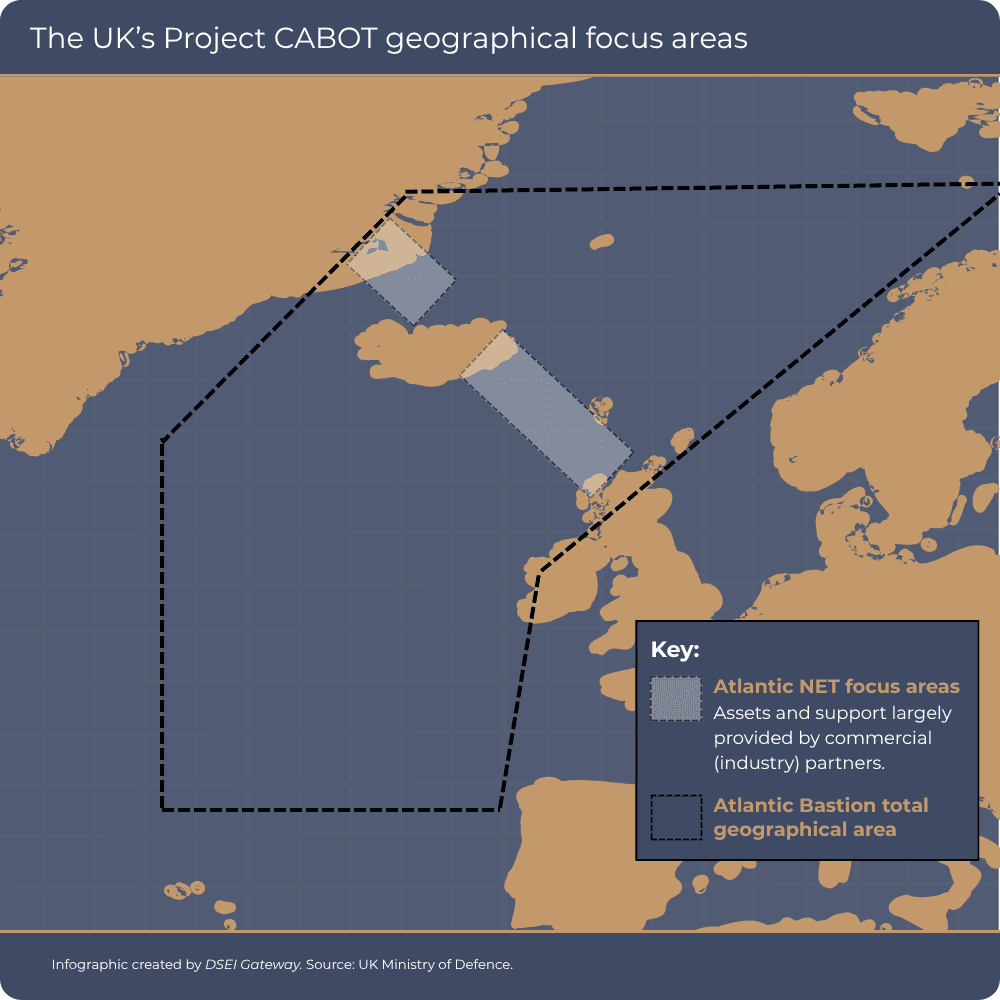
The UK is championing this on a national scale, through project Cabot – a programme focused on combining crewed and uncrewed systems to secure the North Atlantic, in turn addressing both CUI protection and anti-submarine warfare.
It is being delivered in two phases. The first phase – Atlantic Net – will focus on deploying largely industry capabilities as-a-service to provide massed presence. ‘Atlantic Bastion’, the second phase, will see a transition to Royal Navy operated uncrewed systems.
The Royal Navy plans to deploy its first sensors this year, as the initial operational step in creating a ‘system of systems’ for finding, tracking, and if needed, acting against an adversary in the subsea domain, the chief of the Royal Navy, General Sir Gwyn Jenkins, said at DSEI UK in September.
Ultimately, these initiatives demand a closer partnership with industry, which can provide the persistent presence and mass required to monitor and protect CUI at scale and pace.
Benjamin
Howe
Defence Journalist, DSEI Gateway
Benjamin is a UK-based Journalist working for DSEI Gateway, having previously worked as a Content and Community Manager on Clarion's digital products.