
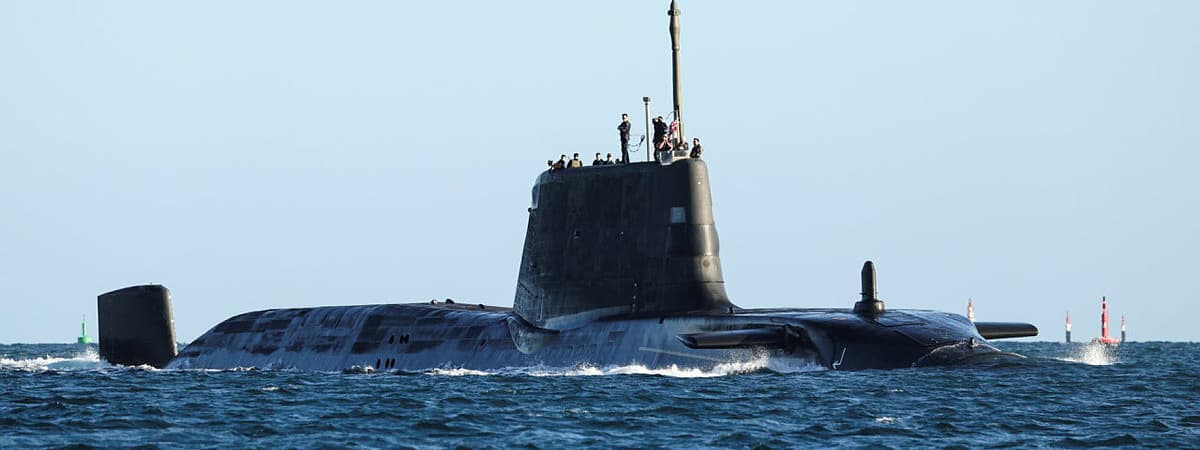
HMS Anson, the Royal Navy's fifth Astute-class submarine
Atlantic Bastion: how the UK is addressing the undersea threat
DSEI Gateway explores Atlantic Bastion, the Royal Navy’s new programme for countering escalating Russian undersea activity.
02 APR 2026

By
Dr Lee
Willett
Independent naval writer and analyst
Across the North Atlantic, the undersea threat is intensifying.
Russian naval presence in UK waters has surged by 30% over the last two years, according to the UK Government. Countering this threat, however, is resource-intensive, requiring rapid re-building of undersea sensing mass.
Aiming to meet this challenge is Atlantic Bastion – a major new Royal Navy (RN) programme designed to enhance maritime surveillance, presence, and deterrence, using a blend of uncrewed systems and crewed, traditional anti-submarine warfare (ASW) platforms.
DSEI Gateway examines the programme’s development, capability outputs, and industry opportunities.
What is Atlantic Bastion?
In September 2025, the RN’s First Sea Lord General Sir Gwyn Jenkins told DSEI UK that the navy was aiming to deploy its first Atlantic Bastion sensors in 2026, as the initial operational step in creating a ‘system of systems’ for finding, tracking, and if needed acting against an adversary.
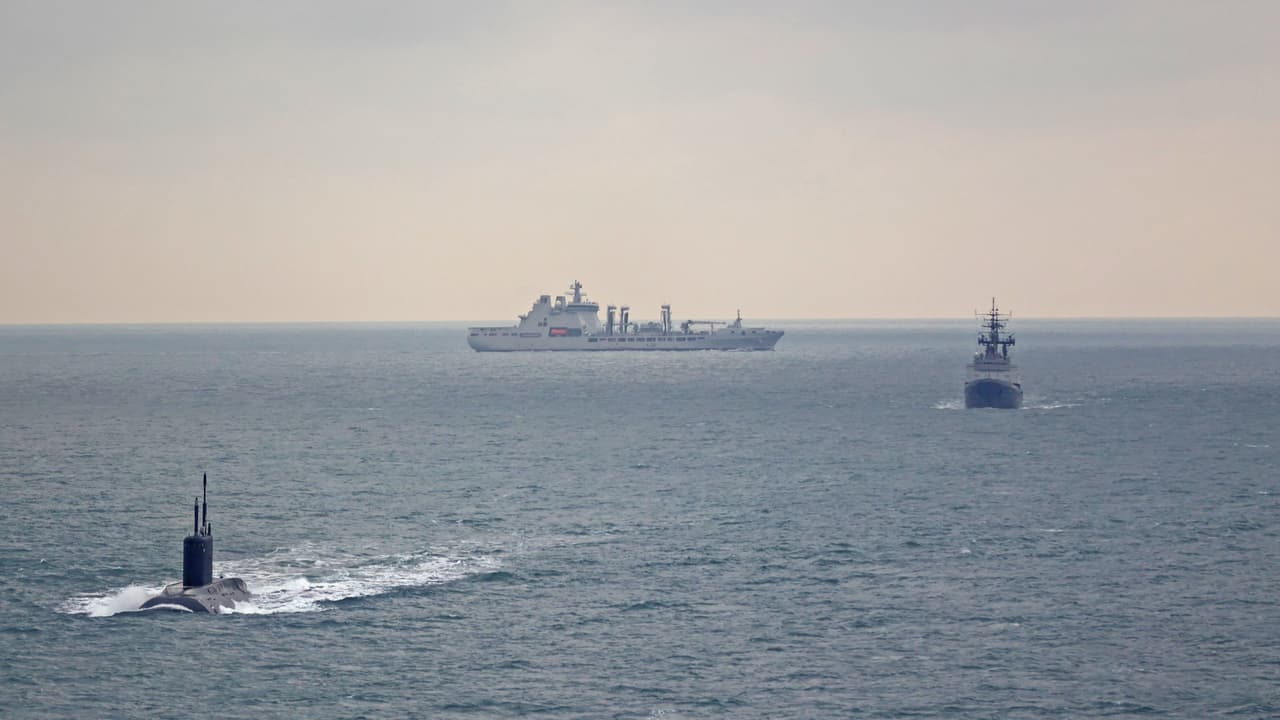
UK assets watching a Russian submarine in UK waters in 2025. (UK MoD Crown Copyright 2025)
This network of sensors – predominantly uncrewed and undersea while utilising AI – will operate across UK and NATO North Atlantic maritime areas of interest to secure sea lines of communication, maritime chokepoints, and critical undersea infrastructure (CUI) nodes.
Areas of interest include the Greenland-Iceland-UK (GIUK) Gap, Norwegian Sea, and Bear Island Gap (dividing the Norwegian and Barents seas).
The requirement is to build scalable sensing mass and wider warfighting readiness across these areas in two phases, under the broader procurement programme, Project Cabot.
Atlantic Net
Phase one of the Bastion programme, Atlantic Net, involves introducing large numbers of uncrewed undersea vehicles (UUVs) to provide massed sensing presence primarily in and around the GIUK Gap.
The aim is to deliver a minimum deployable sensing capability in the water by the end of 2026, before building enhanced functionality and going fully ‘live’ by the end of 2027.
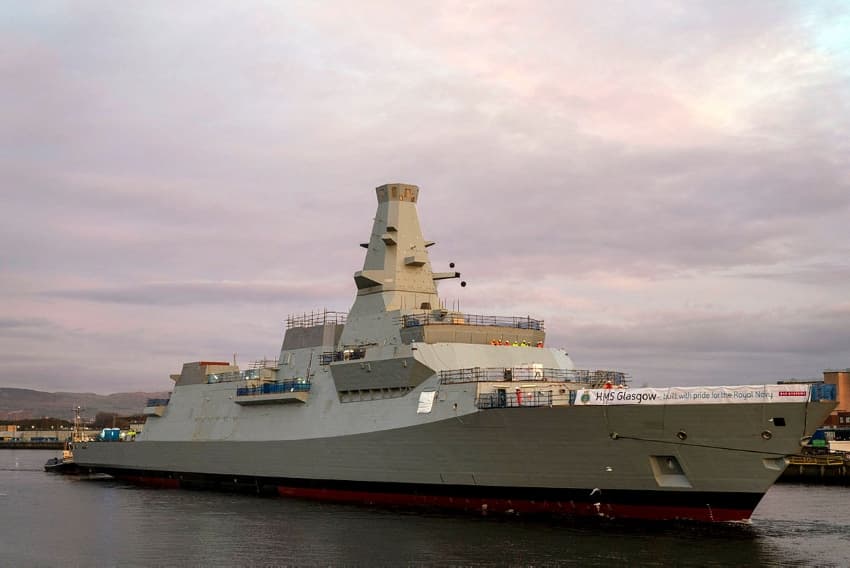
The Royal Navy's Type 26 frigate, HMS Glasgow. (BAE Systems)
While no firm dates have been set, phase two of Atlantic Bastion involves enhancing and expanding this UUV sensing presence more widely across the regions.
It will integrate these systems with other uncrewed platforms like extra-large UUVs and ASW-specialist crewed platforms such as the RN’s Type 26 frigates and the Royal Air Force’s P-8A Poseidon maritime patrol aircraft, to tackle a broader target set.
Put simply, the uncrewed sensors will provide a tripwire, triggering crewed platform responses against targets in particular places.
Why is Atlantic Bastion important?
Atlantic Bastion was launched in the UK’s 2025 Strategic Defence Review (SDR), which said: “Atlantic Bastion is the RN’s plan to secure the North Atlantic for the UK and NATO against the persistent and growing undersea threat from a modernising Russian submarine force.”
The SDR defined three core roles for the UK’s armed forces: defend and protect UK territories and interests; deter and defend in the Euro-Atlantic; and shape the global security environment.
Atlantic Bastion seeks to deliver primarily on the Euro-Atlantic deterrence and defence role. It also supports delivery of the other two: defending UK territories and interests, by securing CUI in and around UK waters; and shaping the global security environment, by negating North Atlantic undersea threats.
Addressing the threat
The concept’s output underscores its importance against a real threat. For almost a decade, senior NATO naval officers have been highlighting the accelerating threat posed by Russia’s Northern Fleet submarine force, which is growing in numbers, capability, and activity.
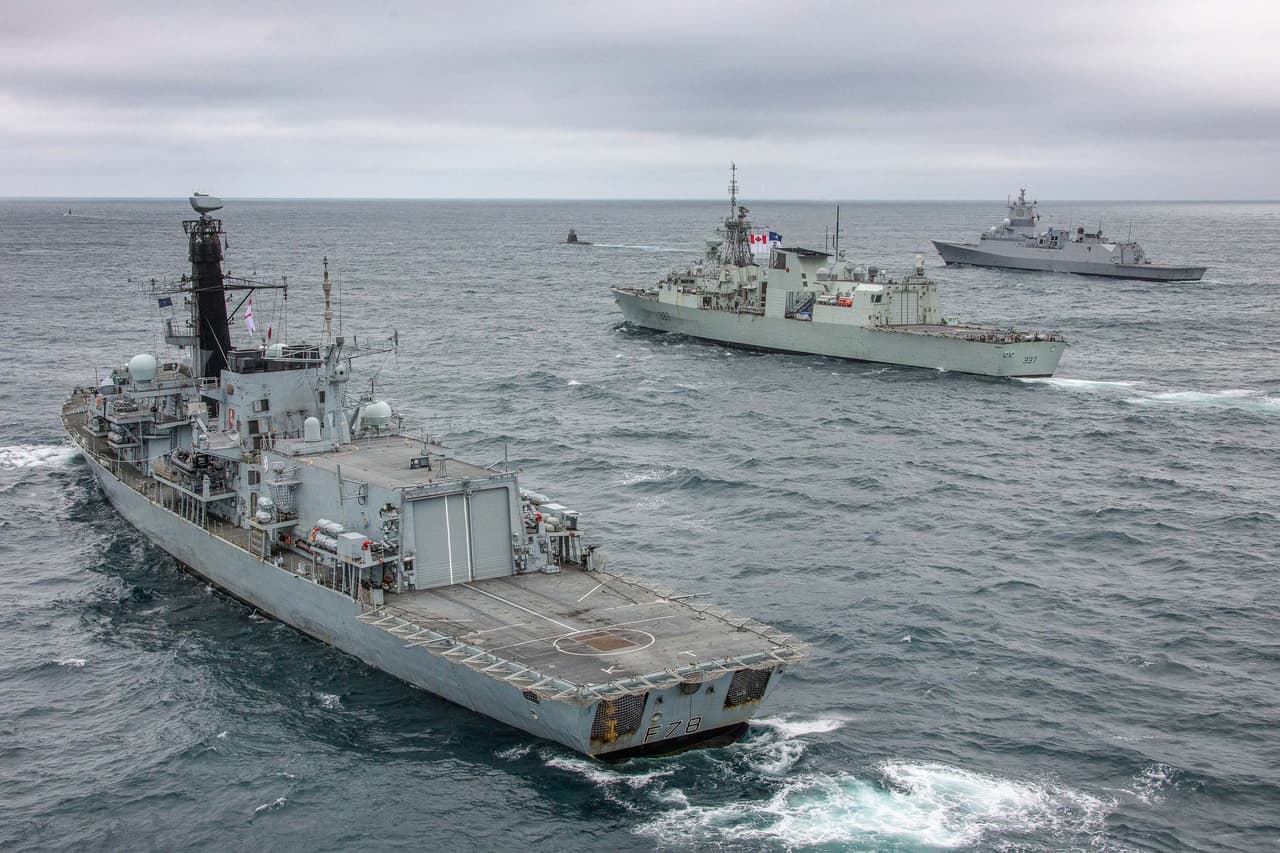
NATO naval ships and submarines sail in NATO’s North Atlantic ASW exercise ‘Dynamic Mongoose’ in 2020. (UK MoD Crown Copyright 2020)
A core Atlantic Bastion requirement is to provide effective ASW sensing, detection, and target prosecution ‘up threat’ to push these more capable boats out of range of central European NATO targets.
At the same time, NATO navies’ investment in submarine numbers and ASW capabilities and skills has been declining over the past few years.
Rebuilding submarine fleets (which many NATO navies are now doing) takes time and money.
So, generating broad, massed sensing capability through uncrewed systems fills the presence gap, and enables NATO’s select – but extremely capable – submarines to be cued on to where they are most needed.
The programme also supports the RN’s shift towards a warfighting, hybrid navy that exploits uncrewed systems for massed effects.
It is also part of a multi-domain trio of concepts – sometimes known as the ‘Atlantic series’ – designed to recapitalise the UK’s holistic contribution to NATO’s maritime North Atlantic deterrence and defence.
These include Atlantic Shield and Atlantic Strike.
While Atlantic Bastion addresses the undersea domain, Atlantic Shield aims to meet the air and missile defence threat. Specifically, it seeks to develop autonomous uncrewed surface vessels for surface force protection. For Atlantic Strike, crewed and uncrewed capabilities are required to deliver air, surface, and sub-surface power projection across the region.
Progress so far
As the first step in Atlantic Bastion, the RN has been conducting technology demonstration activities to support Atlantic Net sensing requirements. The outcome may well feed into – and be shaped by – the UK Ministry of Defence’s (MoD’s) Defence Investment Plan (DIP), an essential document outlining the UK’s equipment and funding priorities.
Atlantic Net procurement began in October, with the MoD issuing an invitation to tender for commercial mission partners to provide a intelligence, surveillance, and reconnaissance capability.
This will be delivered through an ‘as-a-service,’ contractor-owned/contractor-operated/naval oversight construct, providing maritime commanders with actionable data.
In November, defence minister Luke Pollard told parliament that the DIP planning process had included options for uncrewed systems and undersea payloads that reflected the RN’s hybrid navy transition.
In December, the MoD provided a progress report on Atlantic Bastion developments.
Technology demonstrators developed by 20 companies were showcased to the MoD, with the ministry and industry committing a combined GBP14 million of seedcorn investment funding (on a 4:1 ratio) across the first year to enable testing and development.
Following the technology demonstration phase, successful companies will be asked to develop their concepts into frontline capabilities across 2026 and beyond, as part of the programme’s acceleration and expansion.
An unconventional approach
Speaking at the RN’s annual seapower conference in December, General Jenkins explained the programme’s innovative, unconventional approach.

General Sir Gywn Jenkins, the First Sea Lord of the Royal Navy, speaking at DSEI UK 2025.
“We haven’t given industry a long list of our requirements; we haven’t over specified what it is we want to do.... We have merely given them a problem set and asked them to solve it for us – and they’ve stepped up in spades.”
General Jenkins also underscored the need for a “lockstep” relationship between customer and supplier, noting that the RN provides an operational ‘testbed’ experimentation opportunity that industry cannot match alone.
One such opportunity can be provided by the RN’s autonomous extra-large UUV XV Excalibur experimental vessel, received from MSubs in December.
Excalibur will be a ‘testbed’ platform onboard which autonomous missions and payloads, including for Atlantic Bastion, will be trialled.
What – and when – next
The pace and rhythm of the next Atlantic Bastion steps may be determined by the DIP.
However, the strategic emphasis placed on countering the Russian threat and shifting to a hybrid navy to enhance mass, presence, and lethality against that threat both point to the importance of continued uncrewed capability development.
This suggests that Atlantic Bastion will remain a strategic, operational, technological, and budgetary priority.
Over 2026 and 2027, Atlantic Net will move through development into a contracted, minimum deployable sensing capability, on to enhancing functionality and going ‘live’.
In 2028, the Type 26s start entering service. Featuring mission bays that will host uncrewed systems from all domains, partnered with the state-of-the-art sensing and command-and-control (C2) capability a high-end ASW platform brings, the Type 26s will be the centrepiece of the Atlantic Bastion phase network and outputs.
Canada and Norway – both already participating in the Type 26 programme – may well link their national surveillance networks with Atlantic Bastion, creating a network across the North Atlantic.
NATO’s challenge and requirement for undersea sensing across its vast operational area mirrors that of the RN. For example, it established the Allied Under Water Battlespace – Mission Network (AUWB-MN) ASW barrier-focused concept, an integrated sensing and C2 network that harnesses massed uncrewed systems.
There is also a direct link between the two: AUWB-MN offers the digital C2 infrastructure to network the Atlantic Bastion sensors together, and with wider NATO operational architectures. This will ease and enable alliance undersea operations through a single, interoperable, integrated C2 construct.
Phase two of Atlantic Bastion will be a military-led activity using a government-owned/government-operated capability model.
Yet, across the programme, industry involvement remains crucial.
Given the enduring need to accelerate new technology capture to combat the evolving undersea threat, the RN and industry will likely co-operate continuously to refine Atlantic Bastion capabilities.
Moreover, the MoD may well persist with the programme’s concept, development, and procurement approach, which is designed to deliver affordable, scalable mass at an accelerated pace.
Indeed, a prominent success in Atlantic Bastion – for navy and industry alike – has been the MoD sharing an ‘operational problem statement’ for joint resolution, rather than issuing lengthy requirements. Consequently, the technology demonstrator process has already allowed diverse companies to present different technologies encompassing either platform and/or sensor concepts.
Dr Lee
Willett
Independent naval writer and analyst
Dr Lee Willett is an independent defence and security writer with extensive experience covering international issues, specialising in naval affairs. His work appears in leading publications including Janes and Naval News. He has previously held roles at Janes and RUSI.