

Brave1 investment tour in the UK. (Brave1)
Brave1: Ukraine's defence-tech accelerator explained
DSEI Gateway explores the Brave1 accelerator, how its accelerating procurement and innovation, and its efforts to expand across borders.
09 JUL 2026

By
Benjamin
Howe
Defence Journalist, DSEI Gateway
The pace of conflict in Ukraine has forced a rethink of how defence procurement and innovation is approached. Traditional acquisition cycles that span years are no longer suited to a battlefield where technologies evolve in weeks and months.
Brave1, Ukraine's defence-tech accelerator, was established in April 2023 by Ukraine’s Government to help close that gap, support the armed forces through digital transformation, speed the deployment of new capabilities and grow its domestic industrial base. Initially, its remit focused on cutting back regulatory restrictions, along with offering technical and financial support to companies.
For example, over the past three years it has significantly scaled Ukraine’s domestic defence industry, with more than 3,000 companies – the vast majority of which did not exist prior to the war – now operating in its ecosystem.
Many of these companies have become critical to the war effort.
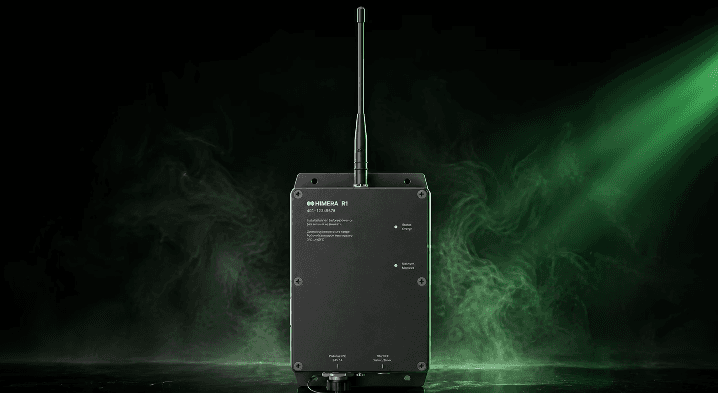
Himera's R1 repeater. (Himera)
Himera – a Ukrainian radio communications company founded shortly after the full-scale invasion of Ukraine – used the Brave1 ecosystem to rapidly validate its technology, secure early grant funding, and connect directly with the military for rapid battlefield testing and iteration. Its equipment is now widely used in the war.
Ukrainian leadership regularly cite Himera as a case study when pitching the capabilities of Ukrainian tech to international investors and NATO allies, showcasing how domestic tech can bypass slow-moving military procurement.
Brave1 has since grown from supporting Ukraine’s domestic defence industry to sharing its innovation and procurement expertise with the country’s allies – now a stated government priority. Yet this international expansion is still rooted in Ukraine’s domestic defence-tech ecosystem, where Brave1 has built the infrastructure needed to rapidly move technology from development into operational use.
Building Ukraine’s defence-tech infrastructure
Short feedback loops are now essential to ensuring technology remains operationally relevant. Recognising this, Brave1 has built the infrastructure that links suppliers and military users together through battlefield data to accelerate innovation.
The Brave1 Dataroom, built on Palantir software, is at the core of this. The platform “provides a secure environment” where Ukrainian developers can access datasets based on real-world conditions, including weather, lighting, and thermal sensor variables, to help develop AI and autonomy tools, Ukraine’s MoD says. The primary focus of the Dataroom has been on UAV detection and interception.
In theory, this should help shorten the gap between software development and operational use by exposing algorithms to more complex conditions than laboratory testing can provide.
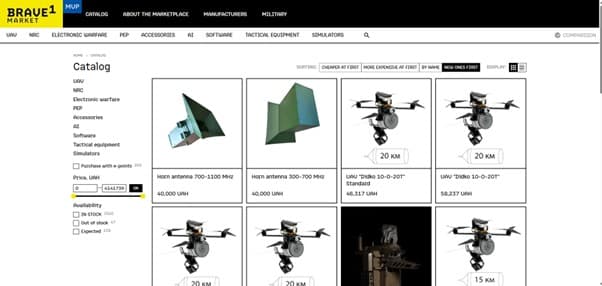
While the Dataroom accelerates innovation, the Brave1 Market optimises procurement.
Launched in April 2025, the marketplace lists more than 1,000 products across areas covering uncrewed platforms, electronic warfare, weapons and AI-enabled robotic systems. Ukrainian Military units can order the exact equipment they require through the platform, and compare options using technical specifications, shortening acquisition times.
One of Brave1’s most significant development’s is an analytics upgrade that allows manufacturers enrolled in the market to see their technology’s field-performance data, including confirmed strike metrics, target types, and the military units actively using their systems.
By receiving feedback directly from individual units, the market enables suppliers to rapidly iterate their technology. It also reinforces Brave1’s position as a vital cog in Ukraine’s innovation and procurement landscape.
Test in Ukraine
Recognising the success of this innovation ecosystem, Brave1 has expanded its support to Ukraine’s allies.
A key effort is the Test in Ukraine platform, established by the accelerator in July 2025, that allows international defence companies to test their products in genuine, frontline conditions.
By delivering direct feedback from end-users, the platform provides a structured pathway for international manufacturers to validate and optimise their products – an opportunity that cannot be replicated easily elsewhere.
Brave1 is demonstrating how modern-day technological innovation and iteration is achieved. In turn delivering close feedback loops, especially with drone warfare, while helping its allies to develop operationally relevant technology.
Test in Ukraine can also act as a seal of approval to buyers if a company’s technology has been tested in Ukraine.

Bilateral innovation corridors
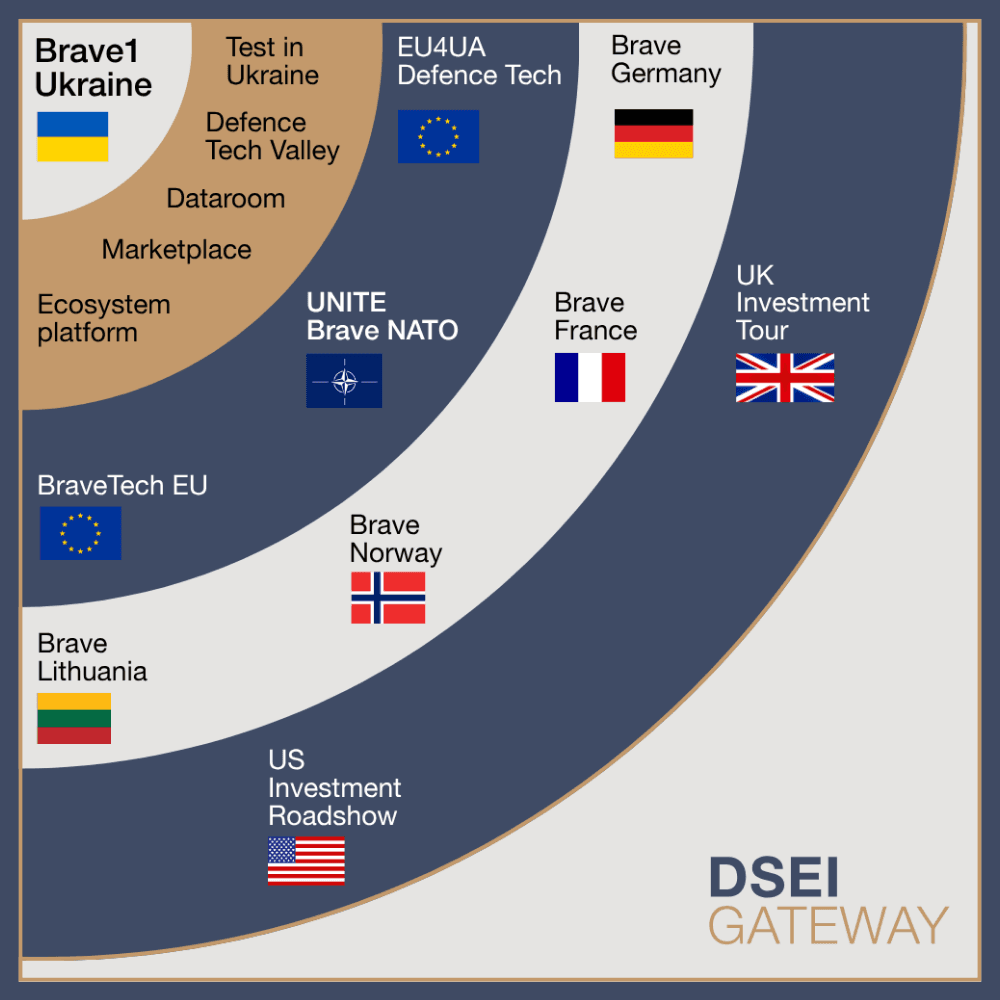
Beyond its domestic ecosystem, Brave1 has been signing a range of bilateral frameworks with its allies to share its procurement model and accelerate joint development. Brave France, announced in February, is one such initiative.
At its core, companies from France and Ukraine will jointly develop uncrewed, missile, and air defence systems through shared grants and hackathons.
All the technology will “undergo rigorous validation in real combat conditions via the Test in Ukraine platform,” Ukraine’s minister of defence, Mykhailo Fedorov, said in June.
In June it was announced that the initiative with the French Defence Innovation Agency would have a EUR20 million budget, with the first challenge call expected in September.
Letters of intent to establish Brave Germany, Brave Lithuania, and Brave Norway, have also been signed, with the former expected to host a challenge call before the end of the year.
Multilateral strategic integration
Beyond bilateral corridors, Brave1 has embedded itself within broader multilateral initiatives, allowing battlefield-driven innovation to scale to a continental level.
EU integration
BraveTech EU, launched in July 2025, operates as a joint Ukraine–EU initiative that applies the Brave1 model at a European level.
Backed by EUR100 million – contributed equally by the European Commission and Ukraine – the programme involves joint hackathons, matchmaking between companies and investors in Ukraine and Europe, research and development funding, and access to the Test in Ukraine initiative. Importantly it leverages two large institutions, the European Defence Fund and EU Defence Innovation Scheme.
Brave1 told DSEI Gateway that this “builds on the [existing] Brave1 model: define operational challenges, source solutions, test them in real conditions, and scale what works.”
While the EU integration broadens Brave1's reach, a parallel track has drawn the accelerator into the heart of NATO's own innovation architecture.
NATO integration
UNITE Brave NATO, launched in November 2025 in partnership with the NATO Headquarters Innovation Directorate and the NATO Communications and Information Agency, marks a further step in Brave1's international integration.
Backed by a budget of EUR10 million, the programme targets mature technologies – those at technology readiness level seven and above – across critical capability gaps, including counter-UAS, resilient navigation in electronic warfare environments, and autonomous guidance systems.
Unlike standalone grants, the initiative is structured around a mandatory matchmaking model: participation requires companies from Ukraine and NATO member states to form partnerships and jointly develop integrated solutions combining complementary technologies into a single product.
Underpinning all of this multilateral activity is a parallel effort to attract the private capital which could help support the innovation and scaling of Ukrainian companies into the future.
Commercial scaling, defence procurement and private investment
Brave1 maintains an active investor pipeline to support Ukrainian companies, grow innovation, and further expand its knowledge sharing ecosystem.
Perhaps the most notable effort was the organisation’s US roadshow held over two weeks in March, which Brave1 says attracted 3,000 attendees. Ukrainian startups participated in the roadshow, with at least one joint venture confirmed, and several other conversations ongoing.
Following this, Brave1 launched a three-day UK tour in early June, which included a pitch event that was “oversubscribed” with investors.
Artem Moroz, Brave1’s Head of Investor relations, told DSEI Gateway that the UK was chosen as the second investment tour location because it lags behind other countries on joint ventures and investment in Ukrainian companies, despite significant political and diplomatic support.
A stumbling block identified – from the perspective of the Ukrainian companies attending – is the amount of regulation UK investors face. This is partly because much of Ukraine’s defence industry is relatively new, meaning companies are unable to demonstrate several years of corporate governance records and financial history.
However, DSEI Gateway attended a press conference at the Ukrainian embassy in June, where representatives from Brave1 and Ukrainian companies were optimistic about the amount of interest from UK investors.
By pairing battlefield experience and innovation with western investment and funding mechanisms, Brave1 has moved beyond its origins as a domestic technology incubator. It aims to drive investment in Ukraine’s companies and functions as an institutional node connecting its allies’ defence industrial bases to the realities of modern technological warfare.
Brave1's continued expansion will ultimately be measured by whether it continues to deliver tangible procurement and innovation outcomes for the companies that engage with it.
Benjamin
Howe
Defence Journalist, DSEI Gateway
Benjamin is a UK-based Journalist working for DSEI Gateway, having previously worked as a Content and Community Manager on Clarion's digital products.