

(BAE Systems 2025)
Bridging the gap: How regional clusters are unifying the UK’s defence landscape
DSEI Gateway speaks with senior officials from the UK’s regional defence clusters to explore how these hubs are bridging the gap between local innovation and national security.

By
Tom
Barlow-Brown
Defence Journalist, DSEI Gateway
SMEs are a vital part of the defence system, able to work in a highly agile manner while delivering cutting-edge specialised technology to militaries.
Recognising this, the UK Ministry of Defence (MoD) has set an ambitious target to increase SME spend – directly and indirectly – by GBP2.5 billion, totalling GPB7.5 billion by May 2028.
A key vehicle helping to deliver on this goal are the Regional Defence and Security Clusters (RDSCs), which span the country.
Explaining the clusters
These clusters act as collaborative networks, uniting industry (primes, SMEs, tier 1), academia, and government in a “triple helix” model to foster innovation and strengthen supply chains, according to Neil Skelland, former chair of the South West cluster and a national forum which brings together all the clusters in the UK.
“If we are to be a prosperous nation, we need communities,” Skelland emphasised to DSEI Gateway.
The RDSCs have emerged organically, evolving through bottom-up innovation. Their approach is inherently agile, responsive to local strengths, and shaped by regional ambition.
The RDSCs are also a primarily vehicle for a broader UK “prosperity agenda” rather than narrow, purely defence-focused structures, he said.
This agenda has three core stands: to enhance capability, industrial capacity, and exports across the UK supply chain.
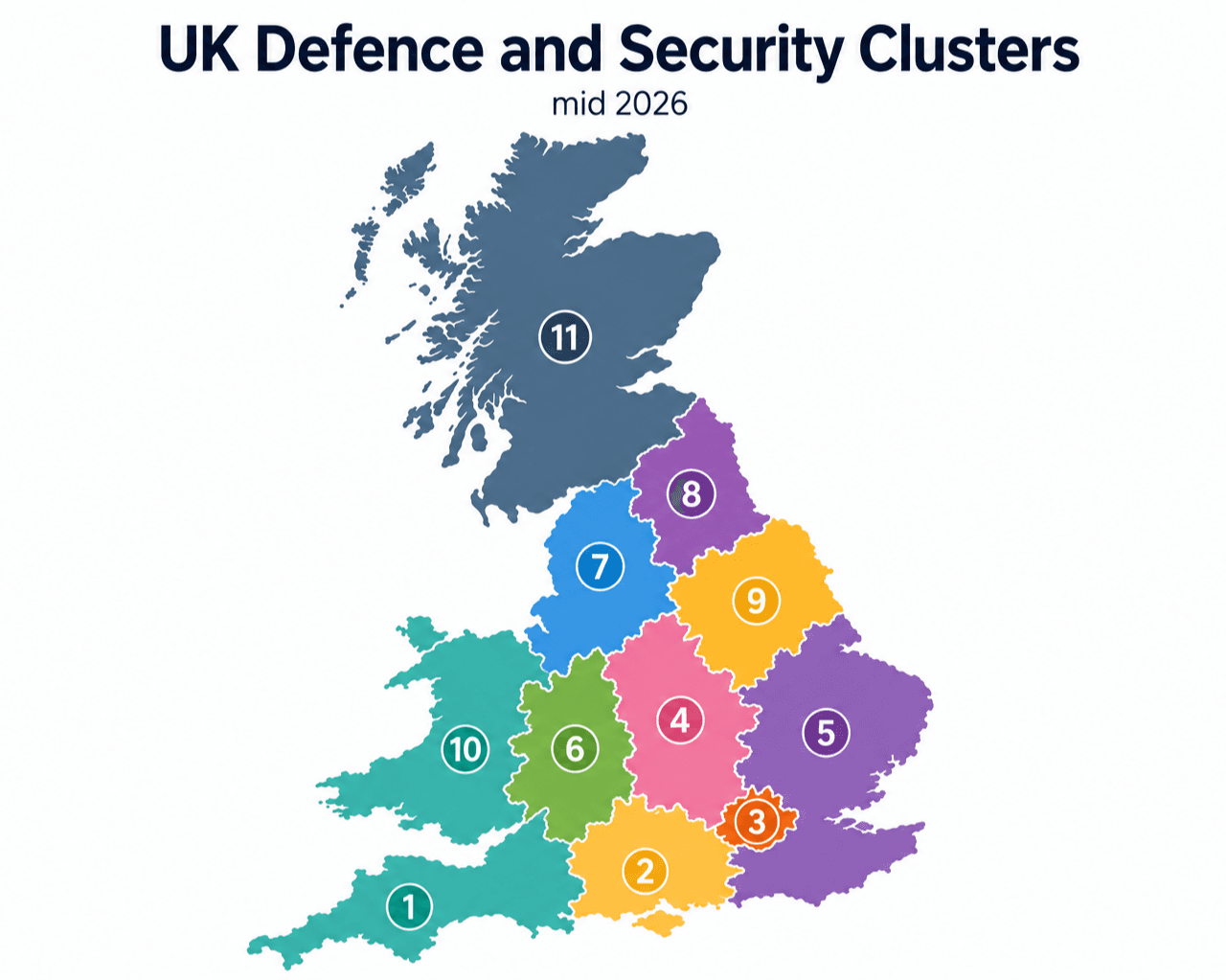
(Generated by AI)
Over 10 RDSCs are operational across the UK, with each cluster drawing their identity from the manufacturing base in their region. Each one has a unique focus reflective of the dominant companies in the area.
Primary examples include the clusters in the North East and South West of England, as well as in London, which is led by the Greater London Authority and London South Bank University.
Other clusters operate in Wales and the East of England, with a cluster in Scotland currently in the planning stages.
Information building
While the clusters help to connect key sector stakeholders together, they also provide “insight and information on the defence ecosystem,” helping organisations large and small to enter the defence industry, and receive the necessary support to be competitive, Rodney Day, chair of the London RDSC, told DSEI Gateway.
Importantly, this means each cluster has a direct link to the UK defence ministry, with the UK’s Defence Innovation and Defence Office for Small Business Growth actively involved specifically.
This access should provide members with a clearer understanding of the UK’s upcoming procurement requirements, which many companies argue is currently lacking.
Access to funding through the UK’s Defence and Security Accelerator, including opportunities from the GPB3.1 million ‘Regional Partnerships Fund’, are also available for members in the clusters.
While heavily focused on defence, the chair of the London cluster emphasised that the clusters should authentically represent the security aspects of their mandate as well. “I think it's important for [the] clusters to be authentic to our title and champion security, resilience and cybersecurity. This element, integrated with defence, is critical for a safe and secure society.”
Looking outward, Skelland sees the specific geographic makeup of the clusters as “big enough that they can do things at scale in their regions,” but stresses that they have connections outside the UK as well. “The prosperity agenda is not something you can just achieve regionally, nor just within the UK.”
The North East: hub of component manufacturing
The North East is one cluster that is helping to champion its member’s representation on the national and international stage.
For example, maritime SME UK Docks, a member of the cluster, recently signed an agreement with the Bangladeshi Navy on the renewal of former Royal Navy vessel HMS Enterprise.
The North East RDSC has 360 members in total, with a strong emphasis on smaller companies. Of these members, 242 are SMEs.
According to Lesley Hawke, the cluster’s project manager, its uniqueness stems primarily from its specialisation in SME component manufacturing rather than large-scale production.
“We are not going to build you a ship and we are not going to build you an aeroplane. What we are going to do is give you all the components and the parts that feed into that,” Hawke emphasised.
This includes companies like Wilton Engineering, on the River Tees, a key supplier to BAE Systems, assisting in complex steel fabrication for submarines at the Barrow-in-Furness shipyard.
According to Hawke, the cluster’s SMEs are “resilient, capable, secure, and agile”, arguing that during the Covid-19 pandemic, “it was the SMEs that kept this country afloat because they can pivot on a pinhead.”
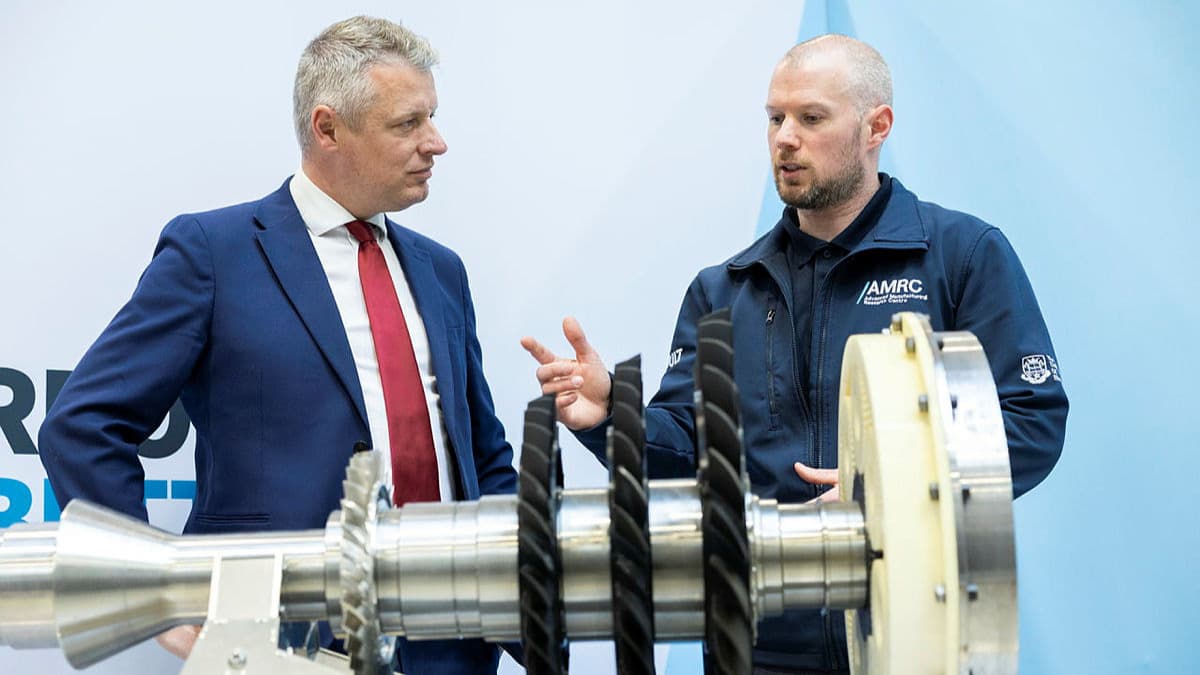
The UK Minister for Defence Readiness and Industry, Luke Pollard, who is actively involved in the RDSC’s. (UK MoD Crown Copyright 2026).
The North East collaborates heavily with other clusters in the UK, specifically the neighbouring North West RDSC through webinars and reciprocal event attendance.
It is “really crucial that we do work in alignment with each other and lean on the strengths of the other clusters,” Hawke said.
The South West: linking regional skills with national priorities
The South West was the first region to establish an RDSC.
Given its foundational role, other regions have “reached out” to learn from its experience, Skelland said. This allowed the cluster to shape the model that other regions have since adopted.
Encompassing a large area of the South coast of England, the South West cluster naturally has many members that are heavily involved in maritime research and manufacturing. However, Skelland argues that it also has members from other parts of the defence industry. “In the South West, we touch on every warfighting domain.”
Members of the cluster are encouraged to “play to their strengths” across the domains that they work in, and work with one another to share expertise. This is assisted by events held in conjunction with partner organisations, such as the Goonhilly Earth Station in Cornwall, focusing on space technology.
As the region features several key primes, they also play a critical role in the clusters, sitting in the steering group and programme team.
The cluster’s programme manager, for example, is consistently held by a prime. The steering group includes major companies such as Babcock, Qinetiq, Thales, and ThyssenKrupp Marine Systems.
This strong prime support provides an “anchor” to SMEs which are part of the cluster, Skelland argues.
Additionally, the cluster has well-established relationships with major academic institutions such as the University of Plymouth.“ Making sure that within the region we have a pipeline of newly skilled people coming through is really important to everybody for the prosperity and defence of the nation,” Skelland said.
Resilience & sustainability
While integration with primes, industry stakeholders, academia, and the other clusters are vital for success, cluster independence is also essential.
The clusters, Skelland argues, must be independent entities with their own decision-making processes to ensure they are resilient and self-sustaining.
“What’s really key to these clusters is that they [are able to] self-sustain without" depending on money from central government.
For example, despite delays in the release of the UK’s Defence Investment Plan, the cluster model has enabled members to remain resilient, he continued.
Looking ahead
As decisions on UK defence spending and growth become ever more important, the RDSC could find themselves playing a greater role in supporting and growing the industrial base. They may even play a central role in re-establishing a new energetic and munitions base – a key requirement for the UK outlined in the Strategic Defence Review.
Indeed, there has been an “uptick in people requesting membership”, Day said, and increasing engagement requests. This indicates a growing recognition of the clusters' value.
He stresses the importance of cluster members reaching out to companies working in adjacent areas, for example virtual and augmented reality, autonomous systems, and robotics, which don't traditionally see themselves as defence-related.
If the clusters continue this trajectory, they could solidify their status as a foundational pillar in driving UK defence growth and innovation in years to come.
Tom
Barlow-Brown
Defence Journalist, DSEI Gateway
Tom Barlow-Brown is a Defence Journalist for DSEI Gateway. Previously he worked as a reporter in the maritime sector covering developments in energy and tech.